

Menopause Weight Gain and Cravings: Why It Happens and How to Manage It (2026)
Key takeaways
- Falling estrogen drives cravings and belly fat.
- Metabolism slows as muscle quietly declines.
- Insulin sensitivity drops, sharpening sugar cravings.
- Protein, fiber, and strength training are the core fix.
- Supporting GLP-1 naturally helps quiet the hunger.
Menopause weight gain and cravings happen because declining estrogen redistributes fat to the abdomen, increases appetite, lowers insulin sensitivity, and reduces muscle. Managing it means prioritizing protein and fiber, strength training, better sleep, steady blood sugar, and support for your body's natural GLP-1.
You didn't change anything. Same food, same habits. But the weight came on anyway, mostly around your middle, and the cravings got loud.
Here's what I hear from women constantly: "I'm entering 40 and for women it's harder to maintain weight due to hormone shifts." And: "I'd like to stop menopause weight gain and lose 20 lbs."
You're not imagining it, and you didn't get lazy. Your hormones changed the rules. Let's break down what's actually happening and what to do about it.
Why does menopause cause weight gain?
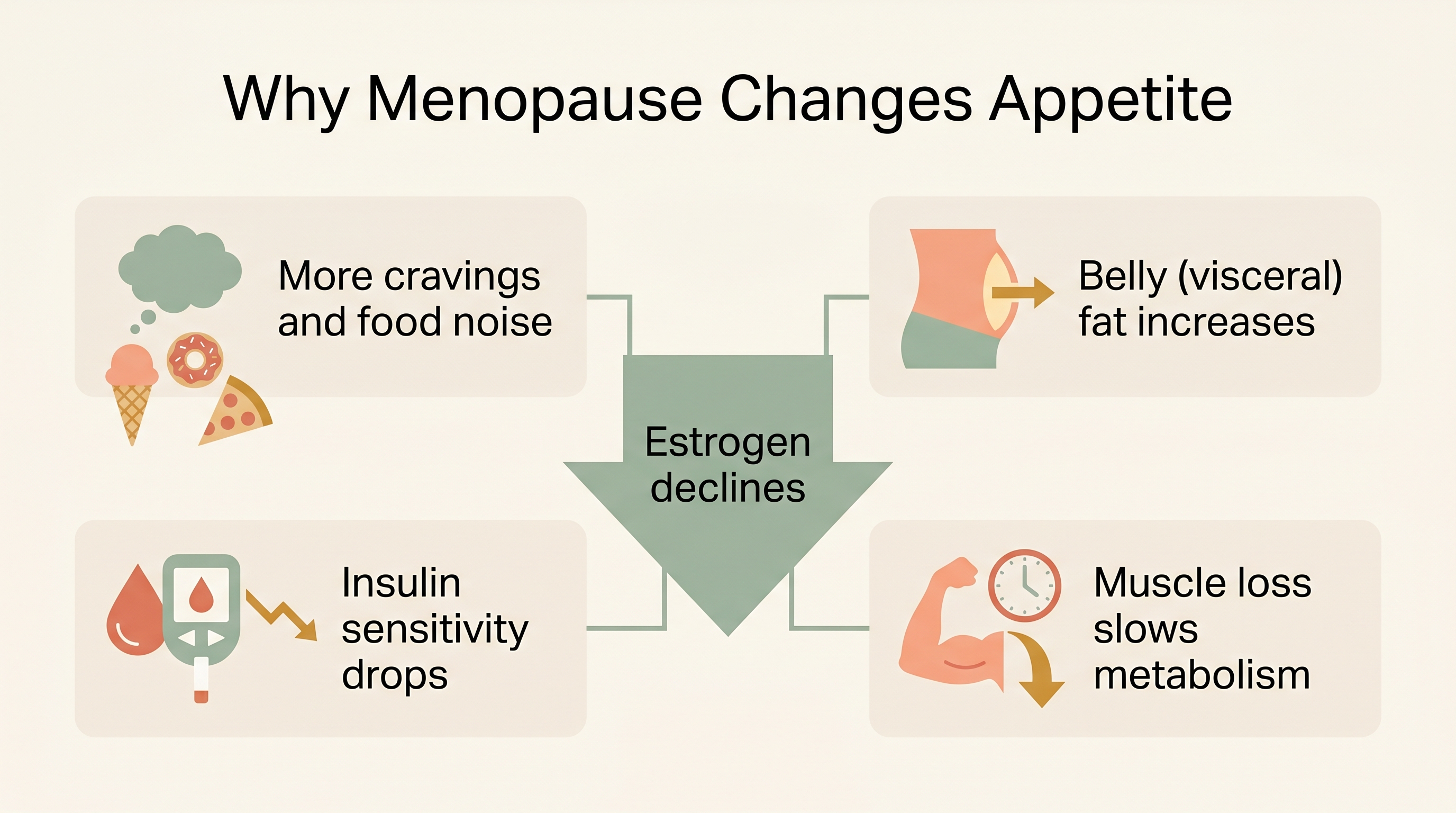
The headline driver is estrogen. As it falls through perimenopause and into menopause, your body's whole metabolic setup shifts (Mauvais-Jarvis et al., 2013).
Estrogen helps decide where you store fat. When it drops, fat moves from hips and thighs toward your belly, including the deeper, more harmful visceral fat around your organs (Lovejoy et al., 2008).
It's not just storage. Studies tracking women through the transition show energy expenditure drops and visceral fat climbs, even without eating more (Lovejoy et al., 2008). The math you used to run on quietly changed.
And it stacks. Slower metabolism, muscle loss, disrupted sleep, and stress-driven cortisol all pile on at the same life stage (Greendale et al., 2019).
Same habits, different hormones. The weight gain is biology rewriting the rules, not a lack of discipline.
Why do cravings get worse during menopause?
Estrogen isn't only a reproductive hormone. It works in the appetite centers of your brain, helping regulate how much you eat and how much energy you burn (Mauvais-Jarvis et al., 2013).
When estrogen drops, that brake loosens. Appetite signals get noisier, and many women notice cravings, especially for sugar and carbs, ramp up (Zhu et al., 2023).
There's a blood sugar angle too. Lower estrogen is tied to falling insulin sensitivity (estrogen deficiency and obesity review, 2014). When your cells handle glucose less smoothly, you get more of the spike-and-crash cycle, and a crash feels exactly like a craving.
Layer on worse sleep and higher cortisol, and you've got a setup where the urge to eat is stronger and your resistance is weaker. This often shows up worst at night. We cover that pattern in how to stop night eating.
Is it harder to lose weight after menopause?
Honestly, yes, it's usually harder. But "harder" isn't "impossible," and knowing why helps you aim at the right levers.
Three things work against you:
Less muscle. Muscle is metabolically active tissue. As it declines with age and lower estrogen, your resting burn drops, so the same diet now leaves a surplus.
More visceral fat. Belly fat is more metabolically stubborn and more inflammatory than hip-and-thigh fat (Greendale et al., 2019).
Noisier appetite. You're fighting stronger hunger signals with a body that burns a little less.
The good news: each of these has a direct counter-move. Muscle responds to strength training. Visceral fat responds to steadier blood sugar and protein. Appetite responds to fiber and GLP-1 support. You're not stuck, you just need a different plan than the one that worked at 30.
How do you manage menopause weight and cravings naturally?
Here's the stack that actually fits the biology above.
Protein first, every meal. Aim for 25 to 30 grams per meal. It protects muscle and raises the fullness hormones PYY and GLP-1, which cut later cravings (Smith et al., 2024).
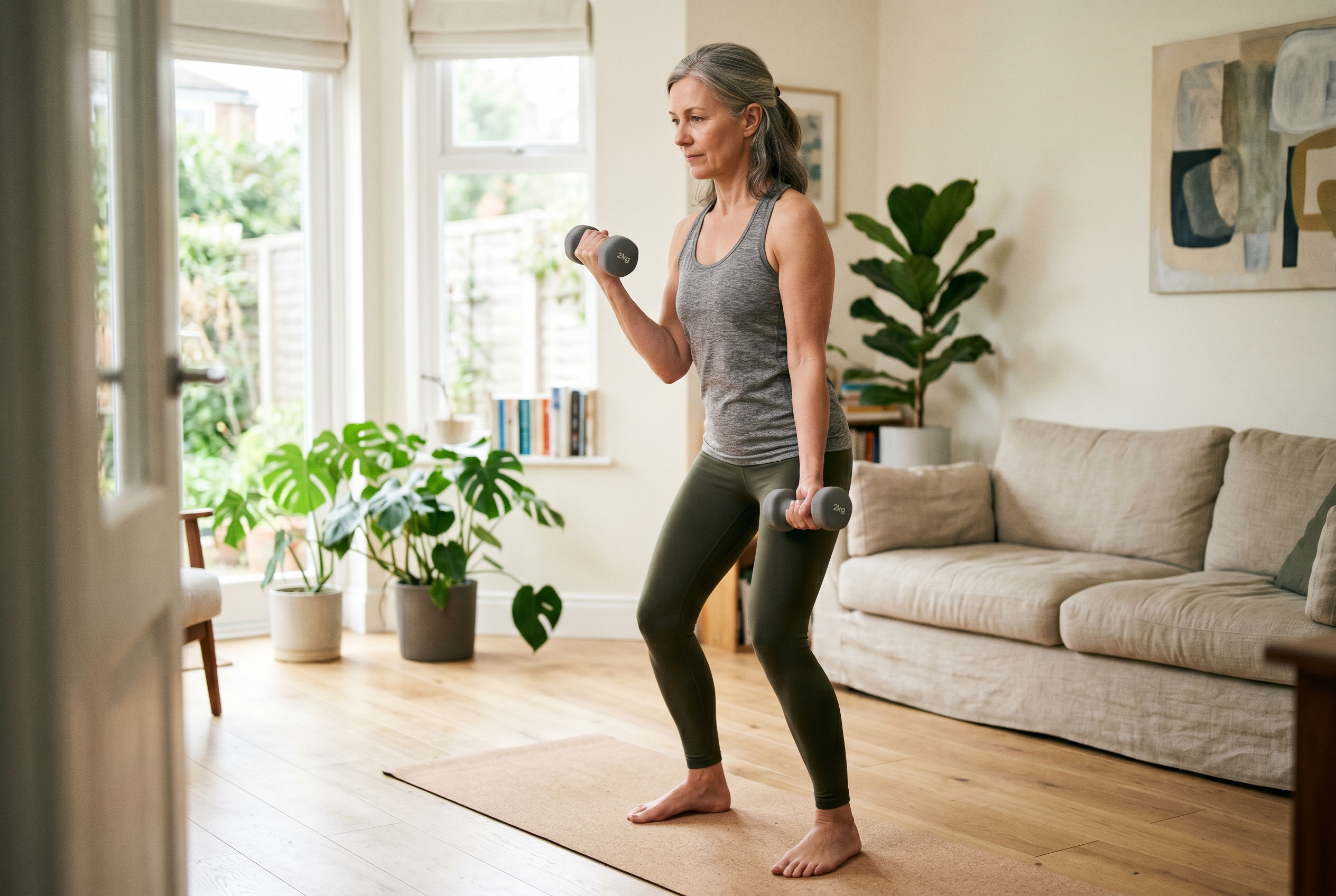
Lift heavy-ish, twice a week. Strength training is the single best lever for keeping muscle and metabolism. Cardio is great, but it won't replace what muscle does.
Fiber, built up slowly. Fiber steadies blood sugar and feeds the gut bacteria behind your natural GLP-1. Add it gradually with water to avoid bloating.
Guard your sleep. Poor sleep raises hunger hormones the next day. Menopause makes sleep harder, so protecting it pays double.
Steady your blood sugar. Pair carbs with protein and fiber, skip the naked-sugar snacks, and you flatten the crashes that drive cravings.
Here's how the menopause changes map to the fix.
| What changes in menopause | The counter-move |
|---|---|
| Muscle loss slows metabolism | Strength training + 25-30g protein per meal |
| More belly (visceral) fat | Steady blood sugar, protein, regular movement |
| Lower insulin sensitivity | Fiber, pair carbs with protein, less added sugar |
| Louder cravings, weaker appetite brake | Fiber + natural GLP-1 support |
| Disrupted sleep | Consistent bedtime, dim evening light |
If you want the cravings-specific playbook for this age group, see weight loss after 35 and our best appetite suppressant for women guide.
Where does GLP-1 fit in for menopause?
GLP-1 is the hormone that quiets appetite, slows stomach emptying, and steadies blood sugar. It's the same target the famous weight-loss drugs hit.
Here's a detail worth knowing: estrogen and GLP-1 work on overlapping pathways. Preclinical research in 2025 found estradiol actually amplifies GLP-1's effect on food intake in females. So as estrogen falls, you may lose some of that natural amplification, which is one more reason appetite gets louder.
That's also why supporting your own GLP-1 is a sensible lever in menopause. You can do it naturally by feeding the gut bacteria that drive GLP-1 release, which we break down in gut health and GLP-1 and how to increase GLP-1 naturally.
As estrogen falls, your natural appetite brake gets weaker. Supporting GLP-1 helps put some of it back.
How can Ozzi help during menopause?
A lot of women in this exact spot come to Ozzi. Some can't or won't take a GLP-1 drug. One told us she "can't take tirzepatide due to chronic constipation" but still wanted to lose menopause weight and tame the nighttime sugar sprees.
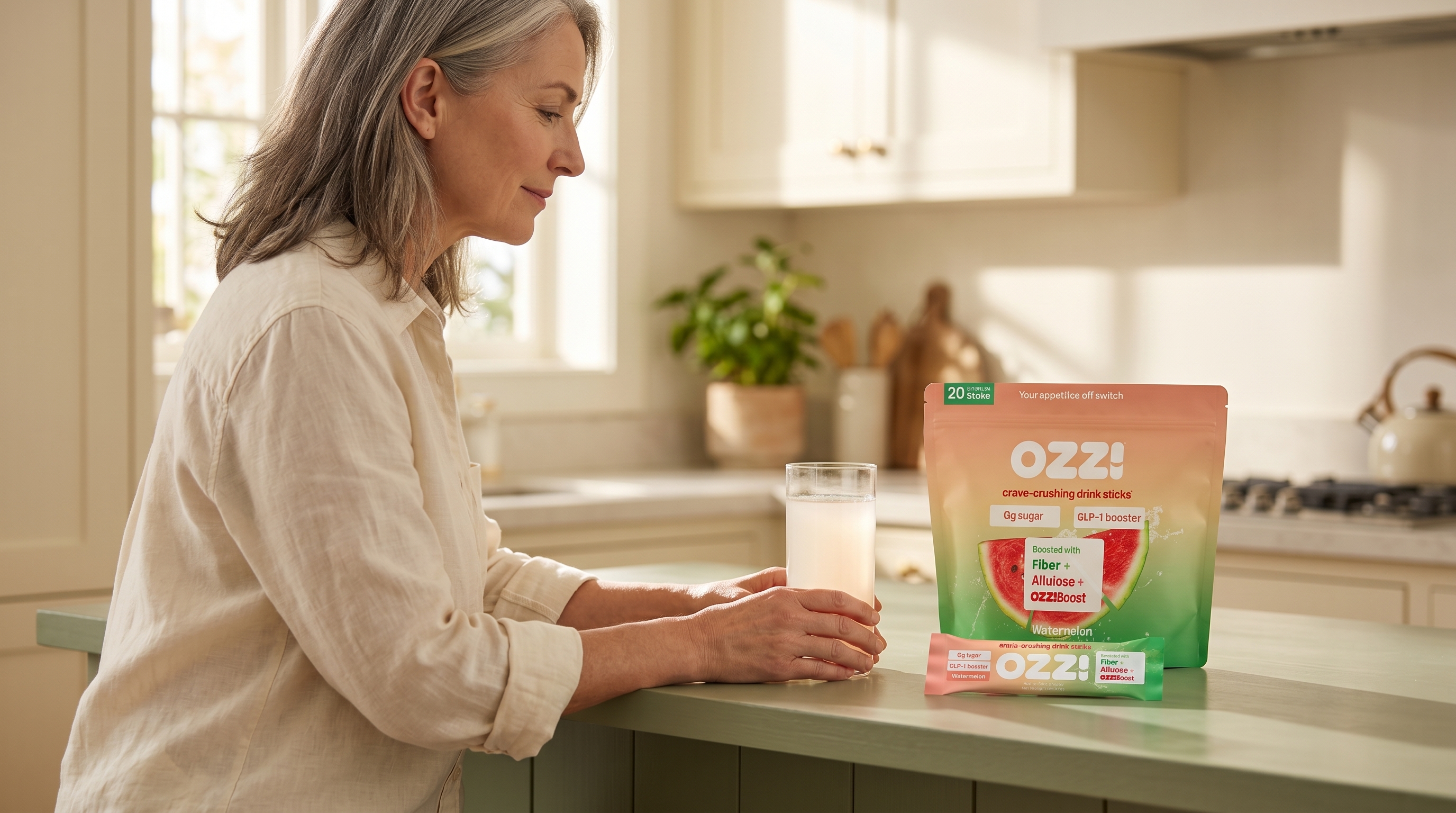
Ozzi's Crave Crusher is a caffeine-free drink stick built around the appetite biology above.
Glucomannan fiber expands in your stomach for real fullness. L-Lysine Butyrate and chicory inulin support your body's own GLP-1. Allulose handles the sweet craving without spiking blood sugar, and chromium supports insulin sensitivity. Our sugar cravings guide covers that side in depth.
It pairs with the protein-and-strength approach rather than replacing it. Think of it as the tool that quiets the cravings while you do the muscle-building work. No stimulants, so you can drink it in the evening when menopause cravings hit hardest.
Quiet the menopause cravings
Ozzi Crave Crusher supports your natural GLP-1 and steadies cravings, caffeine-free. Use it for 10 days straight. If you don't feel a difference, we'll refund your first bag.
Frequently asked questions
Why am I gaining weight in menopause without eating more?
Falling estrogen lowers energy expenditure and shifts fat to your belly, while muscle loss slows metabolism. The same intake now lands as a surplus (Lovejoy et al., 2008).
Why do I crave sugar so much during menopause?
Lower estrogen loosens appetite control and reduces insulin sensitivity, so blood sugar swings more and crashes feel like cravings (Zhu et al., 2023).
What's the best diet for menopause weight gain?
High protein (25-30g per meal), plenty of fiber, steady blood sugar, and fewer ultra-processed foods. There's no single magic diet, but protein and fiber do the heavy lifting.
Does strength training really matter more than cardio?
For preserving muscle and metabolism, yes. Cardio supports heart health, but strength training directly counters the muscle loss driving the slowdown.
Can I boost GLP-1 naturally instead of taking a drug?
You can support it with fiber, protein, and gut-friendly ingredients. It's gentler than medication, not a replacement for it. See our natural GLP-1 guide.
Is menopause belly fat dangerous?
Visceral belly fat is more metabolically active and inflammatory than other fat, so reducing it matters for health, not just looks (Greendale et al., 2019).
Will Ozzi interfere with hormone therapy?
Ozzi is a food-based drink with no hormones or stimulants, but always check with your doctor about your specific regimen.
Why are my cravings worst at night now?
Evening hunger hormones plus menopause-related sleep disruption stack up. Our night eating guide has the full plan.
Does Ozzi have caffeine?
No. It's caffeine-free and stimulant-free, so you can use it in the evening without hurting sleep.
This article is for educational purposes and is not medical advice. Statements about ingredients describe general structure and function and have not been evaluated to diagnose, treat, cure, or prevent any disease. Talk to your doctor about menopause symptoms and any treatment, including hormone therapy.
References
- Lovejoy JC, et al. Increased visceral fat and decreased energy expenditure during the menopausal transition. Int J Obes. 2008. Link
- Mauvais-Jarvis F, Clegg DJ, Hevener AL. The role of estrogens in control of energy balance and glucose homeostasis. Endocr Rev. 2013. Link
- Greendale GA, et al. Adverse changes in body composition during the menopausal transition. 2019. Link
- Zhu J, et al. Role of estrogen in regulation of central and peripheral energy homeostasis: a menopausal perspective. 2023. Link
- Estrogen deficiency and the origin of obesity during menopause. 2014. Link
- Abdominal subcutaneous adipose tissue phenotype and visceral fat after menopause. Sci Rep. 2021. Link
- Smith et al. Effect of dietary protein at breakfast on satiety, PYY, GLP-1, and subsequent food intake. 2024. Link
