

Gut Health and GLP-1: How Your Microbiome Controls Appetite (2026)
Key takeaways
- Gut bacteria control much of your GLP-1 production.
- Butyrate from fiber fermentation tells L-cells to release GLP-1.
- Dysbiosis (an off-balance gut) weakens your appetite signals.
- Prebiotic fiber feeds the bacteria that make butyrate.
- Ozzi delivers direct butyrate to support this loop.
Gut health and GLP-1 are tightly linked. Beneficial gut bacteria ferment fiber into short-chain fatty acids like butyrate, which bind receptors on intestinal L-cells and trigger GLP-1 release. A balanced, fiber-fed microbiome produces more of these signals, supporting steadier appetite and blood sugar.
Most people think GLP-1 is something that only comes in a pen.
It isn't. Your body makes GLP-1 every day, in your gut, and a big part of how much you make comes down to which bacteria are living down there and what you feed them.
That connection is one of the most interesting things happening in metabolism research right now. The gut microbiome and GLP-1 talk to each other constantly, in both directions (Kamath et al., 2026). Get the gut side working, and your own appetite brake gets stronger.
This is the long version of why Ozzi was built around gut ingredients instead of stimulants. Let's walk through it.
What does gut health have to do with GLP-1?
GLP-1 (glucagon-like peptide-1) gets released by special cells in your intestinal lining called L-cells. When GLP-1 goes up, hunger goes down, your stomach empties slower, and your blood sugar response after a meal flattens out.
Here's the part that surprises people. Those L-cells don't fire on their own. They wait for signals. And some of the strongest signals come straight from your gut bacteria.
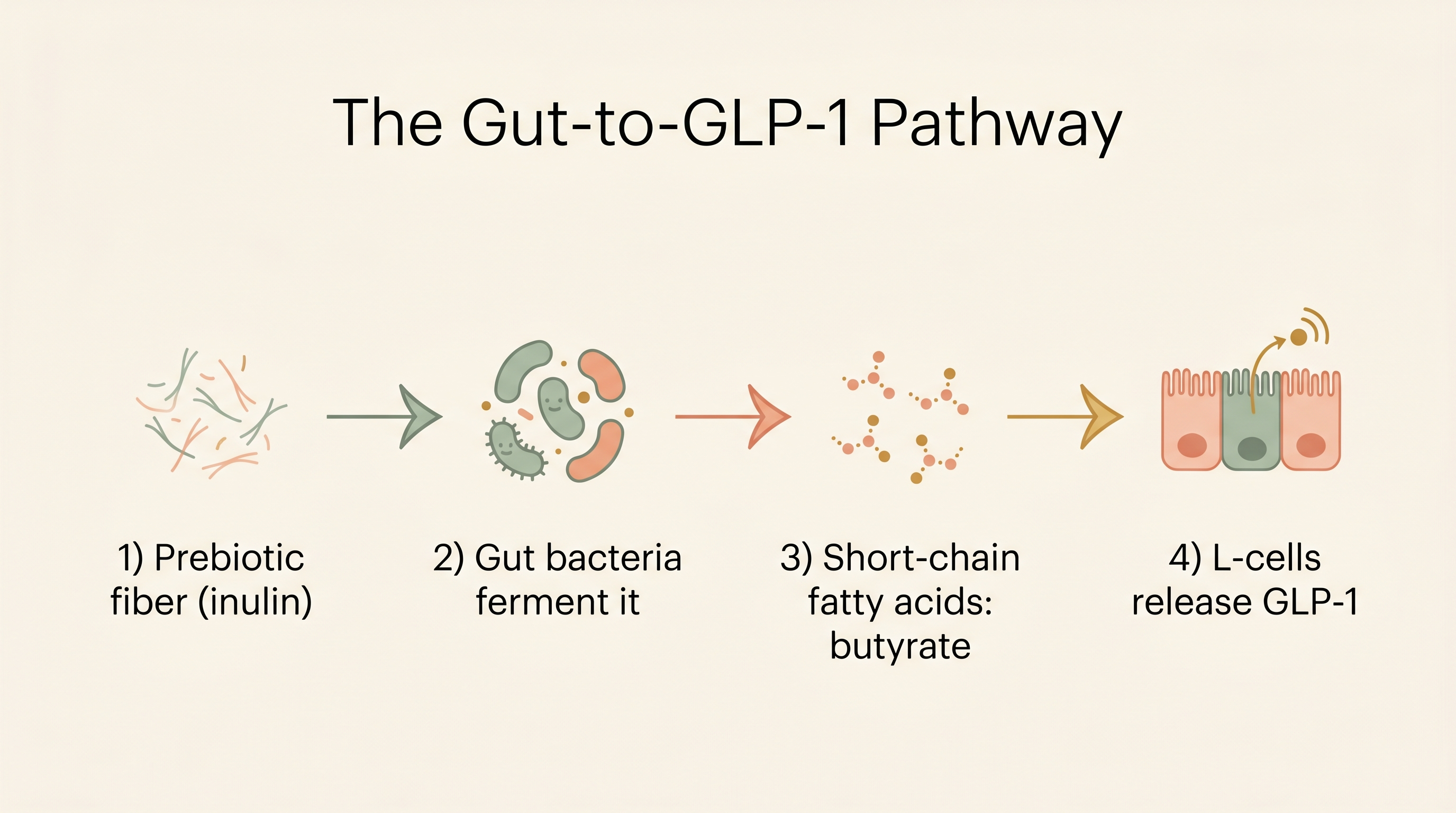
When you eat fiber your body can't digest, your gut bacteria can. They ferment it and produce short-chain fatty acids, mainly acetate, propionate, and butyrate. Those short-chain fatty acids are the messengers. They bind to receptors on the L-cells and tell them to release GLP-1 (Canfora et al., 2015).
So the chain looks like this: fiber goes in, bacteria turn it into butyrate, butyrate tells your L-cells to make GLP-1, GLP-1 quiets your appetite. A healthy gut runs that whole loop better.
Your gut bacteria aren't just along for the ride. They're helping run your hunger hormones.
How do gut bacteria actually trigger GLP-1 release?
The mechanism is more specific than "fiber is good for you." It's worth understanding because it tells you exactly what to feed.
Butyrate and propionate activate free fatty acid receptors (FFAR2 and FFAR3) sitting on the surface of your L-cells (Canfora et al., 2015). Think of these receptors as doorbells. When a short-chain fatty acid presses the bell, the cell gets a message: release GLP-1.
Inside the cell, butyrate also nudges up cyclic AMP, which switches on protein kinase A, which helps the GLP-1 vesicles fuse with the cell membrane and dump their contents (Kamath et al., 2026). That's the molecular machinery of an appetite signal firing.
For a deeper dive into this one fatty acid, we wrote a whole piece on butyrate and GLP-1. The short version: butyrate is one of the most direct natural levers you have on GLP-1.
It's not a perfectly clean story, and I'd rather be honest about that. Some receptors in the gut, like the bile-acid-sensing FXR, can actually dampen GLP-1 in response to short-chain fatty acids in certain conditions (Trabelsi et al., 2015). Biology argues with itself. The overall weight of evidence still points the same direction: more short-chain fatty acid production from a fiber-fed gut tends to mean more GLP-1 and PYY, the two hormones that turn down appetite (gut microbiota obesity review, 2025).
Why does an unhealthy gut make cravings worse?
When your gut microbiome is out of balance, researchers call it dysbiosis. It shows up again and again in obesity and type 2 diabetes (Shen et al., 2025).
Dysbiosis hits your appetite from two sides.
First, fewer of the good fiber-fermenting bacteria means less butyrate, which means a weaker GLP-1 signal. Your natural appetite brake gets softer right when you need it.
Second, an off-balance gut tends to leak. The lining between your gut and bloodstream loosens, and bacterial fragments called LPS slip through. That triggers low-grade inflammation throughout the body, sometimes called metabolic endotoxemia, and that inflammation is linked to insulin resistance and harder-to-control hunger (Shen et al., 2025).
So a struggling gut is a double whammy: less of the hormone that calms you down, plus more of the inflammation that revs you up. If you've ever felt like your hunger had a mind of its own, this is part of why. It's not a character flaw. It's biology.
This is the same hormone-not-willpower idea we get into in how to stop food noise naturally.

Which foods and fibers feed a GLP-1-friendly gut?
If butyrate is the goal, prebiotic fiber is the fuel. Prebiotics are the fibers your bacteria love to ferment.
The big four worth knowing:
Prebiotic fiber (found in onions, garlic, asparagus). It selectively feeds Bifidobacterium, a major short-chain fatty acid producer. A 2024 meta-analysis of randomized trials found a prebiotic fiber supported modest weight management outcomes (Yan et al., 2024).
Resistant starch (cooked-and-cooled potatoes, rice, green bananas, legumes). One of the strongest butyrate boosters in the diet.
Beta-glucan (oats, barley). A viscous fiber that slows digestion and feeds fermentation.
Glucomannan (konjac root). Expands in the stomach for physical fullness and feeds the gut. We cover it in the konjac root for weight loss guide.
Here's a quick map of fiber types and what they do.
| Fiber / prebiotic | Main food sources | What it does for the gut-GLP-1 loop |
|---|---|---|
| Prebiotic fiber | Onion, garlic, asparagus | Feeds Bifidobacterium, raises butyrate production |
| Resistant starch | Cooled potatoes/rice, green bananas, beans | One of the strongest direct butyrate boosters |
| Beta-glucan | Oats, barley | Slows digestion, fuels fermentation |
| Glucomannan | Konjac root | Physical fullness plus fermentable fuel |
| Direct butyrate | Supplements (e.g. L-Lysine Butyrate) | Skips fermentation, delivers the signal molecule itself |
One honest caveat. Not every prebiotic trial shows a big appetite change. A 2021 randomized controlled trial of prebiotics in people with type 2 diabetes found higher postprandial GLP-1 but no clear drop in hunger ratings (Birkeland et al., 2021). Individual results vary a lot, partly because everyone's starting microbiome is different. Fiber is a foundation, not a magic switch.
How does the gut microbiome change how GLP-1 drugs work?
This part is newer and pretty wild. The relationship runs both ways.
GLP-1 drugs like semaglutide don't just act on your brain and pancreas. They also reshape your gut bacteria, shifting the community toward more short-chain fatty acid producers (systematic review, 2025). Some researchers think that microbiome shift is part of why the drugs do what they do.
And it works in reverse too. Your starting microbiome may help predict how well you respond to a GLP-1 drug in the first place (Kamath et al., 2026). Same dose, different gut, different result.
The drugs and the gut are having a conversation. The healthier your gut, the better both sides of it go.
The takeaway for natural approaches is simple. Whether you're on a GLP-1 medication, coming off one, or trying to avoid them entirely, tending your gut is working on the same machinery. If you want the natural side, start with how to increase GLP-1 naturally.
Prebiotics, probiotics, postbiotics: which one matters for GLP-1?
The "biotics" words get thrown around like they're interchangeable. They're not, and the difference matters for appetite.
Probiotics are the live bacteria themselves. Useful, but they're guests, not residents. Most don't permanently colonize, and effects are strain-specific.
Prebiotics are the fiber that feeds the bacteria you already have. This is usually the more reliable lever, because you're growing your own short-chain-fatty-acid factory instead of importing one.
Postbiotics are the end products, the short-chain fatty acids like butyrate themselves. Supplementing butyrate directly is a postbiotic approach: you skip the fermentation step and deliver the finished signal.
| Type | What it is | Role in the GLP-1 loop |
|---|---|---|
| Probiotic | Live bacteria | May add SCFA producers; strain-specific, often temporary |
| Prebiotic | Fermentable fiber | Feeds your own bacteria to make more butyrate |
| Postbiotic | SCFAs like butyrate | Delivers the L-cell signal directly |
For appetite, the smart move is prebiotic plus postbiotic together: feed the factory and deliver the finished product.
How do you know if your gut is out of balance?
There's no perfect at-home test, and I'd be suspicious of anyone who promises one. But there are patterns worth noticing.
Common signs of an off-balance gut include frequent bloating or gas, irregular digestion, feeling hungry again soon after eating, intense sugar cravings, and that low-grade "always thinking about food" hum. The food noise.
None of those alone proves dysbiosis. Together, especially with a low-fiber diet, a recent course of antibiotics, high stress, or poor sleep, they paint a picture. The good news is the gut is responsive. It changes based on what you feed it, sometimes within days (Shen et al., 2025).
A quick gut-check on your own habits: How many different plants did you eat this week? Researchers who study the microbiome often point to plant diversity, not just total fiber grams, as a marker of a resilient gut. More variety means more kinds of bacteria, which means a wider range of short-chain fatty acids.
A resilient gut isn't built on one superfood. It's built on variety, fiber, and consistency.
What's a simple daily routine for a GLP-1-friendly gut?
You don't need a 30-step protocol. A few repeatable habits do most of the work.
Eat 30+ plants a week. Vegetables, fruit, legumes, nuts, seeds, whole grains, herbs. Each one feeds a slightly different set of bacteria. Variety beats perfection.
Get a real fiber target. Most people eat 15 grams a day. Aim closer to 25 to 35. Add it slowly so your gut adapts without the gas.
Include a fermented food. Yogurt, kefir, kimchi, sauerkraut. These add live cultures alongside the fiber that feeds them.
Protect your sleep and manage stress. Both shape the microbiome more than people expect, and both feed back into appetite (Shen et al., 2025).
Be consistent. The gut rewards routine. A scattered week of great eating does less than steady, ordinary fiber every day.
This is also where a daily drink earns its place. It's one repeatable habit that delivers fiber and direct butyrate in the same glass, no planning required.
How is Ozzi built around the gut-GLP-1 connection?
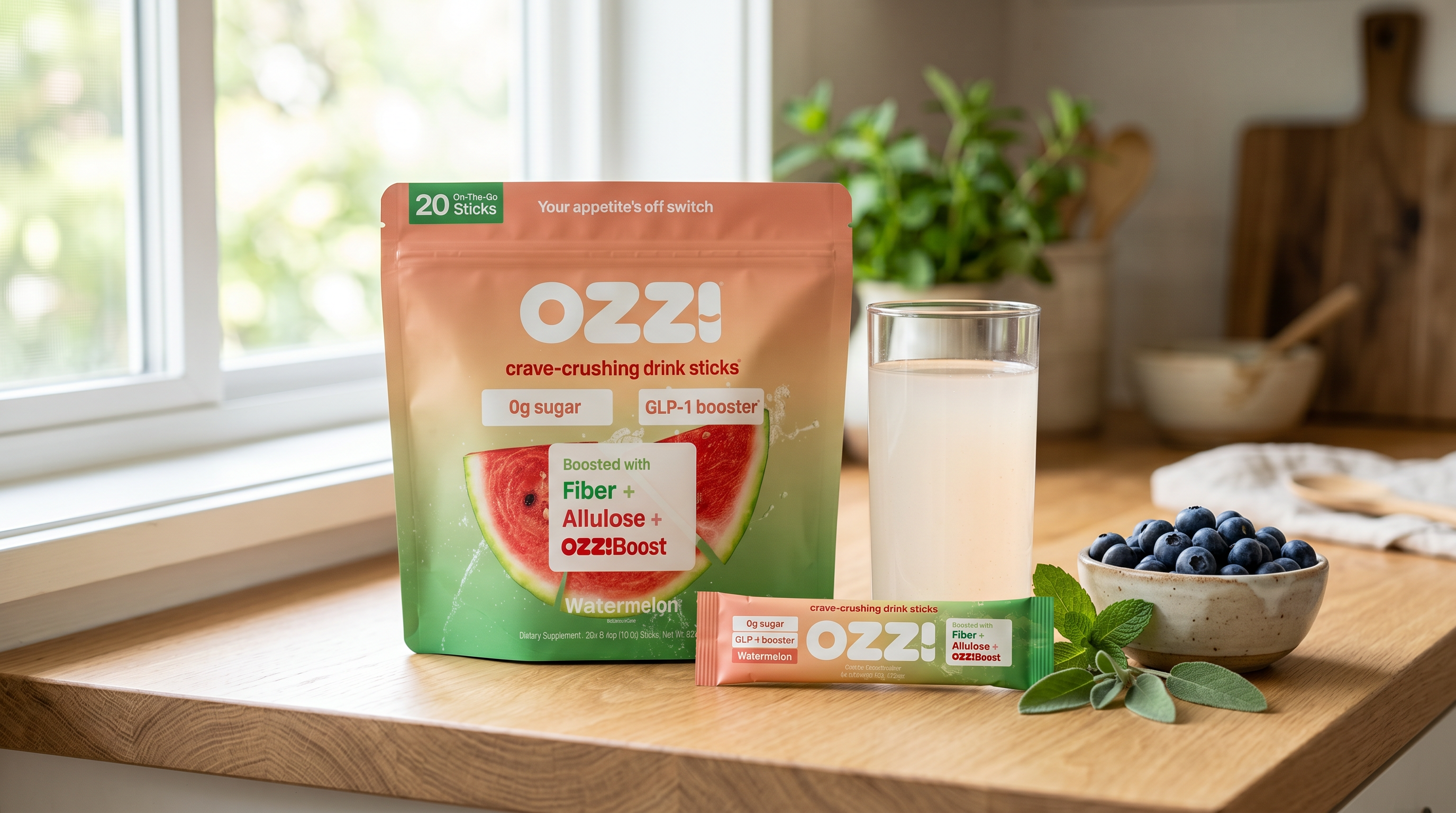
This is exactly the loop we designed Ozzi's Crave Crusher around. Not one ingredient hoping to do everything, but a few that work on the same pathway from different angles.
L-Lysine Butyrate delivers butyrate directly. Instead of waiting on your bacteria to make it, you get the signaling molecule itself, the one that presses the doorbell on your L-cells.
Glucomannan (konjac) expands in the stomach for physical fullness and adds fermentable fiber. Our full allulose supplement guide covers the sweet side of the formula.
Add allulose for sweetness without the blood sugar spike, plus chromium and African mango, and you've got a drink built to support your gut and your appetite at the same time. No caffeine, no prescription. You can have it at 9pm.
Want the broader rundown of evidence-backed options? See our natural GLP-1 booster 2026 guide and the foundational what is GLP-1 explainer.
Feed the loop that quiets your hunger
Ozzi Crave Crusher delivers direct butyrate to support your gut and your own GLP-1. 14-Day Ozzi Challenge: Take it for 14 straight days. If your cravings and food noise aren't quieter, we'll refund your first bag.
This is the pathway our natural GLP-1 support drink is built around, butyrate and fiber included.
Frequently asked questions
Can improving gut health really raise GLP-1?
Improving gut health can indirectly support GLP-1. Feeding short-chain-fatty-acid-producing bacteria with fiber increases butyrate and propionate, which stimulate GLP-1 release from L-cells (Canfora et al., 2015). It's a support effect, not a drug-level surge.
How long does it take to change your gut microbiome?
Diet shifts can move the microbiome within days, but a stable change usually takes a few weeks of consistent fiber. Appetite effects tend to build gradually, not overnight.
What is butyrate and why does it matter?
Butyrate is a short-chain fatty acid your gut bacteria make from fiber. It fuels your colon cells, supports the gut barrier, and signals GLP-1 release. More detail in our butyrate and GLP-1 guide.
Is it better to eat fiber or take a butyrate supplement?
Eating fiber and taking a butyrate supplement both have a place. Fiber feeds long-term butyrate production; a direct butyrate source delivers the signal molecule now. Ozzi uses both together.
Do probiotics raise GLP-1?
Some strains that produce short-chain fatty acids may help, but the evidence is mixed and strain-specific. Prebiotic fiber to feed your existing bacteria is the more reliable lever.
Will prebiotic fiber cause bloating?
Prebiotic fiber can cause bloating at first, because fermentation makes gas. Start with a small dose and build up. The bloating usually settles as your gut adapts.
Does a healthier gut help with blood sugar too?
A healthier gut can help with blood sugar. Short-chain fatty acids and GLP-1 both support steadier post-meal glucose, and a stronger gut barrier lowers the inflammation tied to insulin resistance (Shen et al., 2025).
I'm coming off a GLP-1 drug. Does gut health matter for me?
Gut health matters when you're coming off a GLP-1 drug. Supporting your gut works on the same natural GLP-1 machinery, which is exactly what you want as medication levels fade. See our natural GLP-1 playbook.
Does Ozzi contain caffeine or stimulants?
Ozzi is caffeine-free and stimulant-free, so you can drink it in the evening when cravings usually hit hardest.
This article is for educational purposes and is not medical advice. Statements about ingredients describe general structure and function and have not been evaluated to diagnose, treat, cure, or prevent any disease. Talk to your doctor before changing your routine, especially if you take medication.
References
- Kamath S, et al. GLP-1 agonists and the gut microbiome: a bidirectional relationship. Br J Clin Pharmacol. 2026. Link
- Canfora EE, et al. Short-chain fatty acids in control of body weight and insulin sensitivity. 2015. Link
- Shen X, et al. Gut Microbiota Dysbiosis: Pathogenesis, Diseases, Prevention, and Therapy. MedComm. 2025. Link
- Gut microbiota's role in obesity: key metabolites, microbial species, and therapeutic insights. 2025. Link
- Yan S, et al. Chicory inulin-type fructans on weight management outcomes: systematic review and meta-analysis of RCTs. Am J Clin Nutr. 2024. Link
- Birkeland E, et al. Effects of prebiotics on postprandial GLP-1, GLP-2 and glucose regulation in type 2 diabetes: RCT. Diabet Med. 2021. Link
- Trabelsi MS, et al. The nuclear receptor FXR inhibits GLP-1 secretion in response to microbiota-derived short-chain fatty acids. Sci Rep. 2019. Link
- Effects of GLP-1 Analogues and Agonists on the Gut Microbiota: A Systematic Review. 2025. Link
- Leonurine ameliorates type 2 diabetes through gut microbiota remodeling, enhanced butyrate production, and restored GLP-1 secretion. 2025. Link
