
Fuel for gut-lining cells.
Your gut lining is made of living cells that need energy. Research in isolated human colon cells identified butyrate as a major fuel source.
L-LYSINE BUTYRATE · DIETARY SUPPLEMENT
Daily support for your gut lining.†
Butyrate helps fuel the cells lining your colon. Ozzi brings you BIOMEnd® L-lysine butyrate for daily gut and digestive support.†
We chose BIOMEnd for its L-lysine form and published human absorption research. It pairs butyrate with an amino acid instead of sodium. The study found a higher mean peak blood butyrate level than the tested tributyrin product. See the results and study details.
Compare butyrate formsAs a dietary supplement, take 4 capsules once daily with water.
112 capsules ÷ 4 per day = 28 daily servings.
Active ingredient: L-Lysine Butyrate (as BIOMEnd®), 1,000 mg per serving.
Other ingredients: Vegetable Capsule (Hypromellose), Silicon Dioxide, Dicalcium Phosphate, Microcrystalline Cellulose.
Supplement FactsWHY TAKE BUTYRATE?
Butyrate is a short-chain fatty acid made when gut bacteria ferment fiber. The cells lining your colon use it for energy.
That lining is an important part of your gut barrier. Butyrate is involved in keeping it functioning, which is why it matters for gut health.
Ozzi supplies butyrate directly as BIOMEnd® L-lysine butyrate, giving you a daily way to support intestinal health.†
Explore butyrate benefitsButyrate · four-carbon chainSimplified structure. Hydrogens omitted.
BUTYRATE BENEFITS
Butyrate fuels your colon cells and helps support your gut barrier. Researchers also study how it communicates with immune cells and affects digestive symptoms.
Your gut lining is made of living cells that need energy. Research in isolated human colon cells identified butyrate as a major fuel source.
Connections between intestinal cells help control what passes through the gut lining. Laboratory research shows how butyrate supports these connections, called tight junctions.
In mouse and cell studies, butyrate supported the development of regulatory T cells, which help keep immune responses in balance.
See the research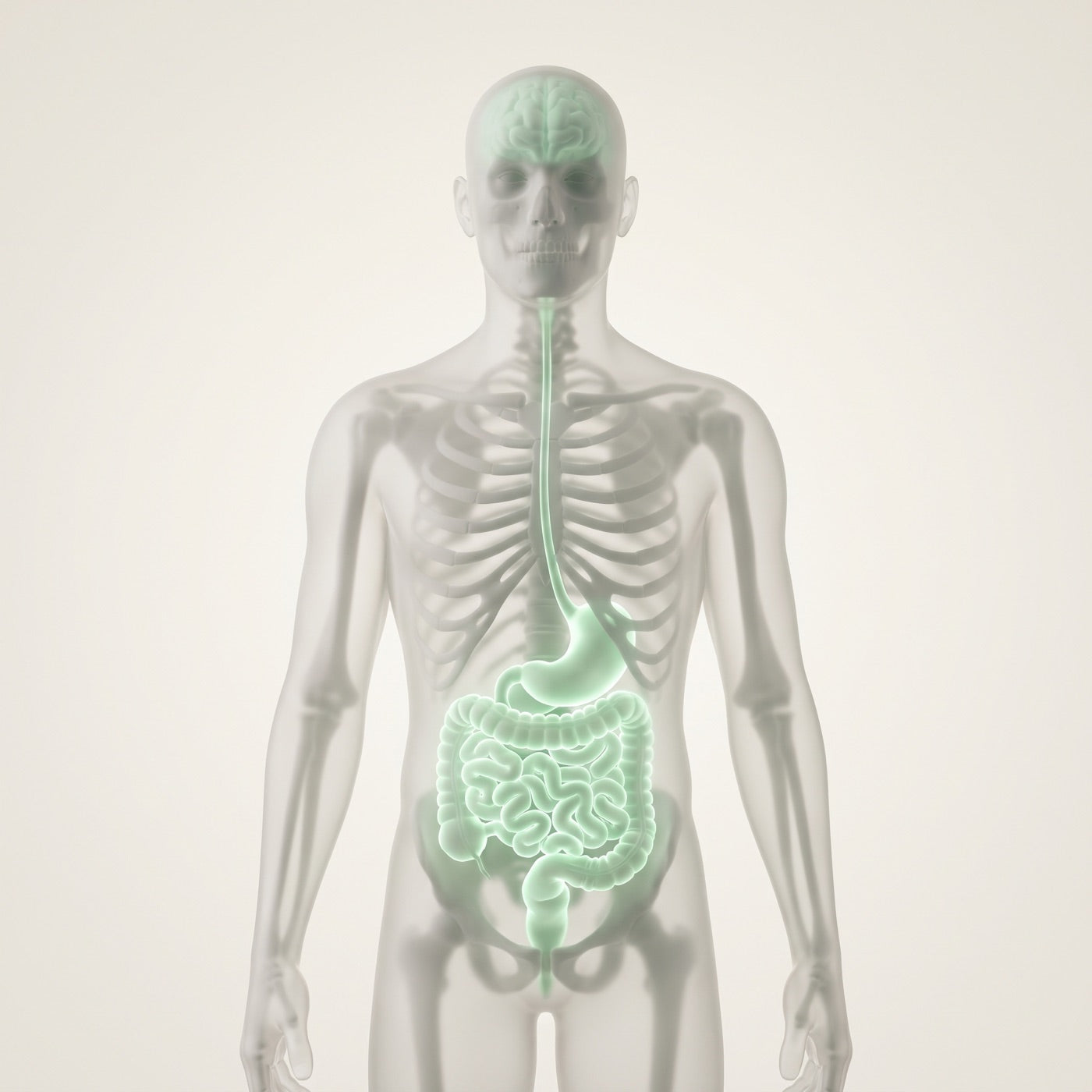 Gut → fullness signals → brain. Conceptual illustration.
Butyrate research spans human tissue, laboratory models and clinical studies. Here is what each line of evidence tells us.
Gut-lining fuel · Human colon cells. Roediger’s research showed that isolated human colon cells use butyrate for energy. Read the study.
Gut barrier · Laboratory study. Peng and colleagues found that butyrate helped intestinal cells assemble tight junctions, the connections that help maintain the barrier. Read the study.
Immune signaling · Mouse and cell study. Furusawa and colleagues found that butyrate supported regulatory T-cell development, a mechanism involved in keeping gut immune responses in balance. Read the study.
Digestive symptoms · Human trial. In a randomized study of 66 people with IBS, microencapsulated sodium butyrate added to existing treatment reduced how often certain symptoms occurred. Symptom severity did not significantly improve. Read the study.
These findings explain why butyrate is studied for gut health. The form, dose, delivery and people studied matter when interpreting results. BIOMEnd’s human study, below, specifically measured absorption; these broader studies did not test Ozzi’s finished capsules.
 Gut → fullness signals → brain. Conceptual illustration.
WHY OZZI BIOMEND?
BIOMEnd uses an essential amino acid to carry butyrate. It has no sodium in its chemical structure.
In a human ingredient study, BIOMEnd produced about 5× the mean peak blood butyrate of the tested tributyrin product, reaching its observed peak at 20 minutes. See the comparison and study details below.
BIOMEnd® L-lysine butyrate, taken once daily with water. No powder to measure or drink to mix. Each bottle provides 28 daily servings.
THE BIOMEND DIFFERENCE
In a human absorption study, BIOMEnd delivered a higher peak blood butyrate level and reached that peak sooner than the tested tributyrin product.
BIOMEnd vs. the tested tributyrin product
4.53 vs. 0.91 µg/mL
Versus 51.5 minutes for tributyrin
Over the 3.5-hour study period
Single-dose ingredient study in 10 healthy men, using equal amounts of butyric acid. Results varied widely. Differences from sodium butyrate were not statistically significant. Ozzi's finished capsules and digestive benefits were not tested. See the study details.
Ozzi’s capsule formula contains no added MCT, seed or other oils. Some tributyrin softgels include added oils, a useful difference if you prefer a formula without an oil blend.
BIOMEnd pairs butyrate with L-lysine instead of sodium. The ingredient has no sodium in its chemical structure.
BIOMEnd's supplier describes a milder odor than traditional butyrate ingredients. A slight odor may still be present.
| IN OZZIL-Lysine ButyrateBIOMEnd® | Sodium Butyrate | Tributyrin | |
|---|---|---|---|
| Mean peak blood butyrate | 4.53 µg/mL | 2.51 µg/mL | 0.91 µg/mL |
| Mean time to observed peak | 20 minutes | 22.5 minutes | 51.5 minutes |
| Mean blood exposure over 3.5 hours | 189 µg·min/mL | 144 µg·min/mL | 108 µg·min/mL |
| Sodium in the ingredient | No sodium in its structure | Contains sodium | No sodium in its structure |
| Added oils | None in Ozzi’s listed formula | Varies by product | Some formulas include MCT or seed oils |
| What carries the butyrate? | L-lysine, an amino acid | Sodium, a mineral | Glycerol, a triglyceride backbone |
Designs for Health’s Tri-Butyrin Supreme lists black cumin seed oil and medium-chain triglycerides (MCTs). Ozzi’s supplied label lists neither. Formulas vary, so check the complete ingredient list for the product you are comparing.
Tributyrin itself is a triglyceride: three butyrate groups attached to glycerol. Oils added to a softgel are separate ingredients.
View the manufacturer’s ingredient listStudy values are group means for the tested ingredients, not all products on the market. Blood exposure is the area under the concentration-time curve (AUC), not the percentage of a dose absorbed. Twenty minutes was the first post-dose measurement. Finished formulas and nutrition declarations vary by product.
BIOMEND HUMAN ABSORPTION STUDY
Compared with the tested tributyrin product, BIOMEnd produced about five times the mean peak blood butyrate in a 2025 study. Ten healthy men tried each form, with equal amounts of butyric acid.
Mean blood exposure over 3.5 hours was 75% greater with BIOMEnd than with the tested tributyrin product: (189 ÷ 108 − 1) × 100 = 75%. Its mean observed peak occurred at 20 minutes, compared with 51.5 minutes for tributyrin. The first post-dose sample was taken at 20 minutes.
This is evidence about absorption. The study did not measure digestive symptom relief or weight loss, and differences from sodium butyrate were not statistically significant.
Read the published studyMEAN PEAK BLOOD BUTYRATE
µg/mL · Mean ± standard deviation
Ingredient study in 10 men; results varied widely. Each study dose supplied 786 mg butyric acid, different from Ozzi's 1,000 mg BIOMEnd serving. The trial did not test Ozzi's finished capsules. Peak ratio: 4.53 ÷ 0.91 = 4.98.
SERVING SIZE + INGREDIENTS
Each serving contains 1,000 mg of BIOMEnd® L-lysine butyrate. This is the complete ingredient, including L-lysine. Take once daily with water.
Open the original label**Percent Daily Values (DV) Not Established
OTHER INGREDIENTS: Vegetable Capsule (Hypromellose), Silicon Dioxide, Dicalcium Phosphate, Microcrystalline Cellulose.
SUGGESTED USE: As a dietary supplement, take 4 capsules once daily with water.
ALLERGEN STATEMENT: This product is manufactured in a facility that also processes other products which may contain milk, eggs, fish, shellfish, tree nuts, peanuts, soy, wheat, and sesame.
Customer reviews
0 reviews
No customer reviews yet. Be the first to tell us how it went.
Write a reviewButyrate is a short-chain fatty acid made when gut bacteria ferment fiber. It is an important fuel source for the cells lining your colon. A butyrate supplement supplies a form of this compound directly.
Butyrate is a major fuel for colon cells and plays a role in maintaining the gut barrier. Mouse and cell research also explores its role in immune regulation, while human trials have investigated digestive symptoms with specific formulations.
Ozzi BIOMEnd provides daily gut and digestive support.† Explore the studies to see what researchers tested and found.
Explore the benefitsBIOMEnd combines a sodium-free ingredient structure with human absorption research. In a single-dose study in 10 healthy men, it produced about 5× the mean peak blood butyrate and 75% greater mean blood exposure over 3.5 hours than the tested tributyrin product. The mean observed peak was at 20 minutes versus 51.5 minutes. Differences from sodium butyrate were not statistically significant, and the study did not test Ozzi’s finished capsules. Each serving provides 1,000 mg of BIOMEnd® L-lysine butyrate.
The main difference is what carries the butyrate. Sodium butyrate pairs it with sodium. BIOMEnd pairs it with L-lysine, an essential amino acid. Tributyrin carries three butyrate groups on glycerol, which digestive enzymes can release.
Some tributyrin softgels also contain added oils. Ozzi’s formula has no added oils. Compare the full ingredient list and amount per serving: milligrams of one form are not automatically the same amount of butyric acid as milligrams of another.
See the comparisonThey all provide a source of butyrate, the compound studied for colon-cell energy, gut-barrier function and immune signaling. That broader research helps explain why people take butyrate.
Forms can differ in how much butyrate they supply, where it is released and how it is absorbed. A result from one formulation is not automatically a result for every other one. We show the broader butyrate research alongside BIOMEnd’s own human absorption data.
No. The label lists 1,000 mg of L-Lysine Butyrate (as BIOMEnd®) per serving. This is the complete ingredient, including L-lysine. It is not a declaration of 1,000 mg of pure butyric acid.
Neither. Probiotics supply live microorganisms. Fiber is a material some gut microbes ferment to make compounds such as butyrate. BIOMEnd supplies L-lysine butyrate itself. It does not replace a varied, fiber-containing diet.
Human research has explored butyrate for digestive symptoms. In a randomized study of 66 people with IBS, microencapsulated sodium butyrate alongside existing treatment reduced how often certain symptoms occurred, without a significant improvement in symptom severity.
Those findings are specific to the tested formulation and population; they do not establish bloating or constipation relief from Ozzi BIOMEnd.
Explore the digestive-health researchAs a dietary supplement, take 4 capsules once daily with water. Each bottle contains 112 capsules, giving you 28 servings at the suggested daily amount.
The label directs you to take your daily serving with water. It does not specify taking them with or without food. Ask your healthcare professional if you need advice about timing for your circumstances.
Individual responses can differ. The published comparison reported no adverse events among 10 healthy men during its single-dose study. That small, short study does not establish how often side effects occur with daily use or with Ozzi’s finished capsules.
See the study contextAsk your healthcare professional before use if you take medication, have a medical condition, are pregnant, or are breastfeeding. They can assess whether it fits your circumstances.
Check the complete formulas before combining supplements. Some Ozzi products already contain BIOMEnd, so taking both can increase your total intake. Ask your healthcare professional to review the products and serving amounts together.
No. This product supplies 1,000 mg of BIOMEnd per serving for daily gut support.† Crave Crusher Capsules are a separate product with a different formula. Follow the label for the product you have.
The supporting ingredients are Vegetable Capsule (Hypromellose), Silicon Dioxide, Dicalcium Phosphate and Microcrystalline Cellulose. Hypromellose forms the vegetable capsule shell.
Read the full ingredient listThe label states that this product is manufactured in a facility that also processes products which may contain milk, eggs, fish, shellfish, tree nuts, peanuts, soy, wheat and sesame. If you have a food allergy, review the full label with your healthcare professional before use.
L-lysine butyrate does not contain sodium in its chemical structure. Sodium butyrate does. Tributyrin also has no sodium in its structure, so this difference is specific to sodium-based forms.
BIOMEnd’s supplier describes its L-lysine butyrate ingredient as having a milder odor than traditional butyrate ingredients. A slight odor may still be present.
There is no established timeline for noticeable results with Ozzi BIOMEnd. The human ingredient study measured absorption after one dose, rather than how quickly people felt a digestive benefit. Take the product as directed; ongoing or worsening symptoms deserve medical advice.
GLP-1 is a hormone involved in appetite and blood-sugar regulation. Researchers have studied butyrate in laboratory models and in people, with findings that differ by formulation and study population. Those results do not establish that Ozzi’s BIOMEnd capsules raise GLP-1 or produce weight loss. This supplement is not a GLP-1 medication.
The ingredient absorption study on this page did not test those outcomes.
Human study in type 2 diabetesOZZI BIOMEND BUTYRATE CAPSULES
112 capsules · 28 servings · 1,000 mg BIOMEnd® L-lysine butyrate per serving
†These statements have not been evaluated by the Food and Drug Administration. This product is not intended to diagnose, treat, cure, or prevent any disease.
BIOMEnd® is a registered trademark of Velocity Life Sciences LLC.