

Weight Loss After 35 for Women: The Cravings Playbook (2026)
Women over 35 lose weight more slowly because of hormonal shifts (declining estrogen, rising cortisol), accelerated muscle loss, and stronger nighttime cravings tied to the perimenopause transition. The most effective approach combines resistance training, 0.8 to 1.0 g of protein per pound of goal weight, and craving control around the 7pm-to-10pm window.
Key takeaways
- Estrogen decline starts as early as 35 and accelerates cravings.
- Muscle loss after 35 averages 1% per year without strength training.
- Nighttime cravings are the single biggest weight loss saboteur for this group.
- Protein at 0.8 to 1.0 g per pound of goal weight protects metabolism.
- Natural GLP-1 support tools target the food noise that diets alone can't fix.
Why does weight loss get harder after 35?
Three things change at once. Estrogen starts a slow decline 5 to 10 years before menopause hits. Muscle mass drops about 1% per year unless you actively train. And cravings get louder, especially the late-evening kind. One Ozzi customer put it plainly: "I am entering 40 and for women it's harder to maintain weight due to hormone shifts so hoping this helps."
Estrogen helps regulate insulin sensitivity, fat storage, and appetite. When it drops, the same diet that worked at 28 stops working. The 2025 menopausal weight loss resistance research published in PMC found that women who maintain consistent fitness lifestyles often report that previously effective strategies stop working during this transition.
This isn't a willpower problem. The hardware changed.
What's the deal with nighttime cravings specifically?
Cortisol drops at night for everyone. For women in their late 30s and 40s, that drop combines with shifting estrogen to amplify the urge to eat. Add a stressful day, kids in bed, the first quiet moment, and the kitchen calls.
In Ozzi's customer survey of 956 buyers, 45% of free-text responses mentioned nighttime cravings as the main problem they were trying to solve. The quotes are blunt:
"After dinner snacking sabotaging me."
"Like you, I can be stellar all day long but the monster comes out at night!"
"The ONLY reason I am not losing weight is because of the agitated emotional eating after 7pm."
Notice the pattern. These women aren't struggling with breakfast or lunch. They're losing the day after dinner.
"I can be stellar all day long but the monster comes out at night."
How much weight should you expect to lose, and how fast?
Realistic expectations matter. Women over 35 doing everything right typically lose 0.5 to 1.5 pounds per week. That's slower than what 25-year-olds see on the same calorie deficit, and it's worth setting that bar early.
The flip side: weight that comes off slowly tends to stay off. The "last 15 to 20 lbs" group is huge in our customer base. A representative quote: "My late night cravings are out of control and I've tried just about everything. I'm active but can't shred the remaining 15 lbs."
That story has a few different forks. We covered some of them in Best Appetite Suppressant for Women and How to Increase GLP-1 Naturally.
What's the right diet framework for women over 35?
Skip the protocols built for 25-year-olds. The framework that works at this age has four pillars.
Pillar 1: Protein first at every meal
0.8 to 1.0 grams per pound of goal body weight. If goal is 150 lbs, that's 120 to 150 g daily. Protein keeps you full longer, protects muscle on a deficit, and has the highest thermic effect of any macronutrient.
Hit it by leading meals with protein, not finishing with it. Eggs at breakfast. Greek yogurt at snacks. Chicken or fish at dinner before the carbs hit the plate.
Pillar 2: Fiber for satiety and gut health
Aim for 30 g of fiber daily. Soluble fiber especially (oats, beans, glucomannan) slows digestion and stretches satiety into the late-evening danger zone.
Inulin from chicory root is also a prebiotic. It feeds gut bacteria that produce butyrate, which in turn triggers GLP-1 secretion. We covered the full mechanism in our 2026 supplement guide.
Pillar 3: Strength training 3x a week
Cardio alone won't fix this. Muscle is the metabolism. You need to add it or at minimum hold it.
Three 30-minute strength sessions a week is the floor. Compound lifts (squats, deadlifts, rows, presses). If you're not lifting yet, start with bodyweight progressions and add weight over months.
Pillar 4: Craving control for the 7pm-to-10pm window
This is where most plans fall apart. You can have perfect macros for the day and still eat 1,000 calories at 9pm.
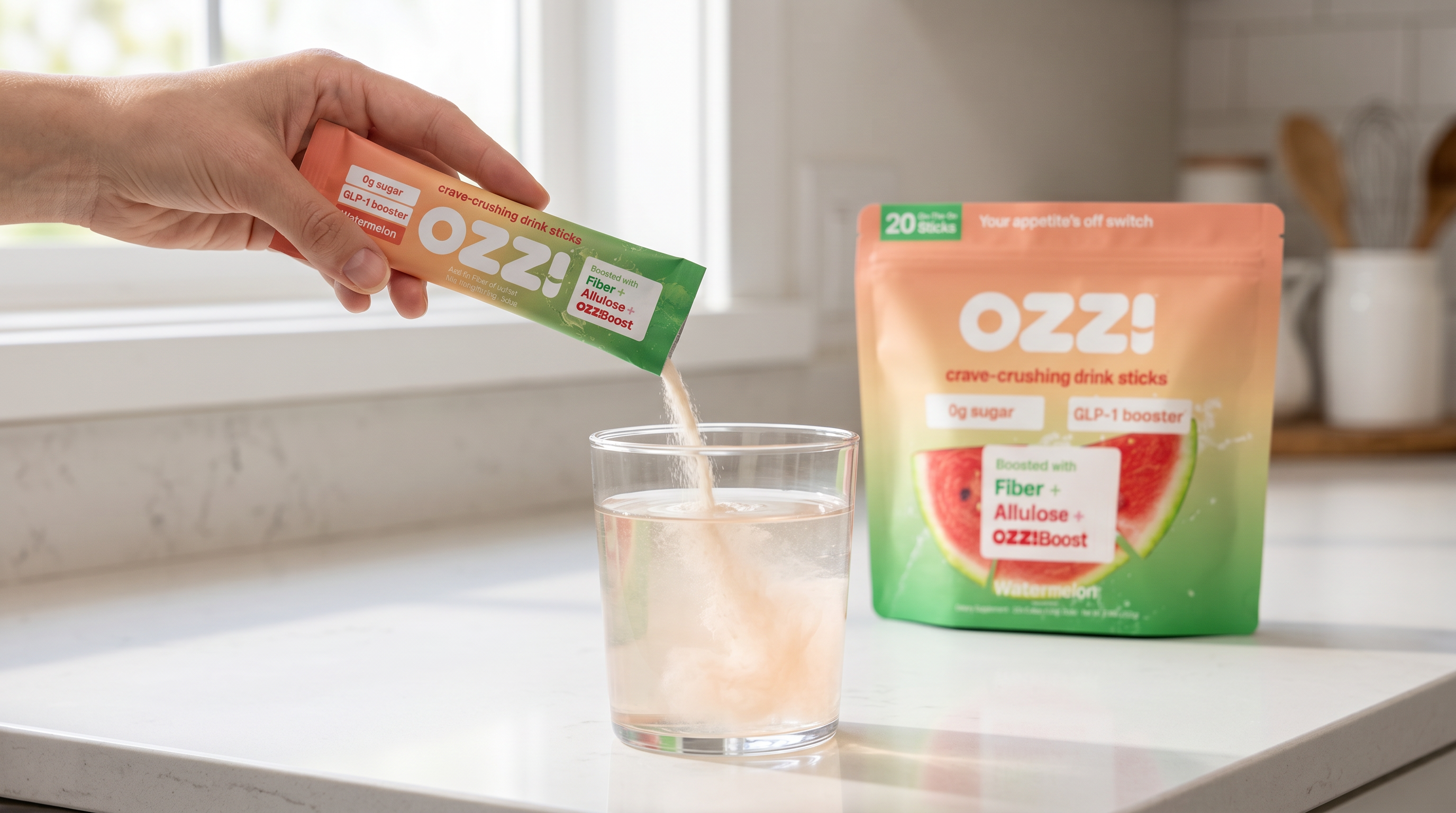
The fix is biological, not behavioral. Drink a GLP-1 booster drink at dinner or 30 minutes after. The allulose, glucomannan, butyrate, and inulin stack quiets food noise in the exact window most women fail.

How do hormone shifts change the strategy?
The closer you get to perimenopause (usually starts late 30s to mid 40s), the more these changes hit:
| Hormone shift | Effect on weight loss | Counter-strategy |
|---|---|---|
| Estrogen decline | Insulin resistance rises, fat moves to midsection | Strength training, fiber, chromium support |
| Progesterone drop | Sleep disrupted, evening cravings amplify | Sleep hygiene, evening GLP-1 booster |
| Cortisol elevation | Belly fat storage, stress eating | Walking, magnesium, structured stress breaks |
| Muscle decline | Resting metabolism drops | Protein + resistance training, non-negotiable |
A 2025 ENDO meeting study showed postmenopausal women on hormone replacement therapy plus tirzepatide lost 17% body weight vs. 14% on tirzepatide alone. The takeaway isn't to chase HRT. The takeaway is that hormonal status matters for fat loss, and ignoring it makes everything harder.
Should you consider Ozempic or other GLP-1 drugs?
The 2025 NewYork-Presbyterian research found that women in menopause benefit from GLP-1 weight-loss medications as much as younger women. So the drugs work biologically.
The harder question is whether you should take them. Some real considerations:
If you have prediabetes or metabolic syndrome, the medical case is stronger. If you've tried "everything" for 20 lbs, a 6-month course of semaglutide is a real option to discuss with your doctor.
If you're worried about long-term side effects, can't afford the drug, or don't qualify for coverage, the natural-support route through diet, training, and a GLP-1 booster is what's left. Our Natural Alternatives to Ozempic guide goes deeper.
And if you tried a GLP-1 drug and got off, the rebound is brutal. We covered the quitting protocol in detail in the GLP-1 quitting guide.
"Food noise! I lost my fiance 3 months ago and I have gained 20lbs."
What about emotional eating?
Emotional eating doesn't get easier with age. It often gets harder, because life stacks. Kids in middle school, parents getting older, divorce, grief, career pressure. None of that goes away during a weight loss attempt.
The honest answer: the framework above (protein, fiber, strength training, craving control) doesn't fix grief or stress. It buys you margin. With food noise quieter and your body holding more muscle, the bad days don't blow up the whole month.
That's the realistic goal. Not perfection. Margin.
Where does a GLP-1 booster drink fit in?
It targets one specific window: the 6pm-to-10pm period when most women in this group lose discipline. Drink it at dinner or 30 minutes after.
Ozzi Crave Crusher stacks four GLP-1 levers: allulose (direct L-cell stimulation), L-Lysine Butyrate (direct GLP-1 secretion), glucomannan (gastric emptying), and chicory inulin (prebiotic for natural butyrate). No caffeine. No stimulants. Vegan. We broke down the full mechanism here.
The 10-day feel the difference guarantee applies to your first bag. Use it 10 days straight. If the nighttime cravings don't quiet down, we refund the first bag. The terms are simple: 10 consecutive days of use, first bag only.
FAQ
Is the slow weight loss after 35 really hormonal, or just lifestyle?
Both. Estrogen and progesterone shifts are real, but they amplify lifestyle factors (less sleep, more stress, less time for cooking) rather than override them. The fix involves both medical understanding and practical change.
How much protein do I really need at 40?
0.8 to 1.0 g per pound of goal weight. The RDA (0.36 g/lb) is a survival floor, not an optimization target. Higher protein protects muscle on a deficit and improves satiety.
Will lifting heavy make me bulky?
No. Women have a fraction of the testosterone needed to build size like men do. Strength training produces lean muscle, not bulk. The "tone" look is muscle plus reduced fat.
Is intermittent fasting good for women over 35?
It can be, with caveats. 14-hour overnight fasts are usually fine. Aggressive 18-to-20 hour fasts can disrupt cortisol and sleep, both already compromised in perimenopause. Start gentle.
Do I need a GLP-1 booster drink if I'm not in perimenopause yet?
You might. Cravings (especially nighttime) are common well before perimenopause. The booster targets the craving window regardless of hormone status.
Can I drink Ozzi on a hormone replacement therapy protocol?
Yes. The ingredients are food-derived and don't interact with HRT. Always check with your doctor before adding anything to a hormonal protocol.
How long until I see results?
Most users feel quieter food noise within 3 to 10 days. Scale changes typically show after week 2 to 3 if calorie deficit is in place. Muscle gains take 8 to 12 weeks of consistent training.
What about cardio?
Walking 7,000 to 10,000 steps daily is excellent for cortisol and recovery. High-intensity cardio is optional. Most women over 35 see better results from strength training plus daily walking than from running themselves into exhaustion.
Does Ozzi work for women on a GLP-1 drug already?
Yes, and many customers stack them. Talk to your prescribing doctor first. The drug handles your daytime hunger. Ozzi adds craving suppression and gut health support.
Take back the nighttime window
Ozzi Crave Crusher targets the 6pm-to-10pm food noise that sabotages diet plans built for 25-year-olds. Try it for 10 days straight. If you don't feel the difference, we refund your first bag.
References
- Investigating weight loss resistance across the menopausal transition: a preliminary quantitative survey of resistance-trained women. PMC. 2025. PMC12445185
- Women in Menopause Benefit From GLP-1 Weight-Loss Medications as Much as Younger Women. NewYork-Presbyterian / Endocrinology research summary. 2025. NewYork-Presbyterian Advances
- Tirzepatide plus hormone therapy boosts weight loss in menopausal women. Contemporary OB/GYN summary of ENDO 2025. 2025. Contemporary OB/GYN
- The role of menopause hormone therapy in modulating tirzepatide-associated weight loss in postmenopausal women: retrospective cohort study. Lancet Obstetrics, Gynaecology, & Women's Health. 2025. Lancet
- Iwasaki Y, et al. Secretion of GLP-1 but not GIP is potently stimulated by luminal D-Allulose. Biochem Biophys Res Commun. 2018. PubMed 29402406
- Yadav H, et al. Beneficial metabolic effects of a probiotic via butyrate-induced GLP-1 hormone secretion. J Biol Chem. 2013. PubMed 23836895
- Tiderencel KA, et al. Effects of chicory inulin-type fructans supplementation on weight management: systematic review and meta-analysis. Am J Clin Nutr. 2024. AJCN
- Lyon MR, et al. Effects of glucomannan supplementation on weight loss in overweight and obese adults: systematic review and meta-analysis. Obesity Medicine. 2020. ScienceDirect
