

GLP-1 Booster Drink Guide 2026: How They Work and What's Actually in Them
A GLP-1 booster drink is a powdered supplement mixed with water that contains ingredients shown to stimulate your body's own GLP-1 release. The most evidence-backed ingredients are allulose, butyrate, soluble fiber, and prebiotic inulin. Drinks tend to act faster than capsules because liquids absorb in 15 to 30 minutes, not 45 to 90.
Key takeaways
- GLP-1 booster drinks work by triggering your own gut to release GLP-1.
- Liquid format absorbs faster than pills, usually within 30 minutes.
- Allulose, butyrate, glucomannan, and inulin have the strongest human data.
- Look for stimulant-free formulas if you take it at night for cravings.
- The 10-day window is when most users notice less food noise.
What is a GLP-1 booster drink?
A GLP-1 booster drink is a powdered supplement, usually in a stick pack or scoop, that you mix into cold water and drink. The active ingredients target the L-cells in your small intestine. L-cells are the cells that secrete GLP-1 when food, fiber, or certain rare sugars hit them.
The hormone GLP-1 (glucagon-like peptide-1) does three things that matter for cravings. It slows how fast your stomach empties. It tells your brain you're full. And it dampens what most customers call food noise, the background hum of "I want to eat" that doesn't go away after meals.
Drugs like Ozempic and Wegovy are synthetic GLP-1. They mimic the hormone directly. A booster drink is different. It doesn't add GLP-1 to your blood. It prompts your gut to make more of its own. We covered the full hormone biology here if you want the deeper version.
Why drink format instead of pills?
Speed is the honest answer. A capsule has to dissolve, pass through the stomach, and then get absorbed in the small intestine. That's typically 45 to 90 minutes before the ingredients reach the L-cells.
A liquid is already dissolved. It hits the small intestine in 15 to 30 minutes on average. If you're trying to head off the 9pm cookie urge, that window matters.
The other piece is dose. To deliver a GLP-1 active dose of allulose (the rare sugar shown to stimulate GLP-1 in rats and humans), you need roughly 5 to 10 grams. Stuffing 8 grams of allulose into capsules takes 12 to 16 pills. A single stick pack handles it in one serving.
I wrote a more granular breakdown of this format question in GLP-1 Pills vs Drinks. The short version: drinks win for speed and dose-per-serving. Pills win for travel and discretion.
"After dinner snacking sabotaging me. Literally snacking right now when I shouldn't be."
Which ingredients actually move GLP-1?
Most "GLP-1 booster" supplements throw 10 herbs at a label and call it a day. The honest answer is that four ingredient classes have meaningful human data. Everything else is supporting cast.
Allulose (the rare sugar)
Allulose is the most-studied direct GLP-1 stimulator in supplements right now. A 2025 paper in Endocrinology showed that luminal D-allulose triggers GLP-1 secretion at least partly through intestinal distension, a brand-new mechanism for this class of ingredient. Earlier rat work showed allulose raised plasma GLP-1 in a dose-dependent way for over 2 hours, outperforming dextrin, fructose, and glucose.
Dose matters. Studies use 5 to 10 grams per serving. A real GLP-1 booster drink should disclose its allulose dose on the label. We broke down allulose dosing in detail here.
Butyrate (the short-chain fatty acid)
Butyrate is a short-chain fatty acid produced by gut bacteria. It directly stimulates L-cells to release GLP-1, and a 2013 paper in Diabetes showed beneficial metabolic effects of a probiotic working through butyrate-induced GLP-1 secretion. Newer formulas use L-Lysine Butyrate, a bound form that's more stable and less smelly than free butyric acid.
Glucomannan (the viscous fiber)
Glucomannan is a soluble fiber from konjac root. It doesn't trigger GLP-1 the way allulose does, but it slows gastric emptying mechanically. In a 2017 randomized crossover trial in the British Journal of Nutrition, gelled glucomannan reduced hunger and increased satiety ratings significantly compared to placebo. A 2020 meta-analysis found glucomannan produced an average weight loss of roughly 1 kilogram across pooled trials.
Chicory inulin (the prebiotic)
Inulin from chicory root is fermented in the large intestine into more butyrate and propionate. Both stimulate GLP-1 and PYY. A 2024 systematic review in the American Journal of Clinical Nutrition pooled 32 trials and ~1,200 participants. Chicory inulin produced an average weight reduction of 0.97 kg vs placebo, with improvements in BMI and body fat in several studies.
How do the best booster drinks stack ingredients?
The good ones don't pick one ingredient. They stack four pathways at once.
| Ingredient | Mechanism | Studied dose | Time to effect |
|---|---|---|---|
| Allulose | Direct L-cell GLP-1 trigger | 5 to 10 g | Same meal |
| L-Lysine Butyrate | Direct GLP-1 stimulation | 300 to 600 mg | Within hours |
| Glucomannan | Slows gastric emptying | 0.5 to 1 g | 30 to 60 min |
| Chicory inulin | Prebiotic butyrate production | 5 to 16 g (we use 0.5 g for tolerability) | Days to weeks |
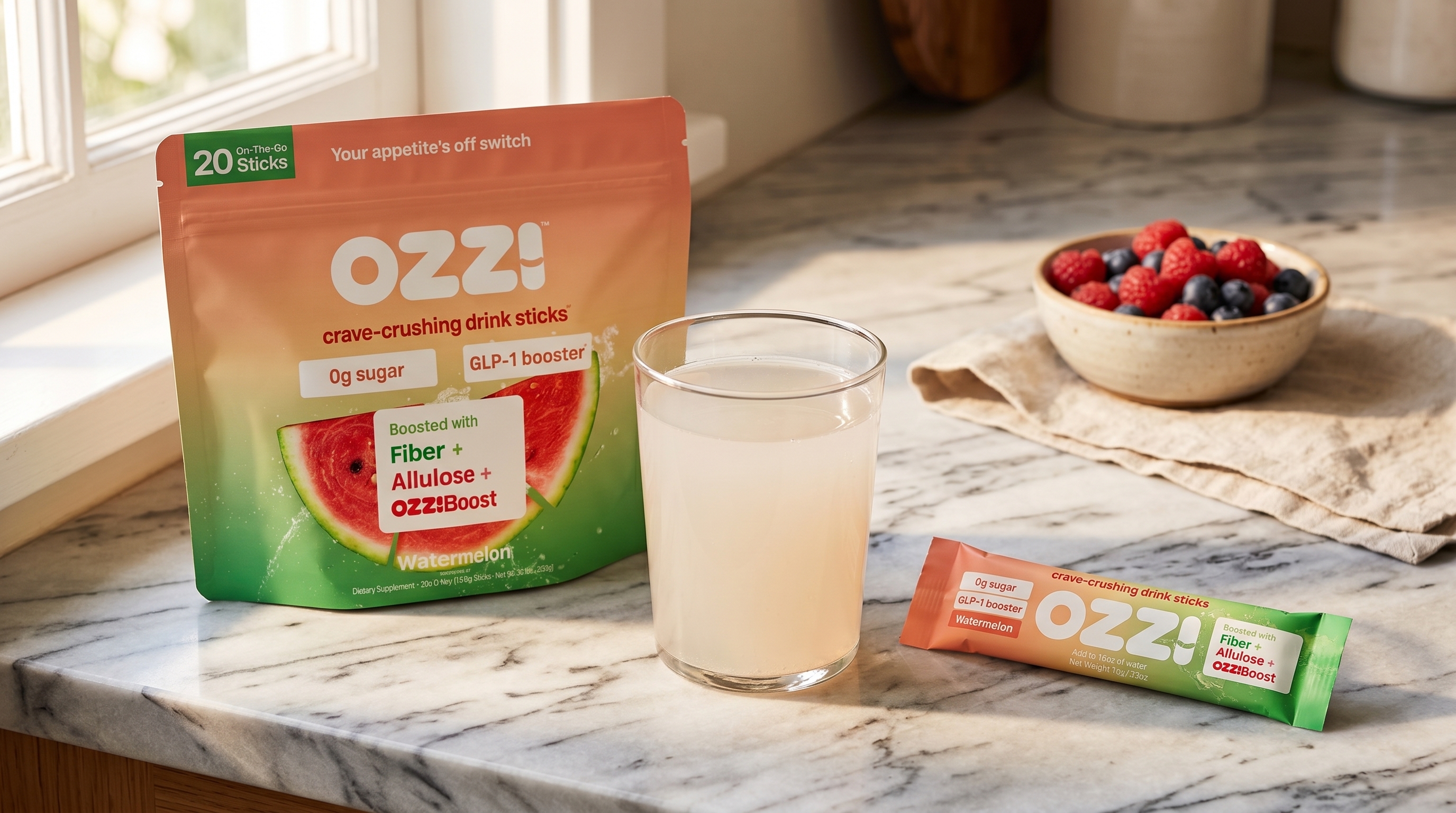
This is the architecture behind Ozzi Crave Crusher. Allulose hits L-cells in the same meal. Butyrate amplifies that signal. Glucomannan adds physical fullness. Inulin builds the long-term gut microbiome that makes more butyrate on its own.
When should you actually drink it?
The answer depends on what problem you're solving.
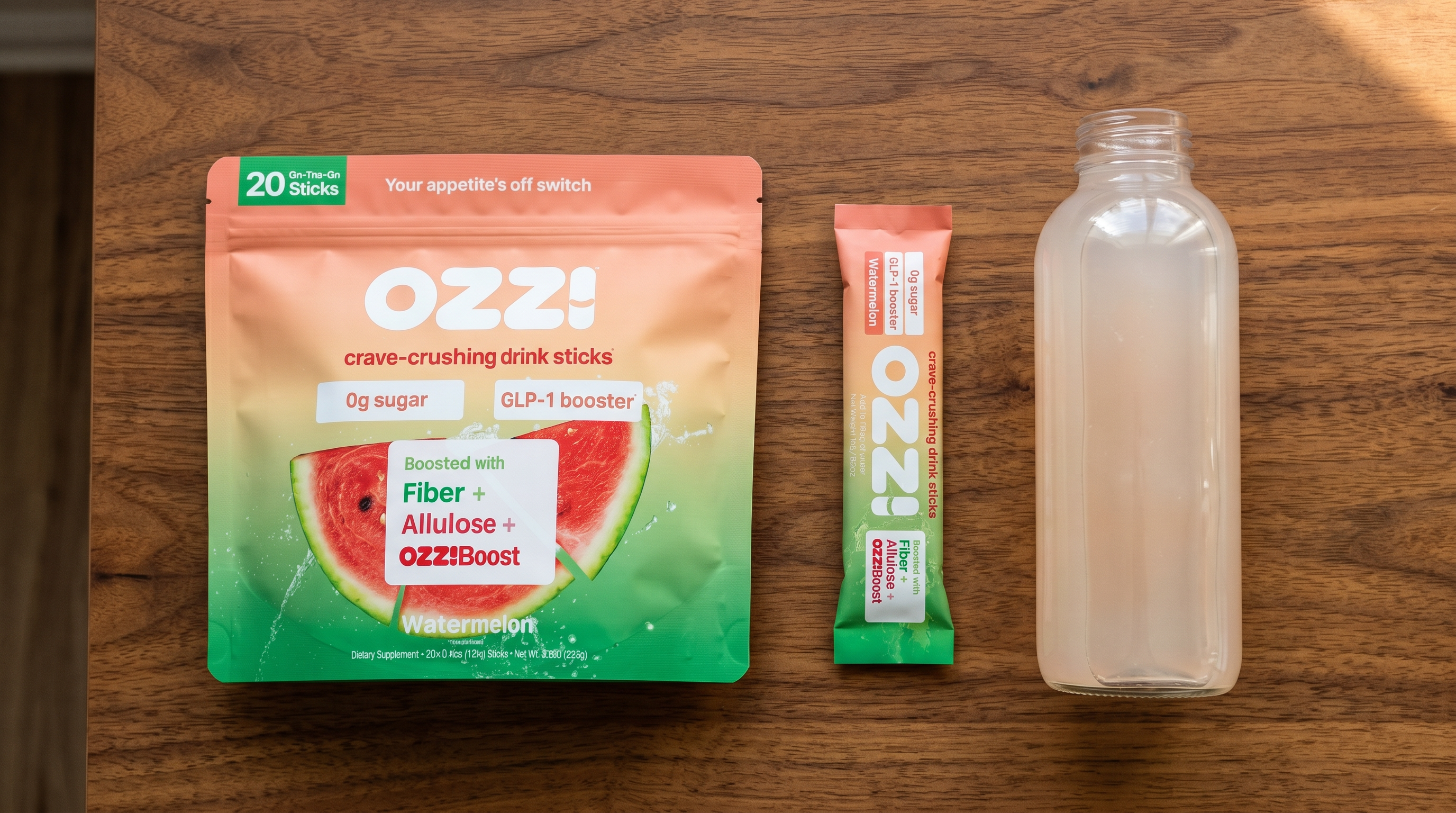
For morning hunger and food noise during the day: mix one stick into 16 ounces of cold water with breakfast or about 30 minutes before. The satiety response kicks in within an hour.
For nighttime cravings (the biggest reason people buy a booster): drink it around dinner or 30 minutes after. This was the #1 use case in our customer survey. 45% of free-text responses mentioned night cravings specifically.
For mid-afternoon snack control: a stick at 3pm covers the 4 to 7pm window when most desk workers lose discipline.
One customer wrote: "I tried the V1.5 and have been very impressed with the drink so far. I only need 1/2 stick in the morning with 8 oz of ice cold water and I am good until noon." Half a stick worked for her. Most people use a full one.
Are GLP-1 booster drinks as effective as Ozempic?
No, and any honest founder will tell you the same. Semaglutide produces 10 to 15% body weight loss in 68 weeks. No supplement matches that.
What a booster drink can do is quiet food noise enough that calorie deficits become doable. That's the bridge customers report. A woman who tried Wegovy and got off it wrote: "Immediately after stopping my appetite doubled and I'm finding it very hard to not overeat." That's the gap an OTC drink can help fill.
We compared the drug versus supplement question in Natural Alternatives to Ozempic and Best OTC GLP-1 Supplement. Both posts get into the realistic expectations.
"I want freedom from food thoughts and night-time hunger." That's what a good booster drink can actually help with.
What should you look for on the label?
Most products on Amazon hide their doses behind "proprietary blend" labels. That's a red flag. If a brand won't tell you how much allulose or butyrate is in a serving, the answer is usually not much.
Check for these specifics:
Disclosed doses on the front of the panel. You want to see actual milligram and gram amounts, not just ingredient names.
5 grams or more of allulose. Below that, you're not in the range that's been shown to move GLP-1.
A real butyrate source. Either L-Lysine Butyrate, tributyrin, or sodium butyrate at a verified dose. "Postbiotics" without a named compound is marketing.
No caffeine if you take it after noon. Most cravings happen at night. A stimulant in the formula sabotages sleep.
No artificial sweeteners. Sucralose and aspartame mute the natural sweet response and can mess with the gut bacteria that produce butyrate.
Our 2026 ingredient roundup goes deeper on which compounds have real evidence and which are filler.
How long until you feel a difference?
Most users notice less food noise within 3 to 10 days. The mechanism explains why. Allulose and glucomannan work the same day you drink them. But the inulin-driven gut microbiome change takes a few days to build.
This is the window Ozzi designed the 10-day feel the difference guarantee around. Drink it for 10 consecutive days on your first bag. If you don't notice a difference, we refund the first bag. The guarantee covers first bags only and requires daily use.

Who should not use a GLP-1 booster drink?
A few honest categories.
If you're pregnant or nursing, skip it. Most ingredients haven't been studied in those populations. The same goes for kids under 18.
If you're on a GLP-1 drug already, talk to your doctor before stacking. The combination isn't dangerous, but you might not need both, and one customer reported that combining them caused stronger nausea.
If you have severe GI issues, especially Crohn's flares or strictures, glucomannan can cause cramping. Start with half a stick and titrate.
And if you're allergic to mango (a rare allergy), skip African mango formulas. For broader food-based GLP-1 strategies that work alongside or instead of supplements, this guide covers it.
FAQ
How fast does a GLP-1 booster drink work?
Liquid ingredients reach the small intestine in 15 to 30 minutes. Most users feel reduced hunger within an hour, and craving suppression typically builds over the first 3 to 10 days.
Can I take a booster drink and Ozempic together?
Talk to your doctor. They're not contraindicated, but stacking GLP-1 drugs with butyrate or allulose can amplify nausea for some people.
Will a booster drink make me lose weight without diet changes?
Probably not on its own. The drink reduces cravings and food noise, which makes a calorie deficit more achievable. Without the deficit, the scale won't move much.
Is it safe to drink every day?
Yes for most healthy adults. The ingredients are food-derived and well tolerated. Allulose can cause mild GI upset above 0.4 g/kg body weight per dose, so don't double up sticks.
Does it taste like medicine?
Ozzi tastes like watermelon. The allulose handles the sweetness without sugar. We use natural flavors and a small amount of stevia-derived Reb M.
Do I need to drink it in cold water?
Cold water mixes better and tastes better. Hot water works chemically but degrades the flavor.
Will it spike my blood sugar?
Allulose has minimal blood sugar impact and is not metabolized the same way as regular sugar. Glucomannan and inulin slow glucose absorption. The chromium in the formula supports normal insulin signaling.
What's the difference between a booster drink and a meal replacement?
A meal replacement provides calories, protein, and fat to substitute a full meal. A booster drink targets the GLP-1 pathway and is roughly 25 to 40 calories per serving. They solve different problems.
How does Ozzi compare to other GLP-1 booster drinks like Lemme or Supergut?
We covered the head-to-head comparisons in Ozzi vs Lemme, Ozzi vs Supergut, and Ozzi vs Pendulum.
Try Crave Crusher for 10 days
If the nighttime cravings don't quiet down after 10 straight days, we refund your first bag. That's the deal. No questions, no hoops.
References
- Iwasaki Y, et al. Secretion of GLP-1 but not GIP is potently stimulated by luminal D-Allulose (D-Psicose) in rats. Biochem Biophys Res Commun. 2018. PubMed 29402406
- Hayakawa M, et al. Intestinal distension induced by luminal D-allulose promotes GLP-1 secretion in male rats. Endocrinology. 2025. Endocrinology bqaf002
- Yadav H, et al. Beneficial metabolic effects of a probiotic via butyrate-induced GLP-1 hormone secretion. J Biol Chem. 2013. PubMed 23836895
- Lyon MR, et al. Effects of glucomannan supplementation on weight loss in overweight and obese adults: a systematic review and meta-analysis. Obesity Medicine. 2020. ScienceDirect
- Au-Yeung F, et al. The effects of gelled konjac glucomannan fibre on appetite and energy intake in healthy individuals. Br J Nutr. 2018. Cambridge Core
- Tiderencel KA, et al. Effects of chicory inulin-type fructans supplementation on weight management: systematic review and meta-analysis. Am J Clin Nutr. 2024. AJCN
- Parnell JA, Reimer RA. Weight loss during oligofructose supplementation is associated with decreased ghrelin and increased peptide YY in overweight and obese adults. Am J Clin Nutr. 2009. PubMed 19386741
- Soloways RCT on glucomannan, inulin, and psyllium in adults with FTO, LEP, LEPR, and MC4R polymorphisms. 2024. PMC10892568
