

Best OTC GLP-1 Supplement in 2026: A Founder's Honest Guide
The best OTC GLP-1 supplement targets three pathways at once: short-chain fatty acid signaling (butyrate or its precursors), gut sweet-taste receptors (allulose), and physical satiety (glucomannan). Single-ingredient pills almost always underperform multi-ingredient drink formulas because the doses needed to move GLP-1 are too large for a capsule.
Key takeaways
- OTC GLP-1 supplements don't replace prescription drugs but can quiet food noise.
- Butyrate stimulates GLP-1 L-cells via the FFAR2 receptor in human research.
- Allulose triggers GLP-1, CCK, and PYY release in randomized human trials.
- Glucomannan creates physical fullness through gel formation in the stomach.
- Stack matters more than any single ingredient. Drinks beat pills on total dose.
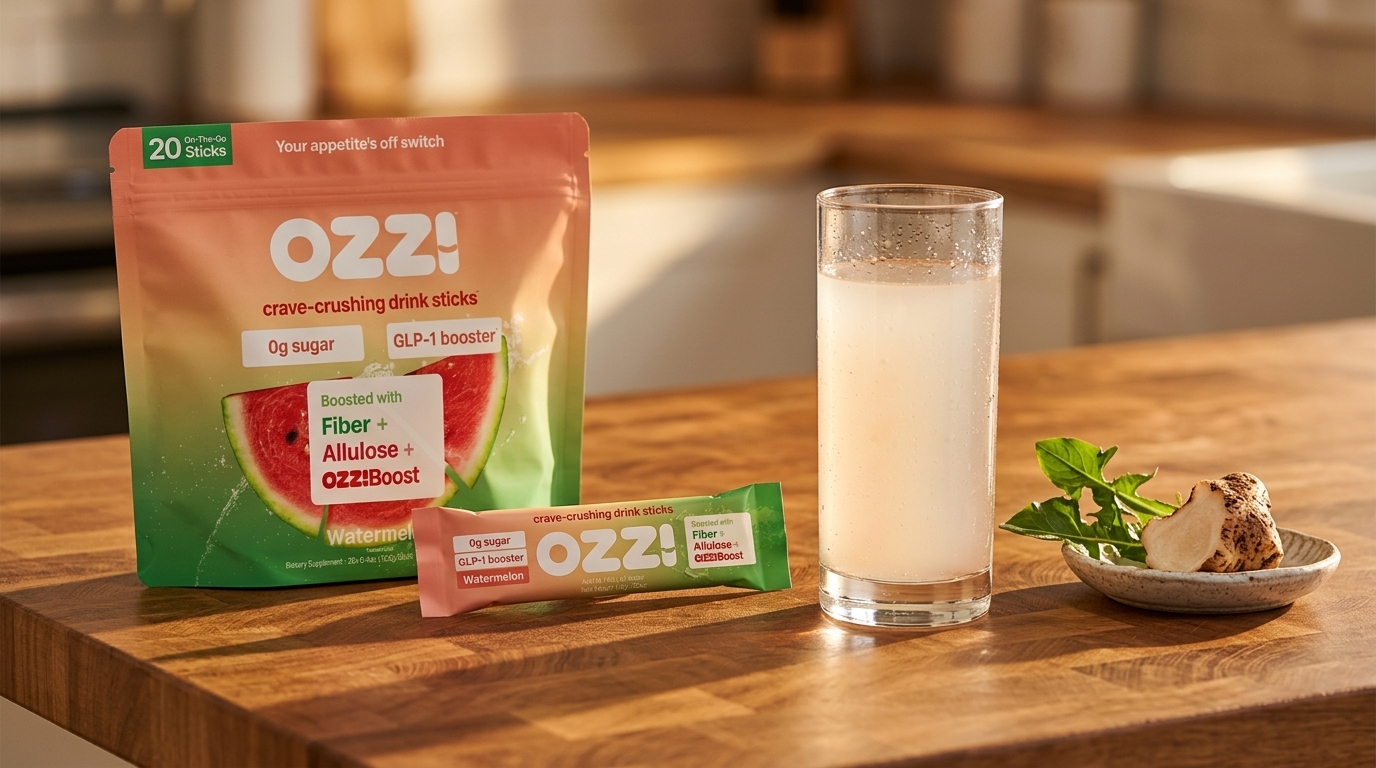
What does "OTC GLP-1 supplement" actually mean?
Strictly speaking, nothing you can buy without a prescription is a GLP-1 receptor agonist. Those are peptide drugs like semaglutide and tirzepatide. They mimic the body's GLP-1 hormone directly.
What OTC supplements do is support your body's own GLP-1 production. They feed the pathways that nudge your L-cells (the gut cells that make GLP-1) to release more of the hormone naturally. The effect is real but smaller than the drugs.
The category exploded in 2025 because three groups of people started looking for alternatives:
People scared of side effects from Ozempic and Wegovy. People who couldn't get a prescription or pay out of pocket. And people who came off the drugs and watched the weight come back.
If you're in any of those camps, this guide is for you.
"Was on a GLP1 med for a year. Lost 30 lbs. Immediately after stopping my appetite doubled and I'm finding it very hard to not overeat." (Ozzi customer survey, February 2026)
Which ingredients have real human research?
Plenty of supplements claim "GLP-1 boost" on the label. Most are guessing. Here's the short list of ingredients with peer-reviewed human evidence behind them.
Butyrate (and butyrate precursors)
Butyrate is a short-chain fatty acid produced by gut bacteria when they ferment fiber. It's also one of the most direct GLP-1 stimulators in the human gut. A landmark 2012 paper in Diabetes showed SCFAs (including butyrate) trigger GLP-1 release through the FFAR2 receptor on L-cells.1
Mice lacking FFAR2 had impaired GLP-1 response. Human L-cells express the same receptor. The path is clear.
The catch with butyrate: it's a smelly fatty acid that doesn't survive your stomach well on its own. Most credible formulas use a buffered form like L-lysine butyrate (sold as BIOMEnd) to make it stable and tolerable.
Allulose
Allulose is a rare sugar that tastes like regular sugar but has about 1/10th the calories and doesn't spike blood sugar. More importantly for this guide, it activates gut sweet-taste receptors that talk to your L-cells.
A 2022 randomized controlled trial in humans found D-allulose induced significant release of GLP-1, CCK, and PYY compared with tap water.2 Another line of research traces allulose's effect through GLP-1 secretion and vagal afferent activation in mice, rats, and humans.3
A meta-analysis in PLOS One also confirmed allulose attenuates postprandial blood glucose in healthy humans.4
Glucomannan
Glucomannan is a soluble fiber from konjac root. It's not a direct GLP-1 stimulator. It works on satiety through a different path: physical fullness.
When glucomannan hits water in your stomach, it absorbs that water and swells into a viscous gel. The gel triggers vagal nerve signals of fullness. In a randomized crossover trial published in British Journal of Nutrition, a higher dose of gelled konjac glucomannan reduced cumulative energy intake by 47%.5
A 2020 meta-analysis of 6 RCTs found a small but significant weight reduction with glucomannan supplementation.6
Chicory root inulin
Inulin is a prebiotic fiber. It feeds your gut bacteria, which then produce more butyrate naturally. Think of it as the indirect SCFA path.
Studies have linked inulin supplementation to improved glycemic markers and appetite regulation. It's the slow-burn partner to direct butyrate.
African mango (Irvingia gabonensis)
African mango seed extract has been studied in small trials, mostly from Cameroon, for effects on body weight, waist circumference, and leptin (the satiety hormone). The evidence is thinner than for the ingredients above but is consistent across studies.
Chromium
Chromium is an essential trace mineral with a long research track record in blood sugar metabolism. It enhances insulin signaling. It's not a GLP-1 stimulator, but blood sugar stability matters for craving control.
Berberine
Berberine has gotten huge attention as "nature's Ozempic." The truth is muddier. Clinical trials show modest weight reductions of 2 to 4 kg, and many trials are small and short.7 Berberine does affect GLP-1 indirectly through gut microbiome changes, but the effect size is smaller than internet hype suggests.
We didn't include berberine in Ozzi because the data wasn't strong enough to justify the dose limits and bitter taste.
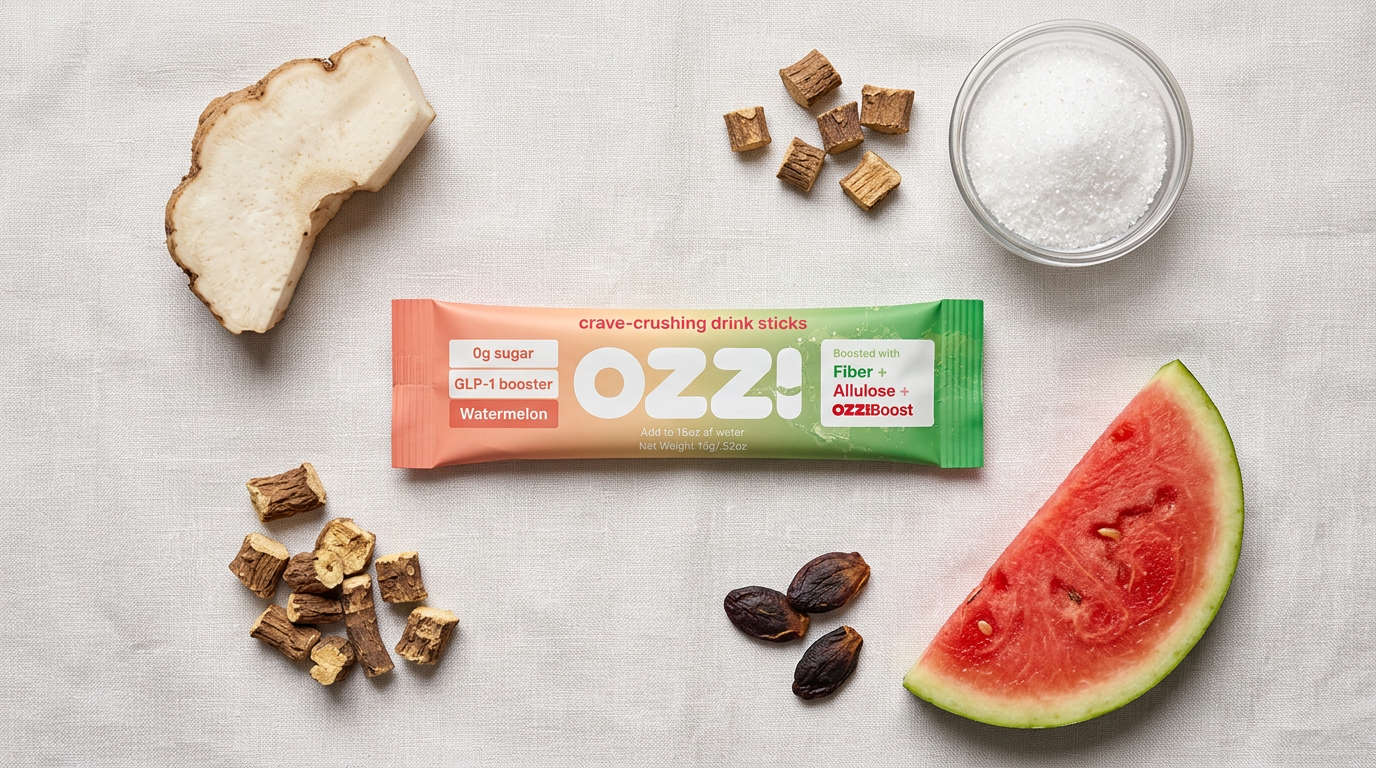
What should you actually look for on the label?
Here's the screening checklist we use when reviewing competitor products:
1. At least one direct GLP-1 stimulator. Either a butyrate source (look for L-lysine butyrate, sodium butyrate, or BIOMEnd) or a meaningful allulose dose (5 grams or more per serving).
2. A fiber for physical satiety. Glucomannan, psyllium, or a similar viscous soluble fiber. Look for at least 500 mg per serving.
3. A prebiotic. Inulin, FOS, or partially hydrolyzed guar gum. Feeds your microbiome to compound the SCFA effect over time.
4. Blood sugar support. Chromium is the most studied. Magnesium and zinc also have data.
5. No stimulant tricks. Caffeine, synephrine, and yohimbine make you feel "less hungry" but don't touch GLP-1. They also produce withdrawal and side effects.
6. Real doses you can verify. Watch for proprietary blends that hide individual amounts. If the label doesn't tell you the dose of glucomannan, it probably contains too little to matter.
How do popular OTC GLP-1 supplements compare?
| Brand | Format | Butyrate | Allulose | Fiber | Stims? |
|---|---|---|---|---|---|
| Ozzi Crave Crusher V2 | Drink stick | L-lysine butyrate 537 mg | 8.35 g | Glucomannan + inulin | No |
| Lemme GLP-1 Daily | Capsule | No | No | Partial (eriomin) | No |
| Supergut GLP-1 Daily | Drink mix | Indirect (resistant starch) | No | Resistant starch | No |
| Pendulum GLP-1 Probiotic | Capsule | Indirect (Akkermansia) | No | No | No |
| Generic berberine | Capsule | No | No | No | No |
This table simplifies a lot. Each brand has reasons for its formulation choices. For deeper comparisons, see our Ozzi vs Lemme breakdown, Ozzi vs Supergut, and Ozzi vs Pendulum.
Why does Ozzi stack four ingredients instead of one?
The honest reason: no single OTC ingredient produces the satiety effect that Ozempic does. We knew that going in.
So we built Crave Crusher around the idea that multiple modest effects, stacked, can produce a real one. The three mechanisms hit different parts of the same problem:
Butyrate plus inulin stimulates GLP-1 secretion (the hormonal signal). Allulose lights up sweet-taste receptors and triggers GLP-1 release (the gut-brain signal). Glucomannan creates physical fullness (the mechanical signal). Chromium stabilizes blood sugar (the craving floor).
Each piece is backed by published research. Together, the stack is what customers actually feel.
"I am loving the v2 recipe! No night time cravings!" (Ozzi customer survey, March 2026)
What about taste and adherence?
This is the part nobody talks about in clinical trials. Adherence is everything.
The best supplement formula does nothing if you stop using it after a week. And the data on long-term supplement use is grim. Most consumers abandon within 30 days. Capsules disappear into a drawer. Bitter herbal drinks get poured out.
Ozzi's watermelon V2 was tuned for the exact moment of need: late afternoon, after dinner, before bed. Cold water plus the stick equals a sweet, slightly cloudy drink that takes the edge off cravings within minutes.
If you're worried about flavor fatigue, mix in cold sparkling water, add lime, or rotate days. The goal is making the drink something you reach for, not something you tolerate.
How does timing affect results?
Most users get the best results from 1 to 2 servings per day, timed before known craving windows. The two most common patterns:
Morning + after dinner. Front-loads satiety for the breakfast skip-or-snack moment and the after-dinner monster.
Just before dinner. Best for people whose problem is overeating at meals plus night snacking. The stick before dinner takes the edge off both windows.
Allulose and glucomannan both work within 15 to 30 minutes. Butyrate is more of a slow build, affecting your gut signaling over days and weeks of consistent use.
The 10-day mark is when most users report a noticeable shift in food noise. That's why Ozzi offers a 10-day feel-the-difference guarantee on first bags.
Who shouldn't use an OTC GLP-1 supplement?
A few cases where we tell people to check with their doctor first:
If you're pregnant or nursing. If you have a diagnosed GI condition (Crohn's, IBS-D, gastroparesis) where high-fiber loads might cause problems. If you take prescription medications that require careful timing around food or fiber (some thyroid meds, for example).
Also: if you're already on a prescription GLP-1, talk to your prescriber about whether to add an OTC stack. There's no published safety data on simultaneous use. Common sense says go slow.
What does "best" really mean here?
Best is doing a lot of work in this article. Let's define it.
Best in our usage means: the formula with the most peer-reviewed ingredients at meaningful doses, in a format that lets you actually take it consistently, at a price you can stick to month over month.
By that standard, the strongest OTC GLP-1 supplements share these traits:
Drink format over pill format. Multiple ingredients with published human data. Doses you can verify on the label. A flavor profile that makes adherence likely. A return policy that lets you test it without financial risk.
That's the lens we built Ozzi through. It's also the lens we'd use if we were buying anything else.
Test Crave Crusher for 10 days straight.
If you don't feel a difference, we'll refund your first bag. First bag only.
The labels and doses sit side by side in our comparison of natural GLP-1 supplements.
Frequently asked questions
Is there any OTC supplement equal to Ozempic?
No. Prescription GLP-1 receptor agonists deliver about 10% to 20% body weight reductions in trials. No OTC supplement approaches that. The realistic goal of an OTC stack is quieting food noise and reducing the cravings that drive overeating.
How long does an OTC GLP-1 supplement take to work?
Immediate effects (within 30 minutes) come from allulose and glucomannan. The slower microbiome shifts from butyrate and inulin compound over 7 to 14 days. Most Ozzi users report a noticeable change by day 10.
What's the difference between berberine and butyrate?
Berberine is a plant alkaloid that affects AMPK signaling and microbiome composition. Butyrate is a short-chain fatty acid that directly activates GLP-1 L-cells. Different paths, with butyrate having more direct evidence for GLP-1 secretion. See our allulose vs berberine breakdown for the full picture.
Are pills cheaper than drinks long-term?
Per serving, often yes. Per effective dose, usually no. A bottle of 60 cheap glucomannan capsules has 30 grams of fiber total. That's about 10 days of an effective daily dose.
Can I take an OTC GLP-1 supplement while on Ozempic?
Ask your prescriber. There's no published safety data on simultaneous use, and the additive effect on GI motility could cause issues. Many people use an OTC stack when tapering off the drug instead.
Will my insurance cover an OTC supplement?
Almost never. OTC supplements aren't FDA-regulated as drugs and don't qualify for medical coverage. Some HSA/FSA accounts allow supplement purchases if a doctor writes a Letter of Medical Necessity. Check with your plan.
What if I have a sensitive stomach?
Start with half a serving. Glucomannan and inulin can cause bloating in people unused to soluble fiber. Build up over a few days.
Does the format really change effectiveness?
For most ingredients on this list, yes. See our full explainer on what GLP-1 is and how its signaling depends on direct gut contact.
Why isn't there a clear winner in this category?
Because OTC GLP-1 supplements are new. There aren't head-to-head clinical trials yet. The brands compete on ingredient choices, format, and price.
The honest bottom line
The best OTC GLP-1 supplement is the one you'll take consistently, that uses peer-reviewed ingredients at meaningful doses, in a format that fits your lifestyle.
For us, that's a drink. For someone else, it might be a capsule. The decision tree is honestly that simple.
If you're new to the category, start with the 10-day trial on a drink stack like Crave Crusher. Pay attention to food noise (not just the scale). The first signal that an OTC GLP-1 supplement is working is usually a quieter brain, not a smaller waistband.
More background here: What is GLP-1, exactly?, Natural alternatives to Ozempic, Best supplements to curb sugar cravings, Best natural GLP-1 supplements for appetite control, and Ozzi vs Lemme GLP-1 Daily.
- Tolhurst G, et al. "Short-chain fatty acids stimulate glucagon-like peptide-1 secretion via the G-protein-coupled receptor FFAR2." Diabetes, 2012. PubMed
- Teysseire F, et al. "The Role of D-allulose and Erythritol on the Activity of the Gut Sweet Taste Receptor and Gastrointestinal Satiation Hormone Release in Humans." PMC
- Iwasaki Y, et al. "GLP-1 release and vagal afferent activation mediate the beneficial metabolic and chronotherapeutic effects of D-allulose." PubMed
- Braunstein CR, et al. "Allulose for the attenuation of postprandial blood glucose levels in healthy humans: A systematic review and meta-analysis." PLOS One. Link
- Chua M, et al. "The effects of gelled konjac glucomannan fibre on appetite and energy intake in healthy individuals: a randomised cross-over trial." British Journal of Nutrition. PubMed
- Zalewski BM, et al. "Effects of glucomannan supplementation on weight loss in overweight and obese adults: A systematic review and meta-analysis of randomized controlled trials." ScienceDirect. Link
- Pharmacy Times. "Is Berberine Nature's GLP-1?" Link
- Impact of allulose on blood glucose in type 2 diabetes: A meta-analysis of clinical trials. ScienceDirect. Link
- Psichas A, et al. "The impact of short-chain fatty acids on GLP-1 and PYY secretion from the isolated perfused rat colon." PubMed
- Iwasaki Y, et al. "Intestinal Distension Induced by Luminal D-allulose Promotes GLP-1 Secretion in Male Rats." Endocrinology. Link
