

Ozzi vs Pendulum GLP-1 Probiotic: An Honest 2026 Comparison
Key takeaways
- Pendulum is a probiotic capsule. Ozzi is a functional drink with direct GLP-1 ingredients.
- Pendulum works through gut colonization. Ozzi works the same day through allulose and fiber.
- Pendulum's 91% craving-reduction stat comes from a 274-person consumer survey, not a peer-reviewed RCT.
- Allulose has direct 2025 Endocrinology evidence for stimulating GLP-1 in mammals.
- Pendulum costs about $65/month. Ozzi costs less on subscription and adds a flavor your day can enjoy.
Ozzi and Pendulum GLP-1 Probiotic both claim to raise GLP-1, but they're not the same category. Pendulum is a 3-strain probiotic capsule that needs weeks to colonize the gut. Ozzi is a fiber-and-allulose drink stick that triggers GLP-1 release the same day you take it. If you want fast satiety, Ozzi wins. If you want long-term microbiome change, Pendulum has a story worth considering.
Every week someone emails me asking, "Is Ozzi just a different version of Pendulum's GLP-1 Probiotic?" The answer is no. We're solving the same problem from completely different angles.
So I sat down and wrote the honest comparison I wish more brands would write. No spin. Just what each one does, what the studies actually say, and who each one is for.
What is Pendulum GLP-1 Probiotic, exactly?
Pendulum is a San Francisco biotech that figured out how to grow Akkermansia muciniphila, a hard-to-cultivate gut bacteria, at commercial scale. That's a real accomplishment.
Their GLP-1 Probiotic capsule, launched in March 2024, contains three strains:
- Akkermansia muciniphila WB-STR-0001 (their proprietary strain)
- Clostridium butyricum
- Bifidobacterium infantis
The theory is straightforward. These bacteria colonize the gut, ferment fiber into butyrate, and Akkermansia secretes a protein called P9. Both butyrate and P9 stimulate intestinal L-cells to release GLP-1, the satiety hormone behind Ozempic and Wegovy.
It's a clever bet on the microbiome doing the work for you. The catch is that gut colonization isn't instant. Pendulum recommends 4 to 12 weeks before users notice meaningful appetite changes.
Price: about $65 per month at the time of writing. Two capsules per day, taken with food.
How does Ozzi work differently?
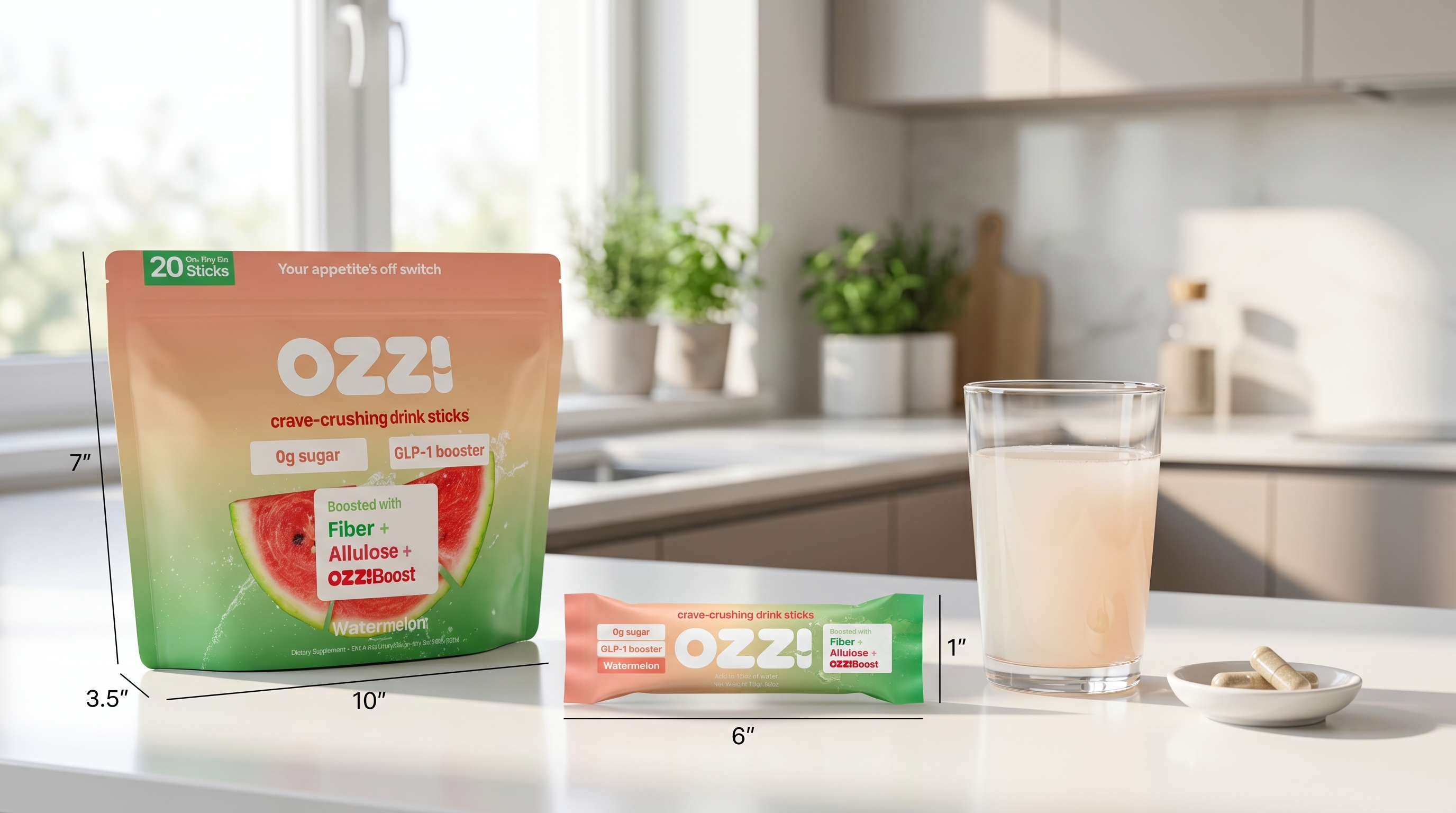
Ozzi Crave Crusher doesn't ask your gut to grow anything new. It delivers the GLP-1 triggers directly.
Mix one stick into 16 ounces of water before a meal. You get:
- Allulose, a rare sugar that triggers GLP-1 through intestinal distension, confirmed in a February 2025 study in Endocrinology.
- Fiber blend, which slows gastric emptying and feeds existing gut bacteria.
- L-Lysine Butyrate, which gives you the butyrate directly, no fermentation step required.
- Plus mulberry leaf, EGCG, chromium, and other appetite-control nutrients.
The full ingredient breakdown is on our product page, and we walk through the mechanism in our complete GLP-1 guide.
You feel Ozzi the same day you drink it. Most customers report quieter food noise within 60 to 90 minutes of the first stick. That's the allulose distension reflex working in real time, not a colonization timeline.
Pendulum bets on the bacteria. Ozzi bets on the ingredients those bacteria would have made anyway.
Pendulum vs Ozzi: side-by-side comparison
Here's the head-to-head on what matters most.
| Feature | Pendulum GLP-1 Probiotic | Ozzi Crave Crusher |
|---|---|---|
| Format | Capsule (2/day) | Watermelon drink stick (1/day) |
| Mechanism | Gut colonization, slow butyrate + P9 production | Direct allulose distension + ready-made butyrate |
| Time to feel it | 4 to 12 weeks | 60 to 90 minutes |
| Direct human RCT on the actual formula | No published peer-reviewed RCT | Individual ingredients have human RCTs; full formula trial in planning |
| Price per month | ~$65 | ~$49 on subscription |
| Daily ritual feel | Pill with breakfast | Cold watermelon drink before a meal |
| Sugar / calories | 0g / ~0 kcal | 0g sugar, ~10 kcal |
| Guarantee | 30-day return | 10-day feel-the-difference on first bag |
Which one actually has stronger evidence?
Both have real science behind them. They just have different kinds of science.
Pendulum's evidence:
- A 2019 randomized controlled trial in Nature Medicine found that pasteurized Akkermansia muciniphila reduced body weight and insulinemia in overweight humans. This trial used a different strain than Pendulum's WB-STR-0001.
- A 2021 paper in Nature Microbiology identified the P9 protein from Akkermansia and showed it stimulates GLP-1 release through ICAM-2 binding. Mechanistic, not clinical.
- Pendulum's own 274-person consumer survey reported 91% reduced cravings over 6 weeks. This was self-reported, not blinded or placebo-controlled.
Ozzi's evidence:
- A 2025 study in Endocrinology showed allulose stimulates GLP-1 in rats via intestinal distension, a mechanism that maps directly to how you feel after drinking Ozzi.
- A 2018 paper in Biochemical and Biophysical Research Communications found d-allulose potently stimulates GLP-1 secretion in rats.
- Mulberry leaf, chromium, and EGCG each have published human trials for blood sugar and appetite endpoints.
Neither product has a peer-reviewed RCT on the exact final formula. That's true for most supplements in this category, including Lemme GLP-1 Daily and Supergut GLP-1 Daily Support.
The difference is in what you feel. Allulose works through a physical reflex that happens in your gut within an hour. Akkermansia works through a multi-week ecological shift. Both are valid. They're just operating on different clocks.
What does it feel like? Day 1 vs week 12
Customer reports differ in shape because the products differ in shape.
Pendulum users typically describe a gradual quieting of food preoccupation over the first month. Some notice digestion changes before appetite changes. The 6-week and 12-week marks are where most positive reviews land. A meaningful slice of users say they didn't feel much in the first month and gave up.
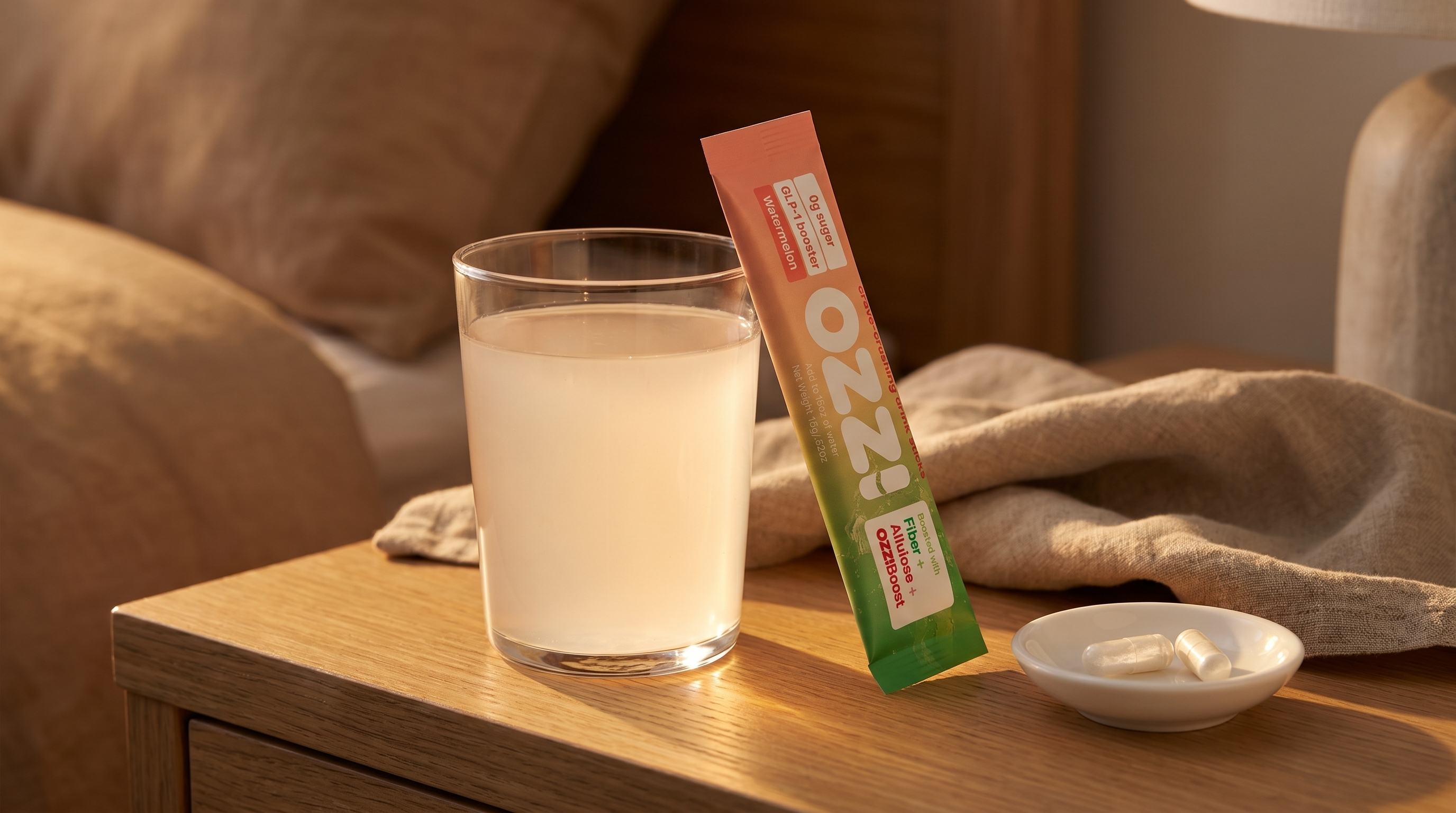
Ozzi users typically describe a same-day shift. The first stick taken before lunch usually leads to a smaller portion, less interest in the cookie at 3pm, and a quieter night monster. By week 2, the pattern stabilizes. By week 4 to 6, fat loss starts showing up for people who are also keeping a reasonable food template.
If you've ever stopped a supplement because "I couldn't tell if it was working," Ozzi's near-immediate signal is usually a relief. If you're patient and you love the idea of long-term microbiome change, Pendulum's slower curve has its own appeal.
Who should choose Pendulum?
Pendulum makes the most sense if:
- You're already a probiotic person and you trust capsule-based supplementation.
- You have known gut imbalances and want to rebuild Akkermansia populations specifically.
- You're willing to commit 3 months before judging results.
- You don't want a flavored drink ritual in your day.
- Budget isn't a sticking point.
It's a reasonable choice for someone whose primary frame is "fix my gut." The Akkermansia science is real even if the specific Pendulum formula hasn't been independently trialed.
Who should choose Ozzi?
Ozzi makes the most sense if:
- You want to feel the difference by the end of your first week.
- Your main problem is food noise, night cravings, and snack-fight fatigue.
- You're tired of swallowing pills and want a ritual that feels like a treat.
- You're stepping down from Ozempic or want a natural option before considering GLP-1 medications.
- You want both the satiety triggers and the butyrate, without waiting for bacteria to make it.
If that sounds like you, the next step is a single bag and the 10-day feel-the-difference guarantee. If you don't notice quieter food noise by day 10, we'll refund the first bag.
If you can't tell whether your supplement is working, it isn't. That's the whole reason Ozzi is a drink.
Can you take them together?
Yes. The mechanisms don't conflict. If you've got the budget and you want the fast satiety signal from Ozzi alongside the longer-term microbiome work from Pendulum, they stack cleanly.
One practical note: take Pendulum capsules in the morning with food and the Ozzi stick in the afternoon before your hardest snack window. Spacing keeps the two routines from competing for the same moment.
Most people pick one. If you do, our take is this: start with whichever gives you the clearest feedback loop. If you can't tell whether something is working, you'll quit before it does.
Frequently asked questions
Is Pendulum FDA approved for weight loss?
No. Pendulum GLP-1 Probiotic is a dietary supplement, not a drug. The FDA does not approve supplements for weight loss claims. Neither does Ozzi make drug claims.
Does Akkermansia muciniphila actually raise GLP-1?
The evidence is mostly preclinical. A 2019 RCT in Nature Medicine found pasteurized Akkermansia improved body weight and insulin sensitivity. A 2021 paper identified the P9 protein as a GLP-1 stimulant in cell models. There's no human RCT on Pendulum's specific strain showing GLP-1 elevation.
How long does Pendulum take to work?
Pendulum recommends 4 to 12 weeks. Their consumer survey reported 91% craving reduction at 6 weeks.
How long does Ozzi take to work?
Most customers feel quieter food noise within 60 to 90 minutes of the first stick. Pattern stabilizes around week 2.
Is Ozzi a probiotic?
No. Ozzi is a fiber and rare-sugar drink stick with appetite-control nutrients. It supports a healthy gut by feeding existing bacteria, but it doesn't add new strains.
Can I take Pendulum and Ozzi together?
Yes. The mechanisms are different and don't compete. Most people pick one to keep their routine simple.
Is Pendulum or Ozzi safer for sensitive stomachs?
Ozzi's allulose is well tolerated up to 0.4 g/kg body weight per day in published studies. Pendulum can cause initial bloating during gut colonization. Always check with your doctor if you have IBD or take prescription medications.
Which is cheaper?
Ozzi is cheaper on subscription, about $49 vs Pendulum's $65 per month.
Can I take either while on Ozempic or Wegovy?
Both are food-grade supplements, but check with your prescriber. Some patients use Ozzi alongside GLP-1 medication to support the wean-down period. See our natural alternatives to Ozempic guide for context.
Want to actually feel the difference this week?
Ozzi Crave Crusher is the watermelon drink stick that quiets food noise the same day you start. Try a bag with our 10-day feel-the-difference guarantee on your first bag. If you don't feel quieter cravings by day 10, we'll refund it.
References
- Depommier C, et al. Supplementation with Akkermansia muciniphila in overweight and obese human volunteers: a proof-of-concept exploratory study. Nature Medicine. 2019;25(7):1096-1103. PubMed
- Yoon HS, et al. Akkermansia muciniphila secretes a glucagon-like peptide-1-inducing protein that improves glucose homeostasis and ameliorates metabolic disease in mice. Nature Microbiology. 2021;6(5):563-573. PubMed
- Kishida K, et al. Intestinal Distension Induced by Luminal D-allulose Promotes GLP-1 Secretion in Male Rats. Endocrinology. 2025;166(2). Oxford Academic
- Hayakawa M, et al. Secretion of GLP-1 but not GIP is potently stimulated by luminal d-Allulose in rats. Biochem Biophys Res Commun. 2018;496(3):898-903. PubMed
- Effect of Akkermansia muciniphila on GLP-1 and Insulin Secretion. Nutrients. 2025;17(15):2516. PMC
- Cani PD, et al. Akkermansia muciniphila: paradigm for next-generation beneficial microorganisms. Nat Rev Gastroenterol Hepatol. 2022;19(10):625-637. PubMed
- Plovier H, et al. A purified membrane protein from Akkermansia muciniphila improves metabolism in obese and diabetic mice. Nature Medicine. 2017;23(1):107-113. PubMed
