

Menopause Sugar Cravings: Why They Hit and How to Stop Them (2026)
By Brandon, founder of Ozzi
TL;DR: Menopause sugar cravings come from a weaker appetite brake, blood sugar that swings harder, and worse sleep. They peak in perimenopause, not after. The fix is protein earlier in the day, real sleep, and a sweet option that isn't sugar. Allulose, chromium and konjac fiber have human research behind them.
Key takeaways
- Food intake peaks 3 to 4 years before menopause, so the hungry years are perimenopause.
- Two short nights raised appetite for high-carb food by 33% to 45%.
- A 24 g protein snack delayed the next meal by almost an hour.
- Chocolate cravings drop only 13.4% after menopause. Hormones are not the whole story.
- Allulose tastes like sugar and does not spike blood sugar.
You used to be able to keep chocolate in the house. Now it is gone by Thursday, and you are not sure when that changed. If you are in your 40s or 50s, the timing is not a coincidence. Here is what is going on, and what works.
Why do you crave sugar during menopause? Estrogen helps control appetite and blood sugar. As it swings and then falls, meals satisfy you less, blood sugar rises and drops faster, and night sweats cut into sleep. All three raise the pull toward sweets, most often in the evening. Cravings are usually strongest in perimenopause.
Why do sugar cravings get worse in perimenopause and menopause?
Four things change at once, and they all push the same way.
Your appetite brake is weaker. Estrogen inhibits food intake (Hirschberg 2012). As it swings and then falls, the same dinner leaves you less satisfied than it used to.
Your body handles sugar differently. Estrogens help regulate energy balance and blood sugar control, and that support fades through the transition (Mauvais-Jarvis 2013). When blood sugar rises and drops faster, the drop feels like a craving.
Your fullness signals get quieter. In rats, estrogen makes the brain more sensitive to leptin, the hormone that reports how much energy you have stored (Clegg 2006). That is animal research, but it fits what women describe: the "I've had enough" signal gets harder to hear.
Your sleep is worse. In a small study of healthy young men, two nights of short sleep raised hunger by 24% and appetite for high-carbohydrate foods by 33% to 45% (Spiegel 2004). Brain imaging after a night without sleep shows the same thing from the inside: the parts of the brain that weigh food choices go quiet, the reward response gets louder, and people want more high-calorie food (Greer 2013). Neither study was in menopausal women, but night sweats and 3am wake-ups put you in the same short-sleep state.
So you are hungrier, less satisfied, more reactive to sugar and more tired. Of course the cookies are winning.
Are perimenopause sugar cravings worse than menopause sugar cravings?
Often, yes.
A four-year study followed 156 women through the transition and found food intake was highest 3 to 4 years before menopause, not after it (Lovejoy 2008). Perimenopause is when hormones swing the most, and it is when most women first notice the pull toward sweets.
After menopause the cravings often ease, but the same study found the body burns less energy, especially during sleep. The same habits cost more. We cover that side in menopause cravings and weight gain.
Is it hormones, or is it habit?
Both, and that is good news.
Researchers surveyed women before and after menopause about chocolate cravings. If the craving were purely hormonal, it should have dropped by about 38% after periods stopped. It dropped by 13.4% (Hormes and Rozin 2009).
Hormones turn the volume up. Stress, tiredness and routine keep the song playing. You cannot do much about your estrogen at 9pm on a Tuesday, but you can change what happened at 3pm, what dinner looked like, and what is within reach afterward.
Why do menopause sugar cravings hit at night?
By evening you are tired, dinner has worn off, and the day's decisions are spent. If you slept badly the night before, hunger is already running high. That is why the craving shows up at 9pm and not at 9am.
There is also a setup problem. A lot of women eat light all day, have a small dinner, and then meet the evening with nothing in the tank. The craving that follows gets blamed on hormones when half of it is plain hunger.
More on the timing in perimenopause cravings and appetite changes and estrogen and appetite.

How do you stop menopause sugar cravings?
You do not need to quit sugar. You need the craving to get smaller and your options to get better. Seven things do that.
1. Put protein in the afternoon
In a trial in healthy women, a high-protein yogurt snack cut afternoon hunger and led to about 100 fewer calories at dinner compared with a chocolate snack of the same calories (Ortinau 2014). In another, a Greek yogurt snack with 24 g of protein pushed the next meal back to 178 minutes, against 124 minutes with no snack (Douglas 2013).
2. Eat a real dinner
A small dinner is the most common setup for a big evening craving. Put protein and fiber on the plate and eat enough of it.
3. Protect your sleep first
A cool room, less alcohol and a steady bedtime do more for cravings than any snack swap. If night sweats are wrecking your sleep, that is worth raising with your doctor.
4. Keep something sweet that is not sugar
Telling yourself "no sweets ever" tends to end in a binge. A sweet option that fits is easier to live with. More on allulose below.
5. If you want chocolate, make it dark
In a crossover study of 16 young men, dark chocolate left people more satisfied and less interested in something sweet than milk chocolate, and they ate 17% less at the next meal (Sørensen 2011). Small study, different group, but an easy swap.
6. Add nuts
In a four-week trial of 137 adults, about a handful and a half of almonds a day eaten as a snack lowered the blood sugar response and reduced hunger and the desire to eat (Tan and Mattes 2013).
7. Decide before 9pm
Choose what you will have after dinner while you still have the energy to choose. A decision made at 6pm beats one made at 9pm.
Which ingredients have research behind them for sugar cravings?
No supplement has been tested on menopause sugar cravings specifically. But a sugar craving is a blood sugar, fullness and taste problem, and those have been studied a lot.
| Ingredient | What it works on | Best human finding |
|---|---|---|
| Allulose | Sweet taste, blood sugar, fullness hormones | Lowered the blood sugar and insulin rise after carbs; triggered GLP-1, PYY and CCK release |
| Chromium | Insulin and blood sugar | Reduced food intake, hunger and fat cravings in women who craved carbs |
| Konjac glucomannan | Stomach stretch, slower sugar absorption | Lower fasting blood sugar and body weight across 14 trials |
| Butyrate | Gut fullness-hormone cells | Mechanism shown in mouse and cell studies; human results pending |
| African mango | Leptin | Improved weight, waist and leptin in one 10-week trial |
Allulose: the sweet that does not act like sugar
Allulose is a rare sugar that tastes like sugar with about a tenth of the calories.
In healthy adults, 7.5 g of allulose on its own had no effect on blood glucose or insulin, and 5 g or more taken with a carbohydrate load lowered the rise in both (Iida 2008). For a body that is getting touchier about sugar, that matters.
It also does more than sit there. In a double-blind crossover trial of 18 healthy adults, 25 g of allulose caused a significant release of GLP-1, PYY and CCK, the gut hormones that tell your brain you are full (Teysseire 2022). And in a 12-week trial of 121 adults, 4 g or 7 g twice a day lowered body fat percentage and body fat mass (Han 2018).
Chromium: studied in women who crave carbs
Researchers gave 42 overweight women who reported carbohydrate cravings chromium picolinate or a placebo for eight weeks. The chromium group ate less, felt less hungry and had fewer fat cravings (Anton 2008). In a separate trial in adults with atypical depression, 600 mcg a day improved carbohydrate craving (Docherty 2005).
Chromium helps insulin work, which is the likely link. Neither trial was in menopausal women, and Ozzi uses a different form of chromium at a lower dose than those studies.
Konjac glucomannan: fiber that slows the sugar down
Glucomannan forms a gel in water. A meta-analysis of 14 trials with 531 people found it lowered fasting blood glucose by 7.44 mg/dL and body weight by 0.79 kg (Sood 2008). One eight-week capsule trial found no effect on weight or hunger (Keithley 2013), which is a reminder that this fiber needs a full glass of water to do its job.
Butyrate and African mango
Butyrate is the compound your gut bacteria make from fiber. In mouse and cell studies it stimulates the gut cells that release GLP-1 (Tolhurst 2012). Human confirmation is still pending.
African mango improved weight, waist size and leptin in a 10-week trial of 102 adults (Ngondi 2009), though a later review called the evidence too thin to rely on (Onakpoya 2013). We treat both as supporting ingredients.
For the deeper comparison, see supplements for sugar cravings and what's inside Ozzi.

Can you have something sweet without the sugar?
Yes, and you should plan to.
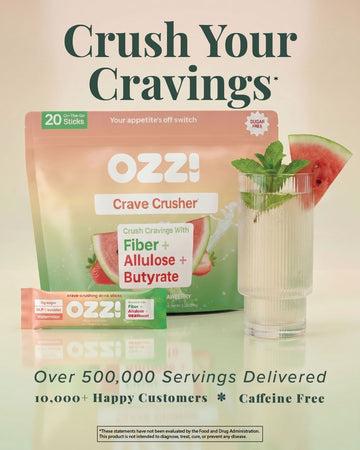
That is the idea behind Ozzi. One stick in water after dinner gives you 8g of allulose in a sweet drink, with six actives that support your body's natural GLP-1. It is caffeine-free, so it fits the evening. Ozzi is a cravings product. It does not treat menopause or its symptoms.
We built it as full-spectrum support for the hormones that run your appetite: something sweet from allulose, fiber for fullness, chromium for blood sugar, and butyrate for the gut signal. One drink, when the cravings hit, in place of the snack.
If the change started in your 40s, start with perimenopause and menopause craving control.
Two ways to take Ozzi
The drink
Ozzi Crave Crusher
8g allulose, 500mg konjac glucomannan, 500mg BIOMEnd L-lysine butyrate, chromium, ursolic acid and 150mg African mango in one daily stick. Sweet, caffeine-free, and made for after dinner.
See the drink →
The capsules
Ozzi Capsules
OEA, BIOMEnd butyrate and konjac fiber in a capsule. No caffeine, no flavor to choose, nothing to mix. Take with a full glass of water.
See the capsules →Should you cut out sugar completely?
Probably not.
A hard ban works for a few days and then fails on the worst possible night. The women who do best with sugar cravings are rarely the strictest ones. They are the ones who eat enough during the day, keep one or two sweet things they like, and stop treating every dessert as a verdict.
A better rule than "no sugar": no sugar on an empty stomach. Something sweet after a meal with protein and fiber hits your blood sugar far more gently than the same thing at 4pm with nothing else in you.
How long does it take for the cravings to calm down?
Give it two weeks before you judge anything.
The first few days of eating more protein and a bigger dinner mostly feel like eating more. Around the second week, most people notice the 9pm pull is quieter and easier to answer with something small. Sleep is the slow one. If your nights are broken, cravings will follow your worst nights for as long as they last.
Perimenopause itself can run for years, so think of this as a routine, not a reset.

What does a low-craving day look like?
- Breakfast: protein first. Eggs, Greek yogurt or a protein shake.
- Lunch: a real meal with protein, vegetables and a carb you like.
- 3pm: the protein snack. Greek yogurt, cottage cheese, or almonds and fruit.
- Dinner: enough food. Protein and fiber first, then the rest.
- After dinner: your planned sweet thing. Then you're done for the night.
- Bedtime: cool room, same time as last night.
None of that is exciting. All of it lowers the volume before the craving starts.

When should you talk to your doctor?
Talk to your doctor if cravings come with constant thirst, frequent urination or unexplained weight change, and ask about a blood sugar test. Raise it too if you are bingeing, or if night sweats and poor sleep are running your days. Hormone therapy is a medical decision, and your doctor is the right person for it.
More on hormones and cravings
Frequently asked questions
Does menopause cause sugar cravings?
It can. Estrogen inhibits food intake and helps regulate blood sugar, so as it falls many women feel hungrier and crave sweets more, especially at night. Poor sleep from night sweats adds to it.
How do I stop menopause sugar cravings?
Eat more protein earlier in the day, have a real dinner, protect your sleep, and keep a sweet option that is not sugar. Decide what you will have after dinner before the craving shows up. Cravings respond better to a plan than to a ban.
Are sugar cravings worse in perimenopause or menopause?
Usually perimenopause. A four-year study found food intake was highest 3 to 4 years before menopause. After menopause cravings often ease, but the body burns less energy.
Why do I crave sugar at night during menopause?
By evening you are tired, dinner has worn off and decisions feel harder. If you slept badly the night before, hunger is already higher. That combination lands around 9pm for most women.
Do sugar cravings go away after menopause?
They often ease once hormones stop swinging. They rarely vanish, because habit and stress drive cravings too. In one survey, chocolate cravings were only 13.4% less common after menopause.
What supplements help with menopause sugar cravings?
The ingredients with human research on cravings, hunger or blood sugar are chromium, allulose and konjac glucomannan. None has been tested on menopause sugar cravings specifically. They work on the blood sugar and fullness signals that cravings run on.
Is allulose safe to have every day?
Allulose is a rare sugar found in small amounts in figs and raisins, and it is widely used in foods and drinks. In trials, adults took 8 g to 14 g a day for 12 weeks. Large amounts at once can cause stomach upset in some people, so start with a normal serving.
Can Ozzi help with menopause sugar cravings?
Ozzi is a cravings product. It is a sweet, caffeine-free drink stick you take after dinner, with 8g of allulose and six actives that support your body's natural GLP-1. It does not treat menopause or its symptoms.
References
- Hirschberg AL. Sex hormones, appetite and eating behaviour in women. Maturitas. 2012. PMID 22281161
- Mauvais-Jarvis F et al. The role of estrogens in control of energy balance and glucose homeostasis. Endocr Rev. 2013. PMID 23460719
- Clegg DJ et al. Gonadal hormones determine sensitivity to central leptin and insulin. Diabetes. 2006. PMID 16567519
- Spiegel K et al. Brief communication: sleep curtailment in healthy young men is associated with decreased leptin levels, elevated ghrelin levels, and increased hunger and appetite. Ann Intern Med. 2004. PMID 15583226
- Greer SM et al. The impact of sleep deprivation on food desire in the human brain. Nat Commun. 2013. PMID 23922121
- Lovejoy JC et al. Increased visceral fat and decreased energy expenditure during the menopausal transition. Int J Obes. 2008. PMID 18332882
- Hormes JM, Rozin P. Perimenstrual chocolate craving. What happens after menopause? Appetite. 2009. PMID 19595725
- Ortinau LC et al. Effects of high-protein vs. high-fat snacks on appetite control, satiety, and eating initiation in healthy women. Nutr J. 2014. PMID 25266206
- Douglas SM et al. Low, moderate, or high protein yogurt snacks on appetite control and subsequent eating in healthy women. Appetite. 2013. PMID 23022602
- Sørensen LB, Astrup A. Eating dark and milk chocolate: a randomized crossover study of effects on appetite and energy intake. Nutr Diabetes. 2011. PMID 23455041
- Tan SY, Mattes RD. Appetitive, dietary and health effects of almonds consumed with meals or as snacks: a randomized, controlled trial. Eur J Clin Nutr. 2013. PMID 24084509
- Iida T et al. Acute D-psicose administration decreases the glycemic responses to an oral maltodextrin tolerance test in normal adults. J Nutr Sci Vitaminol. 2008. PMID 19155592
- Teysseire F et al. The role of D-allulose and erythritol on the activity of the gut sweet taste receptor and gastrointestinal satiation hormone release in humans. J Nutr. 2022. PMID 35135006
- Han Y et al. A preliminary study for evaluating the dose-dependent effect of d-allulose for fat mass reduction in adult humans. Nutrients. 2018. PMID 29385054
- Anton SD et al. Effects of chromium picolinate on food intake and satiety. Diabetes Technol Ther. 2008. PMID 18715218
- Docherty JP et al. A double-blind, placebo-controlled, exploratory trial of chromium picolinate in atypical depression: effect on carbohydrate craving. J Psychiatr Pract. 2005. PMID 16184071
- Sood N et al. Effect of glucomannan on plasma lipid and glucose concentrations, body weight, and blood pressure: systematic review and meta-analysis. Am J Clin Nutr. 2008. PMID 18842808
- Keithley JK et al. Safety and efficacy of glucomannan for weight loss in overweight and moderately obese adults. J Obes. 2013. PMID 24490058
- Tolhurst G et al. Short-chain fatty acids stimulate glucagon-like peptide-1 secretion via the G-protein-coupled receptor FFAR2. Diabetes. 2012. PMID 22190648
- Ngondi JL et al. IGOB131, a novel seed extract of the West African plant Irvingia gabonensis, significantly reduces body weight and improves metabolic parameters in overweight humans. Lipids Health Dis. 2009. PMID 19254366
- Onakpoya I et al. The efficacy of Irvingia gabonensis supplementation in the management of overweight and obesity: a systematic review of randomized controlled trials. J Diet Suppl. 2013. PMID 23419021
