

Stress Eating and Cortisol: Why You Reach for Sugar When Overwhelmed (2026)
Stress eating happens when chronic stress keeps cortisol elevated. Cortisol raises appetite, sharpens cravings for sugary, fatty 'comfort' foods, and nudges fat toward your belly. It also disrupts hunger hormones like leptin and ghrelin, so you feel hungry even when your body doesn't need food.
Key takeaways
- Cortisol raises appetite and steers you toward sugar and fat.
- High cortisol reactors eat more sweets under stress.
- Stress plus a high-sugar diet drives belly fat hardest.
- Steady blood sugar and gut health blunt stress cravings.
- Sleep, protein, fiber, and a craving tool beat willpower.
You ate clean all day. Salad at lunch, no snacking, felt great. Then a brutal work call, a kid meltdown, an inbox that won't quit, and by 8pm you're standing at the pantry with a sleeve of cookies you don't even remember opening.
That's not a character flaw. That's chemistry.
One Ozzi customer put it perfectly: 'The ONLY reason I am not losing weight is because of the agitated emotional eating after 7pm.' Stress is the trigger, and your hormones do the rest.
Let's break down what's actually happening, then build a plan that works when you're stressed and tired, which is exactly when most plans fall apart.
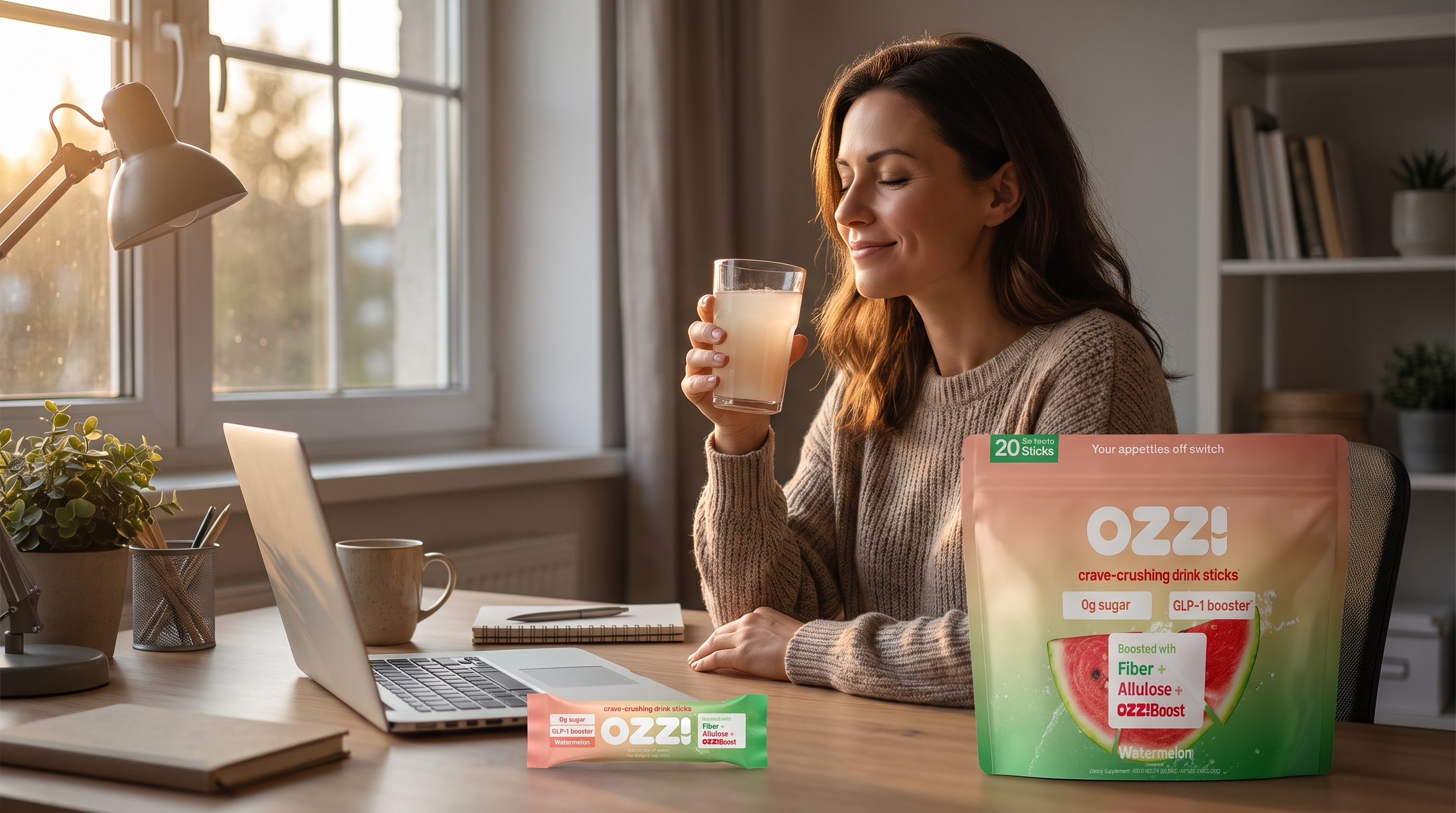
Why does stress make you crave junk food?
When something stresses you, your brain fires up the HPA axis (hypothalamic-pituitary-adrenal). The end product is cortisol, a steroid hormone built to help you survive a threat.
Short bursts of cortisol are fine. The problem is modern stress, which doesn't end. Deadlines, money, caregiving, and bad sleep keep cortisol simmering for weeks.
Chronically elevated cortisol does three things to your appetite. It increases hunger and the drive to eat. It biases that hunger toward calorie-dense sugar and fat. And it tangles up the hormones that tell you when to stop.
Researchers reviewing the stress-appetite link found that when a stressor persists, cortisol 'increases appetite and the motivation to eat,' with a clear pull toward high-calorie comfort foods that deliver a quick dopamine hit (Chao et al., 2017).
Your cravings aren't a willpower problem. They're a hormone problem.
What does cortisol do to hunger hormones?
Cortisol doesn't act alone. It throws off the two hormones that run your hunger thermostat: leptin (the 'I'm full' signal) and ghrelin (the 'I'm hungry' signal).
Under chronic stress, leptin signaling gets blunted and ghrelin can climb. The result is a body that feels hungry even when it's fed. That's the 'food noise' so many people describe.
A 6-month study tracking stress, cortisol, and appetite hormones found that higher cortisol, higher insulin, and chronic stress each predicted greater future weight gain and stronger food cravings (Chao et al., 2017).
So the loop builds on itself. Stress raises cortisol. Cortisol drives cravings and overeating. Overeating and weight gain add stress. Round and round.
If this sounds like your nights, our guide on how to stop food noise naturally goes deeper on quieting that mental loop.
Why do some people stress eat more than others?
Not everyone reaches for cookies under pressure. The difference comes down to cortisol reactivity, basically how big a cortisol spike you get from the same stressor.
In a classic lab study, women were stressed and then offered snacks. High cortisol reactors ate significantly more calories on the stress day, and ate more sweet food across the board, compared to low reactors who barely changed (Epel et al., 2001).
Later work confirmed the pattern. People with stronger cortisol responses tend toward more reward-driven, hyperpalatable eating (Geiker et al., 2018).
If you're a high reactor, this isn't your fault and it isn't permanent. It just means stress management and blood-sugar support do more for you than for the average person.

Is 'cortisol belly' real?
The phrase gets overhyped, but there's a real mechanism underneath it. Cortisol tends to redirect fat storage toward the abdomen, specifically visceral fat, the deep, metabolically active kind around your organs.
What makes it worse is the combination. In studies, chronic stress paired with a high-sugar, high-fat diet drove abdominal fat harder than diet alone (Aschbacher et al., 2014).
So stress eating isn't just about the calories. The stress and the comfort food amplify each other, and your waistline takes the hit.
The fix isn't a magic supplement that 'blocks cortisol.' It's lowering the stress signal and removing the sugar spikes that feed the cycle.
How do you stop stress eating? A real plan
You can't delete stress. You can change how your body responds to it and how loud the cravings get. Here's what actually moves the needle, ranked by impact.
1. Protect your sleep first. One bad night raises ghrelin and cortisol the next day. Sleep is the single biggest lever on stress cravings, and most people skip it.
2. Front-load protein and fiber. A breakfast and lunch built on protein and fiber keeps blood sugar steady, so you arrive at the stressful evening without a glucose crash begging for sugar.
3. Interrupt the reflex. When the urge hits, put 10 minutes between you and the pantry. A walk, a glass of water, a quick stretch. Cortisol-driven urges peak and fade.
4. Steady your blood sugar. Sharp glucose spikes and crashes feel like stress to your body. Soluble fiber and smart sweeteners flatten the curve.
5. Feed your gut. Your gut bacteria produce short-chain fatty acids like butyrate that influence appetite hormones. A healthier gut means a calmer hunger response. More on that in our piece on gut health and GLP-1.
6. Give yourself a craving tool. Willpower fails when you're stressed and depleted. A physical routine you can reach for beats relying on grit.
Stress will always show up. Whether it ends in a binge is the part you can change.
What helps stress cravings? Options compared
Plenty of things get marketed for stress eating. Here's an honest look at what each one actually does.
| Approach | What it targets | Honest take |
|---|---|---|
| Sleep + stress habits | Cortisol at the source | Highest impact, lowest cost. Start here. |
| Ashwagandha | Perceived stress, cortisol | Small trials show modest stress-eating drops. |
| Soluble fiber (glucomannan, inulin) | Fullness, blood sugar | Physical satiety, steadier glucose, gut support. |
| Allulose | Sweet craving without the spike | Satisfies the sugar pull, minimal glucose impact. |
| 'Cortisol blocker' pills | Marketing, mostly | Skip the hype. No magic cortisol switch. |
One promising example: a 2024 trial testing ashwagandha and meditation found reductions in stress-induced eating behaviors versus control, suggesting the cortisol angle is worth taking seriously (Smith et al., 2024).
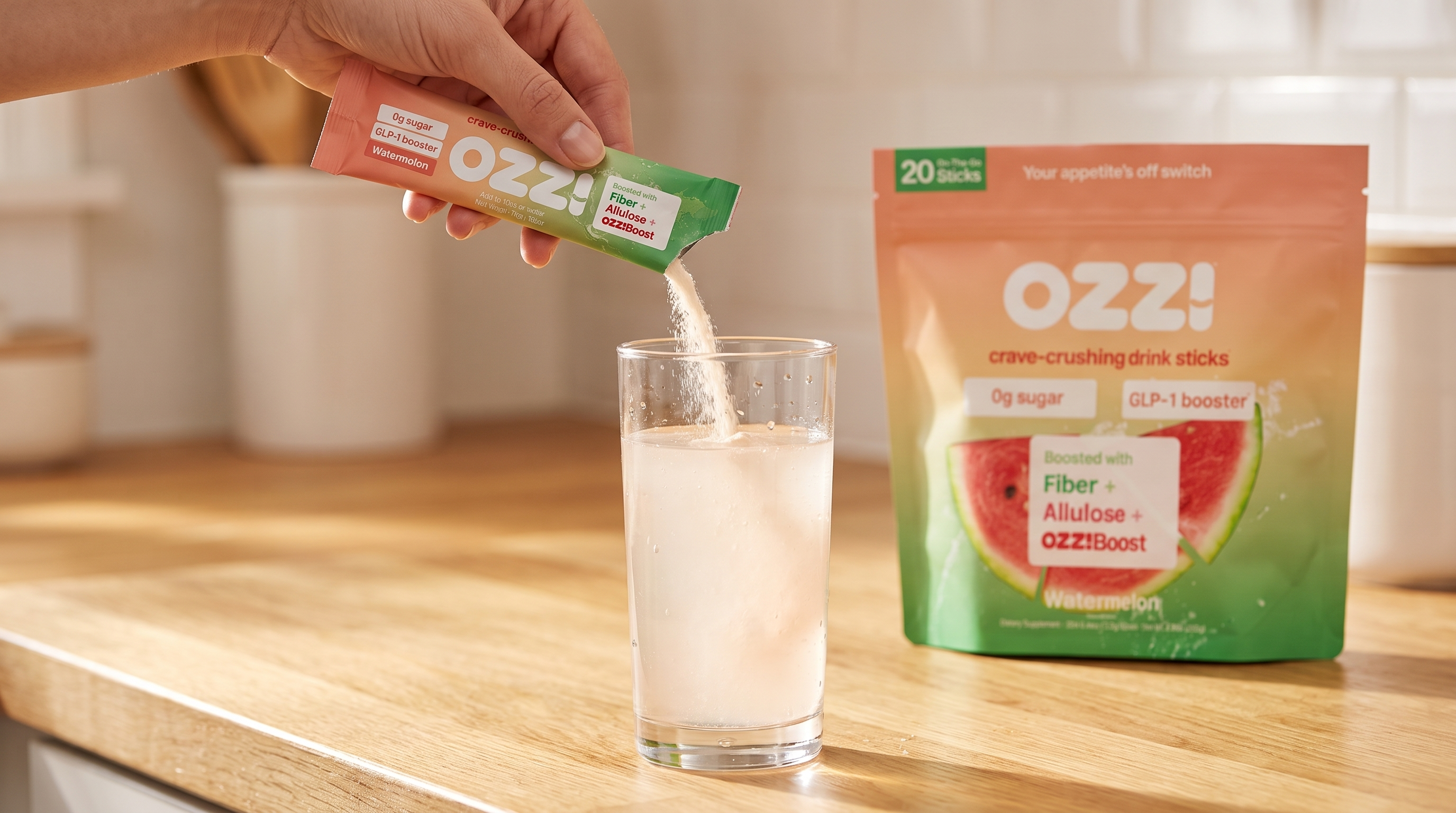
Where does Ozzi fit into stress eating?
I built Ozzi for the 9pm version of myself, the one who ate well all day and still lost the plot at night. Ozzi won't lower your work stress. What it does is attack the craving side of the loop.
Ozzi's Crave Crusher is a watermelon drink stick you mix into 16oz of cold water. It works on cravings from a few angles at once.
Glucomannan, a soluble fiber from konjac root, absorbs water and expands in your stomach for real physical fullness. Allulose satisfies the sweet pull with about a tenth of sugar's calories and minimal effect on blood glucose, so a stressful evening doesn't end in a spike-and-crash.
L-Lysine Butyrate and chicory root inulin support the gut-to-GLP-1 pathway, helping your own fullness hormones do their job. Chromium backs steady blood sugar, which matters a lot when stress is yanking it around.
No caffeine, so you can drink it at night without wrecking the sleep that keeps cortisol in check. You can read the full breakdown in our natural GLP-1 booster guide, or see how it stacks up in the best natural appetite suppressant roundup.
For the nighttime pattern specifically, pair this with our playbook on how to stop night eating and why you crave sugar at night.
Give your willpower a night off
Stress will keep coming. Ozzi gives you something to reach for instead of the pantry. Try Crave Crusher for 14 days straight. If it doesn't work for you, we'll refund your first bag.
If the stressful stretch you are heading into is the holiday season specifically, we put the practical version in how to eat less junk food during the holidays.
Frequently asked questions
Is stress eating the same as emotional eating?
They overlap heavily. Stress eating is one type of emotional eating, driven specifically by the cortisol response. Boredom, grief, and loneliness drive others. Our guide on how to stop emotional eating covers the full range.
Does cortisol really increase appetite?
Yes. Chronically elevated cortisol raises appetite, sharpens cravings for sugar and fat, and disrupts leptin and ghrelin, the hormones that signal fullness and hunger.
Why do I only stress eat at night?
Willpower depletes over the day, blood sugar dips, and evening is when stress finally catches up to you. Cortisol patterns and a long day of decisions stack up right when your defenses are lowest.
Can lowering stress actually reduce belly fat?
Indirectly, yes. Lowering chronic stress reduces cortisol-driven cravings and the high-sugar eating that drives visceral fat. There's no overnight fix, but the mechanism is real.
Do cortisol-blocking supplements work?
Most 'cortisol blocker' claims are marketing. Adaptogens like ashwagandha show modest effects on perceived stress in small trials, but nothing flips cortisol off like a switch.
Will Ozzi lower my cortisol?
No, and we won't claim that. Ozzi targets the craving side of the loop with fiber, allulose, and GLP-1 support. Managing stress and sleep is what lowers cortisol.
What should I eat to fight stress cravings?
Build meals around protein and fiber to keep blood sugar steady. Steady glucose means fewer crashes that feel like stress and trigger sugar cravings.
How fast can I expect stress cravings to ease?
Sleep and blood-sugar changes can help within days. Gut and hormone shifts take longer. Most people notice the night urges soften over a few weeks of consistency.
Is caffeine making my stress eating worse?
It can. Caffeine can raise cortisol and disrupt sleep, both of which worsen cravings. That's why Ozzi is caffeine-free and fine to drink in the evening.
This article is for educational purposes and isn't medical advice. Ozzi is a dietary supplement and isn't intended to diagnose, treat, cure, or prevent any disease. Talk to your doctor about chronic stress, weight, or any health condition.
References
- Chao AM, et al. Stress, cortisol, and other appetite-related hormones: Prospective prediction of 6-month changes in food cravings and weight. Obesity. 2017. https://pubmed.ncbi.nlm.nih.gov/28349668/
- Chao AM, et al. (full text). PMC. 2017. https://pmc.ncbi.nlm.nih.gov/articles/PMC5373497/
- Epel E, et al. Stress may add bite to appetite in women: a laboratory study of stress-induced cortisol and eating behavior. Psychoneuroendocrinology. 2001. https://www.sciencedirect.com/science/article/abs/pii/S0306453000000354
- Aschbacher K, et al. Chronic stress increases vulnerability to diet-related abdominal fat, oxidative stress, and metabolic risk. Psychoneuroendocrinology. 2014. https://pmc.ncbi.nlm.nih.gov/articles/PMC4104274/
- Geiker NRW, et al. High/low cortisol reactivity and food intake in people with obesity and healthy weight. Translational Psychiatry. 2018. https://www.ncbi.nlm.nih.gov/pmc/articles/PMC7026436/
- Spencer SJ, et al. Food cravings mediate the relationship between chronic stress and body mass index. Journal of Health Psychology. 2018. https://pmc.ncbi.nlm.nih.gov/articles/PMC6186388/
- Ashwagandha and meditation on stress-induced obesogenic eating behaviors. J Am Nutr Assoc. 2024. https://www.tandfonline.com/doi/full/10.1080/27697061.2024.2401054
