

Allulose vs Monk Fruit vs Stevia: Which Sweetener Actually Helps Appetite? (2026)
Key takeaways
- Allulose is a rare sugar with real GLP-1 and glucose data behind it.
- Monk fruit and stevia sweeten without spiking, but do less to appetite.
- Only allulose is dosed in grams; the others work in tiny milligram amounts.
- Allulose can cause gas if you take too much too fast.
- Ozzi uses 8.35g allulose as the base and stevia (Reb M) as a finisher.
Allulose, monk fruit, and stevia are all low or zero-glycemic sweeteners, but allulose is the only one with human trial evidence for lowering post-meal blood sugar and raising GLP-1, the hormone that signals fullness. Monk fruit and stevia mainly replace sugar's sweetness without those metabolic effects.
If you're trying to quiet cravings without spiking your blood sugar, you've probably seen all three names on labels. Allulose. Monk fruit. Stevia.
They get lumped together as "natural sweeteners." But they behave very differently once they hit your gut. One of them actually talks to your appetite hormones. The other two mostly just taste sweet.
Here's the honest breakdown, backed by what the 2025 and 2026 research actually shows.
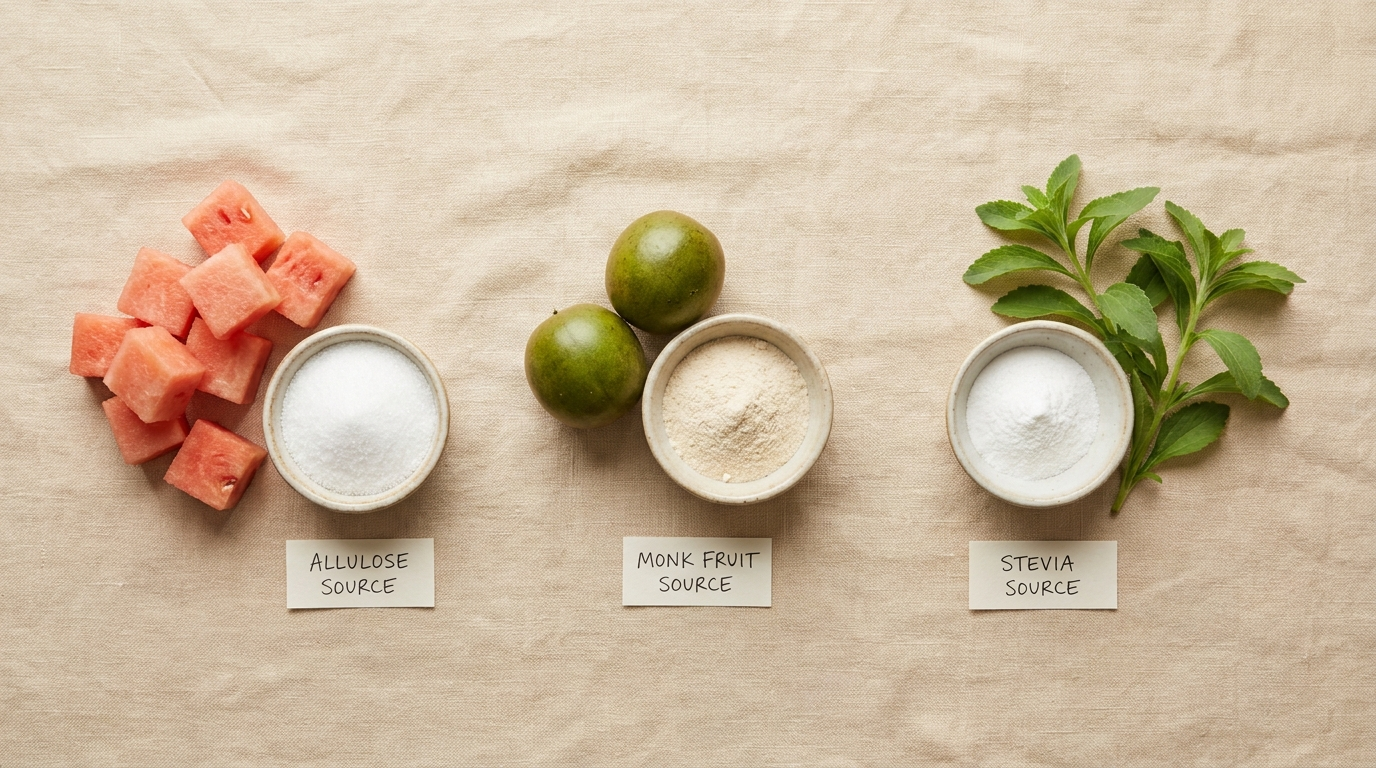
What is allulose, and why is it different?
Allulose is a rare sugar. It exists in tiny amounts in figs, raisins, and (yes) watermelon.
It tastes almost exactly like table sugar, about 70% as sweet, but your body barely metabolizes it. Roughly 90% of the allulose you eat gets absorbed and then excreted without being used for energy. That's why it lands at about 1/10th the calories of sugar and doesn't spike glucose or insulin.
The interesting part is what happens in your gut. A 2025 systematic review and meta-analysis of controlled human trials found that allulose significantly reduced post-meal glucose and insulin responses. A separate meta-analysis in people with type 2 diabetes reported the same direction of effect.
Then there's GLP-1. Animal and early human work suggests allulose can trigger GLP-1 release from the gut, and a 2026 randomized crossover trial was specifically built to measure allulose's GLP-1 profile against aspartame in healthy adults.
Allulose is the only one of the three that seems to do something, not just taste like something.
Want the deeper dive? I wrote a full allulose supplement guide and a piece on whether allulose spikes blood sugar.
Does monk fruit affect blood sugar or GLP-1?
Monk fruit gets its sweetness from compounds called mogrosides. They're intensely sweet, roughly 150 to 200 times sweeter than sugar, so you use a pinch, not a spoonful.
Because you use so little and mogrosides aren't really metabolized for energy, monk fruit is essentially zero-glycemic. It won't spike you. A 2025 PRISMA-guided systematic review of randomized trials backed that safety and glycemic-neutral picture.
Does it touch GLP-1? Maybe, but mostly in animals. Some rodent studies show mogroside V can nudge insulin secretion through a GLP-1 pathway, and a probiotic yogurt sweetened with monk fruit improved blood sugar and short-chain fatty acid production in diabetic rats. Human confirmation is thin.
So monk fruit is a great sugar swap. Just don't expect it to move your appetite the way a gram-dose ingredient can.
Is stevia good for appetite and blood sugar?
Stevia comes from the leaf of the Stevia rebaudiana plant. The sweet compounds are steviol glycosides, with names like Reb A and Reb M. Like monk fruit, it's 200 to 350 times sweeter than sugar and used in milligram amounts.
Blood sugar wise, stevia looks clean. A 2024 SWEET consortium crossover trial found biscuits reformulated with stevia Reb M reduced post-meal insulin and glucose versus sugar in adults with overweight or obesity.
The appetite story is messier. That same trial found no meaningful change in appetite or gut hormones after two weeks. But a separate lab study showed Reb A can stimulate GLP-1 release through bitter-taste receptors, and one beverage trial found stevia before lunch cut total calorie intake without raising blood sugar.
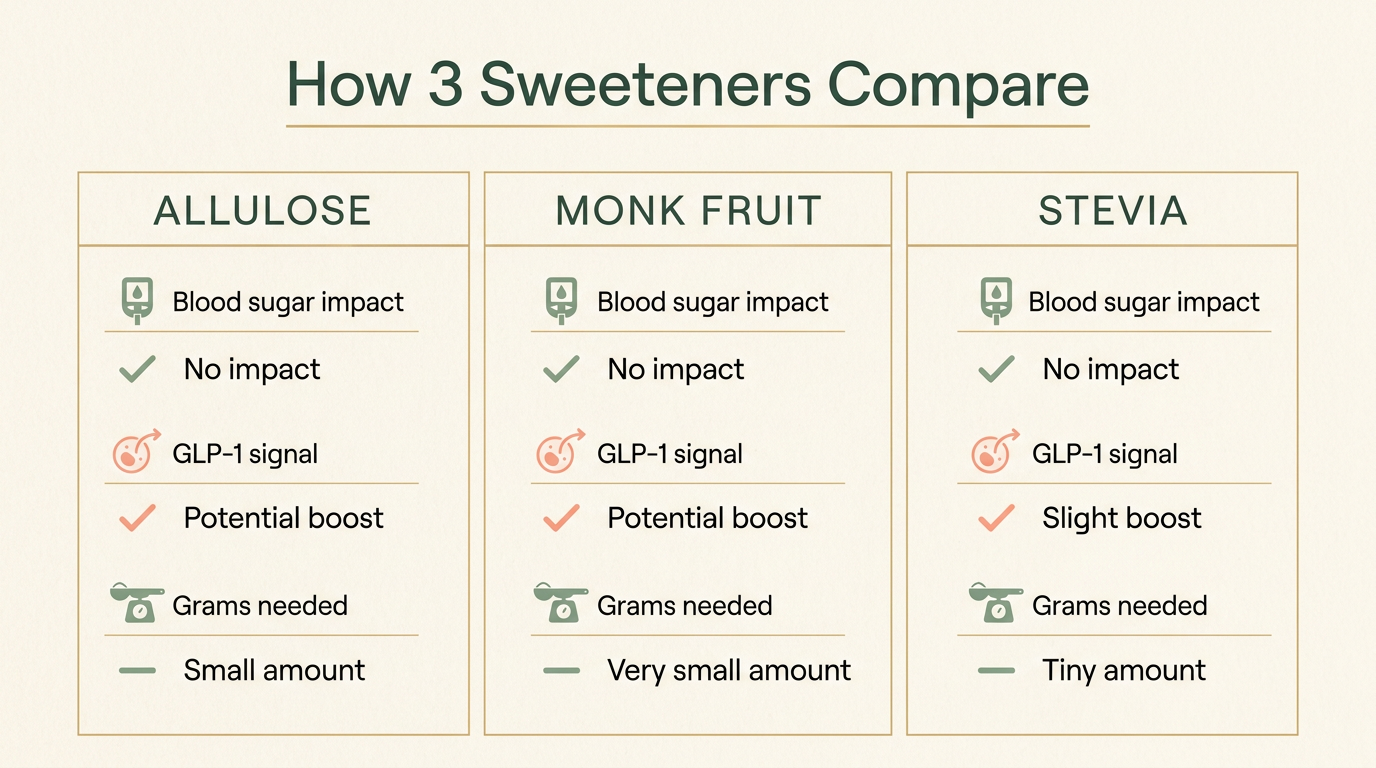
How do allulose, monk fruit, and stevia compare head to head?
Here's the practical comparison, cutting through the label noise.
| Factor | Allulose | Monk fruit | Stevia |
|---|---|---|---|
| Type | Rare sugar | Fruit extract | Leaf extract |
| Sweetness vs sugar | ~70% | 150-200x | 200-350x |
| Blood sugar spike | No (may lower) | No | No |
| Human GLP-1 evidence | Emerging, promising | Mostly animal | Mixed |
| Typical dose | Grams (5-15g) | Milligrams | Milligrams |
| Main downside | Gas if overdone | Cost, availability | Bitter aftertaste |
The dose row is the one people miss. Allulose works in grams, so it can bulk a drink and do metabolic work. Monk fruit and stevia work in milligrams, so they can sweeten but can't physically do much beyond that.
Which one is best for cravings and weight?
If your only goal is swapping sugar out of your coffee, any of the three works. Pick the taste you like.
If your goal is cravings, the honest answer is that no sweetener alone fixes them. Sweeteners help you cut sugar. Appetite is a hormone conversation, and that's where allulose's GLP-1 and glucose data give it the edge.
That's also why I don't think sweetener choice is the whole game. Allulose pairs best with fiber and butyrate, which is the actual mechanism behind quieting sugar cravings and raising GLP-1 naturally.
A sweetener can stop the spike. It takes fiber, butyrate, and allulose together to touch the hunger.
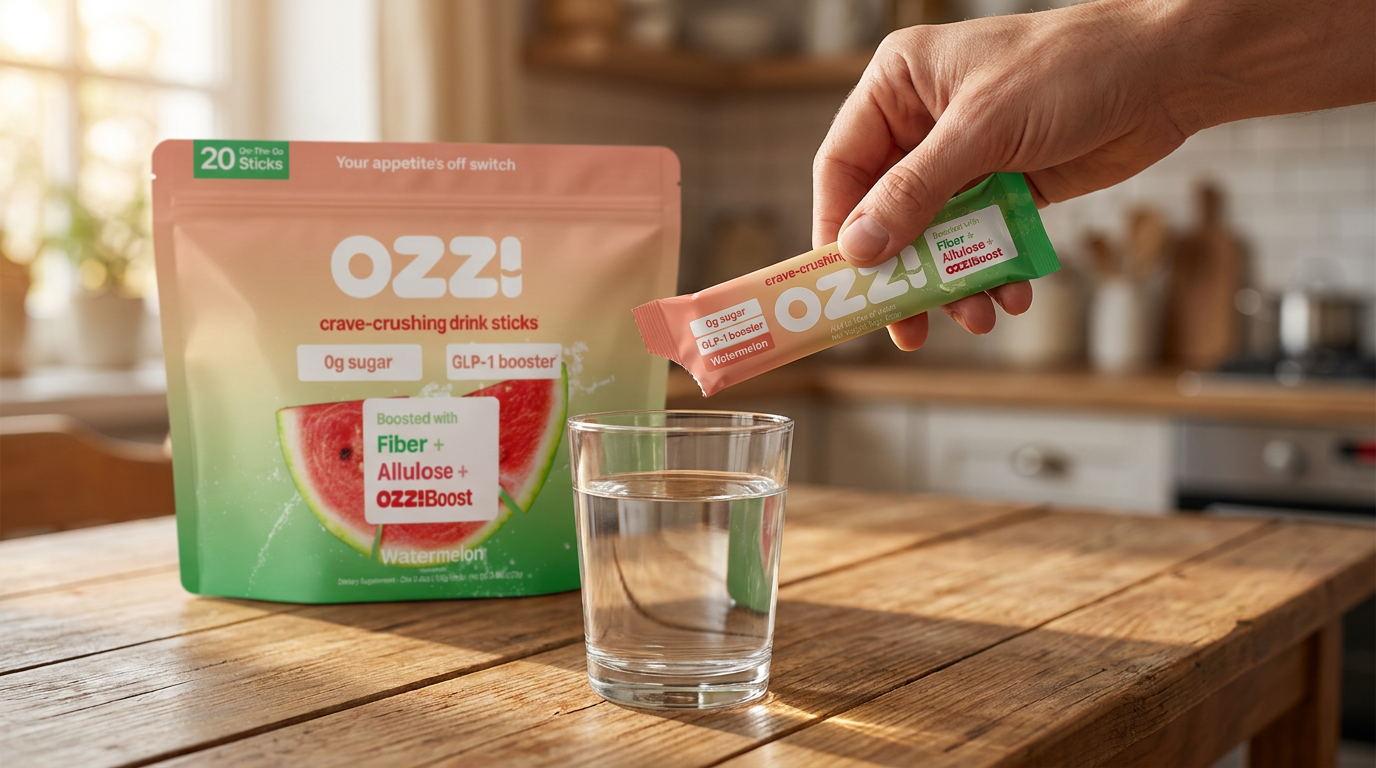
Why does Ozzi use allulose and stevia together?
People assume a "natural sweetener" drink picks one and calls it a day. We use two, on purpose.
Allulose (as allSWEET) is the base, at 8.35g per serving. It's the largest ingredient by weight in Crave Crusher. It carries the sweetness, keeps blood sugar flat, and brings the GLP-1 and glucose data we care about.
Stevia shows up as Reb M (OnoSweet), used in a tiny amount just to round out the finish so the drink tastes clean, not flat. No monk fruit, because at our allulose dose we don't need a second high-intensity sweetener stacked on top.
The rest of the appetite work comes from glucomannan fiber, L-Lysine Butyrate, and inulin, which is the real GLP-1 machinery. The sweeteners just make it something you'll actually drink every night.
Want the allulose one, done for you?
Ozzi Crave Crusher is built on 8.35g of allulose plus fiber and butyrate to help quiet cravings, without caffeine or a prescription. Try it for 14 days straight. If it doesn't work for you, we'll refund your first bag.
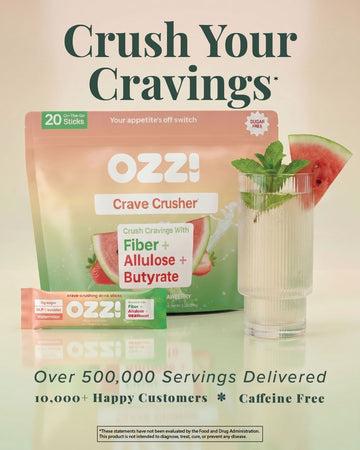
Made with 8g of allulose
Ozzi Crave Crusher
One watermelon stick a day: 8g allSWEET allulose, 500mg konjac glucomannan, 500mg BIOMEnd L-lysine butyrate, 300mcg chromium, 10mg ursolic acid and 150mg African mango. No caffeine, no stimulants, and every dose printed on the label.
See what's in it →Frequently asked questions
Is allulose better than stevia and monk fruit?
For blood sugar, all three are good. For appetite and GLP-1 support, allulose has the strongest human evidence because it's dosed in grams and shows glucose and GLP-1 effects.
Does allulose raise blood sugar?
No. Human trials show it doesn't spike glucose, and pooled data suggest it can slightly lower post-meal glucose. More detail in our allulose and blood sugar post.
Is monk fruit or stevia safer?
Both have strong safety records and are approved for general use. The bigger difference is taste. Some people find stevia bitter, while monk fruit tends to taste cleaner.
Which sweetener tastes most like sugar?
Allulose, by a wide margin. It's an actual sugar, so it browns and behaves like sugar, just at 70% sweetness and a fraction of the calories.
Can allulose cause digestive issues?
Yes, if you take a lot at once. Large single doses can cause gas or loose stools. Typical serving sizes like Ozzi's 8.35g are well tolerated by most people.
Do these sweeteners break a fast?
Pure stevia and monk fruit are essentially calorie-free. Allulose has minimal calories and doesn't raise insulin, though strict fasters may still prefer to keep it to eating windows.
Is stevia in Ozzi?
Yes, a small amount of Reb M (as OnoSweet) rounds out the finish. Allulose does the heavy lifting at 8.35g per serving.
Can I just take allulose on its own for cravings?
You can, but a sweetener alone won't do much for hunger. Allulose works best alongside fiber and butyrate, which is how Ozzi is formulated. See our guide on increasing GLP-1 naturally.
Curious how allulose stacks up against other ingredients? Compare it in allulose vs berberine, or start with the basics in what is GLP-1.
References
- Glycemic and cardiometabolic effects of rare sugars allulose and tagatose: a systematic review and meta-analysis of controlled human intervention trials. American Journal of Clinical Nutrition, 2026. Link
- Impact of allulose on blood glucose in type 2 diabetes: A meta-analysis of clinical trials. PubMed, 2024. Link
- Allulose for the attenuation of postprandial blood glucose levels in healthy humans: A systematic review and meta-analysis. PLOS One. Link
- The Fructose and Allulose Catalytic Effects (FACE) Trial. PMC. Link
- Effects of Allulose vs Aspartame Consumption on Postprandial GLP-1 Profiles: Protocol for a Randomized, Crossover, Double-Blind Trial. JMIR Research Protocols, 2026. Link
- Monk Fruit Extract and Sustainable Health: A PRISMA-Guided Systematic Review of Randomized Controlled Trials. PMC. Link
- Effects of a synbiotic yogurt using monk fruit extract as sweetener on glucose regulation and gut microbiota in rats with type 2 diabetes. Journal of Dairy Science. Link
- Rebaudioside A from Stevia rebaudiana stimulates GLP-1 release by enteroendocrine cells via bitter taste signalling pathways. Food & Function, RSC. Link
- Acute and two-week effects of neotame, stevia rebaudioside M and sucrose-sweetened biscuits on postprandial appetite and endocrine response. eBioMedicine, SWEET consortium, 2024. Link
- Acute Effect of Stevia on Glycemic and Insulin Responses in Obese Patients: A Randomized Double-Blind Placebo-Controlled Crossover Study, 2025. Link
