

Ozempic Side Effects and the Natural Alternative People Are Trying (2026)
The most common Ozempic side effects are nausea, vomiting, diarrhea, and constipation, reported by up to half of users. Rarer risks include gastroparesis, pancreatitis, and muscle loss. People who want the GLP-1 benefit without the shot can support the hormone naturally through diet, fiber, and gut-focused ingredients.
Ozempic is the most talked-about drug of the decade for a reason. It works.
But 'it works' and 'it's right for me' aren't the same sentence. A big chunk of the people who email me at Ozzi aren't anti-medication. They're just nervous about the side effects, or they can't get a prescription, or they took it, stopped, and watched the weight come back.
So let's go through the real side effects, what the 2025 research says, and the honest version of what a natural approach can and can't do.
Key takeaways
- Up to 50% of Ozempic users report gut side effects.
- About 4.5% quit the drug over GI issues in trials.
- Roughly two-thirds of lost weight returns after stopping.
- Muscle loss comes from rapid weight loss, not the drug itself.
- You can support GLP-1 naturally, just gently and slowly.
On this page
- What is Ozempic and how does it work?
- What are the most common Ozempic side effects?
- What are the more serious risks?
- Does Ozempic cause muscle loss and 'Ozempic face'?
- What happens when you stop Ozempic?
- Can you support GLP-1 naturally instead?
- How does Ozzi fit into this?
- Frequently asked questions
What is Ozempic and how does it work?
Ozempic is the brand name for semaglutide, a GLP-1 receptor agonist. It's a weekly injection originally approved for type 2 diabetes and now used widely for weight loss (as Wegovy at higher doses).
It mimics GLP-1, the hormone your gut releases after you eat. GLP-1 slows stomach emptying, tells your brain you're full, and quiets the constant mental chatter about food that people call food noise.
The results are real. In the landmark STEP 1 trial published in the New England Journal of Medicine, adults on semaglutide lost an average of 14.9% of their body weight over 68 weeks, versus 2.4% on placebo. That's a serious number.
The catch is that the same mechanism that makes it work, slowing down your gut, is also what causes most of the side effects.
The natural side of this article
Ozzi Crave Crusher is the caffeine-free drink stick I make. It's built on the same gut levers covered below: 500 mg glucomannan for fullness, L-Lysine Butyrate, and chicory root inulin. Mixed in water it's pale off-white and nearly clear, and there's no needle involved.
What are the most common Ozempic side effects?
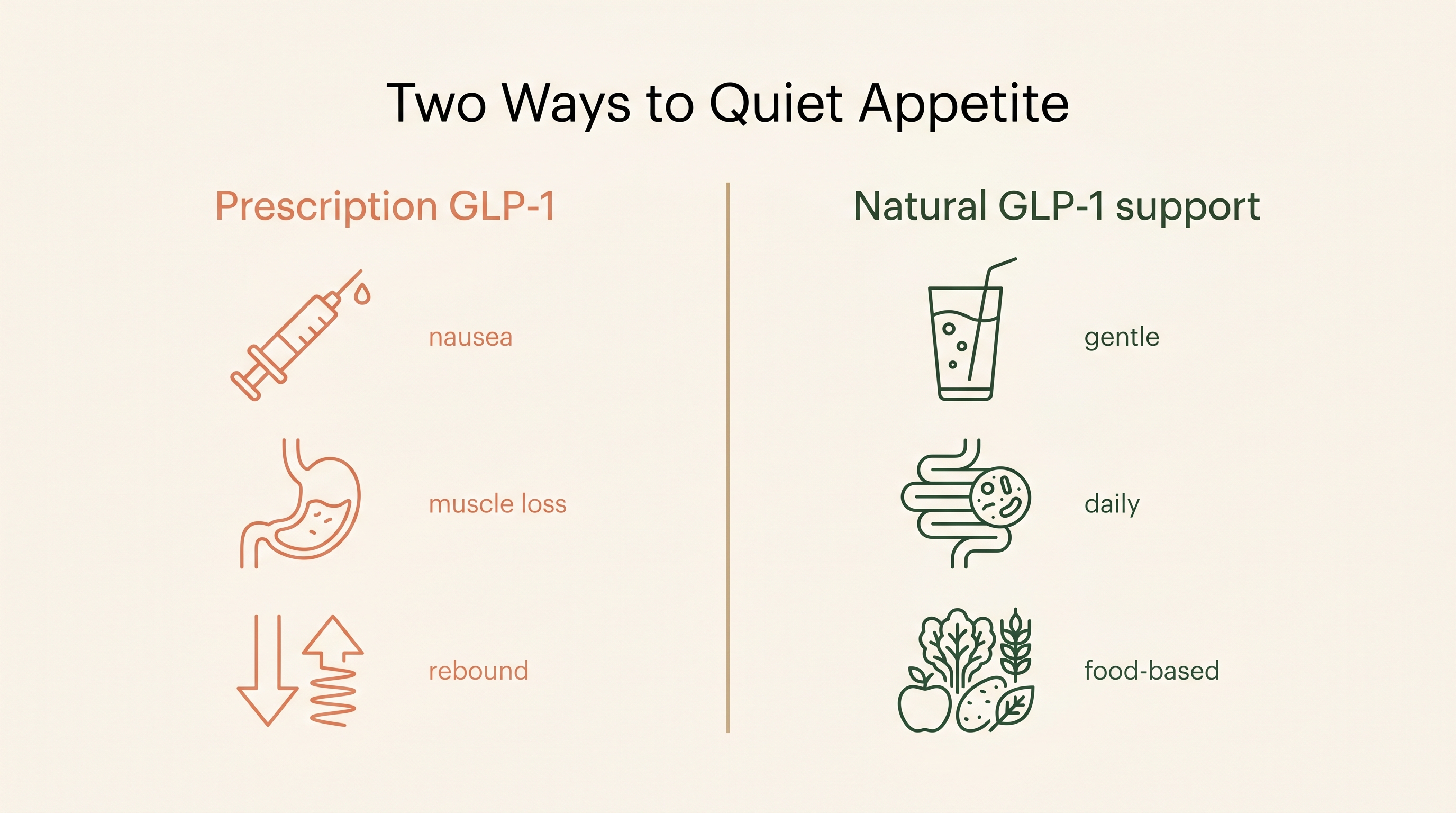
The big ones are gastrointestinal. Your stomach is emptying slower than it's used to, and it complains.
Across studies, up to 50% of users report gut-related side effects, with nausea being the most frequent. The usual list:
- Nausea (the number one complaint)
- Vomiting
- Diarrhea
- Constipation
- Abdominal pain and bloating
- Acid reflux
For many people these are worst during the early weeks and during dose increases, then they settle. For others they don't settle. In STEP 1, 4.5% of people quit semaglutide because of GI side effects, compared to 0.8% on placebo.
The thing that makes Ozempic work, a slowed-down gut, is the same thing that makes some people miserable on it.
What are the more serious risks?
Most side effects are uncomfortable but not dangerous. A smaller set are worth real attention. Here's the short version, with where each finding comes from.
| Risk | What the evidence says | Source |
|---|---|---|
| Serious adverse events | Risk 1.6 times higher than placebo, driven mostly by pancreatitis and gallstones | Tan et al., 2022 meta-analysis |
| Quitting over side effects | More than twice as likely as on placebo | Tan et al., 2022 meta-analysis |
| Severe GI reactions, acute kidney injury, pancreatitis | Added to the Ozempic label in January 2025. Kidney injury is linked to dehydration from vomiting | FDA label update, 2025 |
| Gastroparesis (badly delayed stomach emptying) | FDA advises against use in severe cases. A 2025 pilot study tied gastric electrical changes to semaglutide | FDA label update, 2025; 2025 pilot study |
| Thyroid C-cell tumors | Boxed warning based on rodent studies. Human risk still being studied | FDA label |
None of this means the drug is bad. For many people the benefit clearly outweighs the risk. It does mean this is a real medication with real trade-offs, not a casual purchase.
Does Ozempic cause muscle loss and 'Ozempic face'?
Sort of, but the nuance matters.
When you lose weight fast, you lose some muscle along with fat. That's true of any rapid weight loss, not just Ozempic. The 2025 SEMALEAN study tracked body composition on semaglutide and confirmed meaningful lean mass changes alongside the fat loss.
'Ozempic face,' the gaunt, hollow look, is the same story playing out in the face. It's driven by losing fat quickly, not by the drug poisoning your skin.
The good news is it's largely preventable. Adequate protein, resistance training, and slower dose escalation protect muscle. If you want the full breakdown, I cover how to support GLP-1 the right way in my guide to raising GLP-1 naturally.
What happens when you stop Ozempic?
This is the one nobody likes to talk about.
GLP-1 drugs work while you take them. Stop, and your appetite often comes roaring back. Research following people off semaglutide found that roughly two-thirds of the lost weight returned within about a year of stopping.
I hear this constantly. One customer put it bluntly: 'My insurance doesn't cover GLP-1 anymore and I previously lost over 100 pounds with it. I've gained it all back.' Another: 'I was on a GLP1 med for a year. Lost 30 lbs. Immediately after stopping my appetite doubled and I'm finding it very hard to not overeat.'
That rebound is exactly the gap a natural daily routine is built to fill. If you're tapering off, my GLP-1 quitting protocol and guide to keeping weight off after Ozempic go deeper.
The window that trips most people up is the evening one. If your hardest hours are after dinner, the Ozzi munchies page breaks down why late-night hunger behaves differently from daytime hunger.
Is there a natural GLP-1 alternative?
Yes, with an honest caveat: a drink stick is not a 14.9% body-weight injection. Anyone who tells you otherwise is selling you something.
What you can do is nudge your own GLP-1 production using food and ingredients, gently and consistently. Your gut makes GLP-1 every day. Certain inputs encourage it to make more.
| Approach | GLP-1 effect | Side effects | Needs prescription? |
|---|---|---|---|
| Semaglutide (Ozempic) | Strong, drug-level | Common GI, some serious | Yes |
| Natural GLP-1 support | Gentle, food-based | Minimal | No |
| Diet and fiber alone | Modest | None | No |
The ingredients with the most evidence behind them work on different levers at once. Butyrate, a short-chain fatty acid your gut bacteria make, can stimulate the L-cells that release GLP-1. Soluble fiber like glucomannan expands in your stomach for physical fullness. Prebiotic inulin feeds the bacteria that produce more butyrate. I cover the mechanism in detail in butyrate and GLP-1 and the wider natural GLP-1 supplement roundup.
How does Ozzi fit into this?
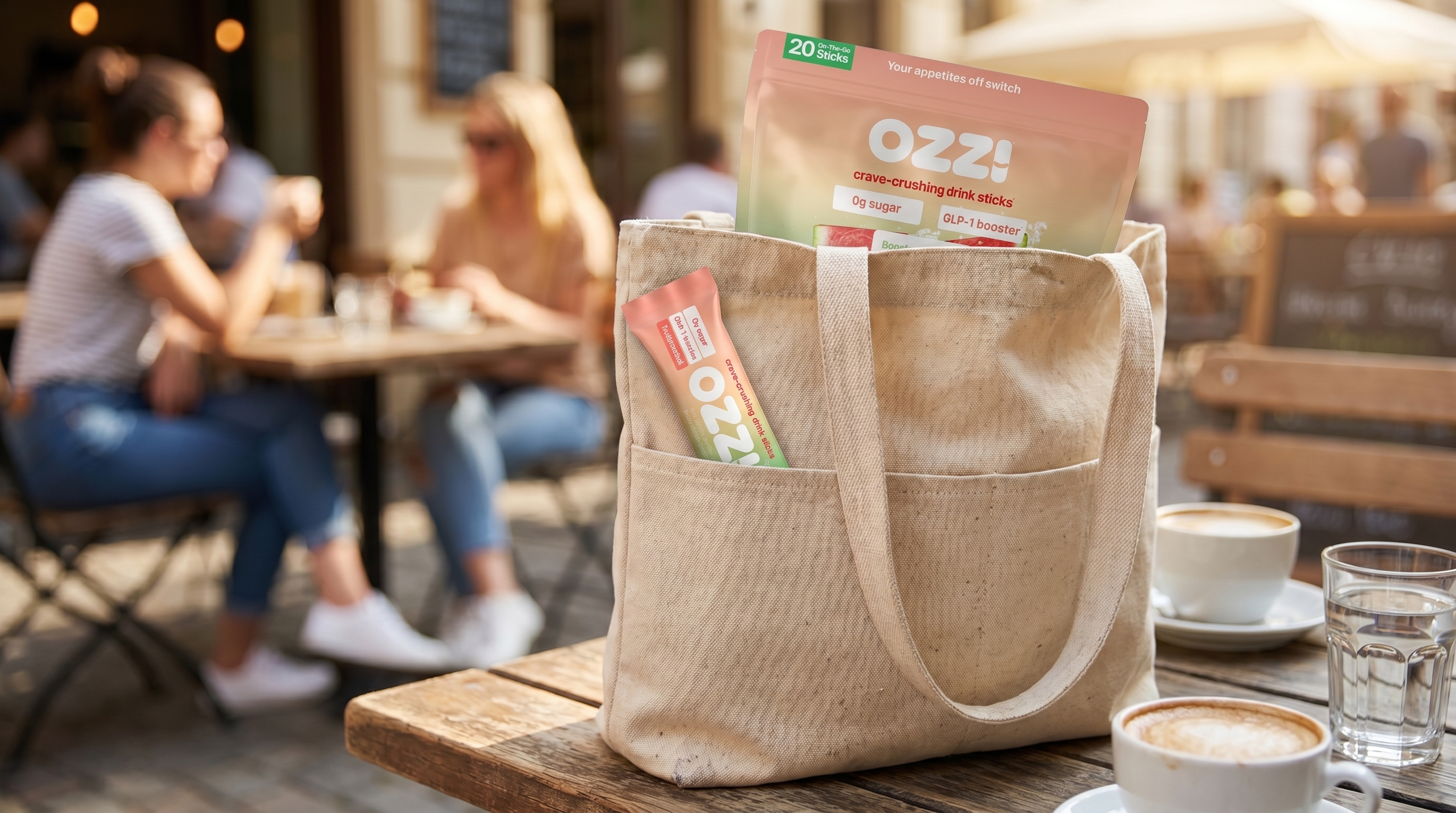
I built Ozzi Crave Crusher for the people in that gap. Scared of the side effects, priced out of the drug, or off it and fighting the rebound.
It's a daily drink stick with six studied ingredients: allulose, glucomannan, L-Lysine Butyrate, chicory inulin, African mango, and chromium. No caffeine, so you can drink it at night when cravings usually hit. No injection, no prescription.
I won't pretend it replaces Ozempic. It doesn't. What it does is give your gut daily support toward its own GLP-1, take the edge off cravings, and do it without nausea or a needle. For a wider comparison, see natural alternatives to Ozempic and how berberine compares.
A drink stick won't out-muscle a prescription. It will show up every day without making you feel sick.
Ozzi Crave Crusher
The GLP-1 benefit, without the shot
A caffeine-free daily drink stick that supports your body's own GLP-1 production. Six studied ingredients, including 500 mg glucomannan for fullness, L-Lysine Butyrate for direct butyrate, and chicory root inulin to feed the bacteria that make more of it. No needles, no prescription, no stimulants.
| Format | Drink stick, mixed in water |
| Caffeine | None, so evenings are fine |
| Prescription | Not needed |
| Subscribe & Save | 15% off |
14-Day Ozzi Challenge: Take it for 14 straight days. If your cravings and food noise aren't quieter, we'll refund your first bag.
Frequently asked questions
What is the most common Ozempic side effect?
Nausea, by a wide margin. It's usually worst in the first weeks and during dose increases, then often eases over time.
How long do Ozempic side effects last?
For many people the gut effects fade after a few weeks as the body adjusts. For others they persist, which is why some people stop the drug.
Does everyone gain weight back after Ozempic?
Not everyone, but it's common. Research shows roughly two-thirds of lost weight returns within about a year of stopping unless habits and appetite support stay in place.
Is there a natural alternative to Ozempic?
There's no natural product that matches the drug's strength. But fiber, butyrate, and rare sugars can support your own GLP-1 gently and without the side effects.
Can I take a natural GLP-1 supplement while on Ozempic?
Ask your doctor. A caffeine-free fiber and gut-support drink is generally low-risk, but combining anything with a prescription should be cleared with your provider.
Does Ozempic cause hair loss?
Hair shedding can happen, but like muscle loss it's usually tied to rapid weight loss and low nutrient intake rather than the drug directly.
Why does Ozempic cause 'Ozempic face'?
Fast fat loss shrinks the fat pads in the face, creating a gaunt look. Slower weight loss and good nutrition reduce it.
Is Ozempic safe long term?
It's still being studied. Short and medium-term data look strong for the right patients, but serious risks like pancreatitis exist, so it needs medical supervision.
What can I use if I don't qualify for a GLP-1 prescription?
Diet, fiber, resistance training, and a daily GLP-1 support drink like Ozzi are reasonable starting points. They're gentler and don't need a prescription.
Keep reading
GLP-1 Quitting Protocol: How to Stop Ozempic Without Gaining the Weight Back
The taper schedule, the protein number, and what to do in the first 90 days after your last dose.
GLP-1 Microdosing vs Natural GLP-1 Support: An Honest 2026 Comparison
Why microdosing is popular, what the evidence actually shows, and how the natural route compares.
References
- Wilding JPH, et al. Once-Weekly Semaglutide in Adults with Overweight or Obesity (STEP 1). N Engl J Med. 2021;384(11):989-1002. https://doi.org/10.1056/NEJMoa2032183
- Tan HC, Dampil OA, Marquez MM. Efficacy and Safety of Semaglutide for Weight Loss in Obesity Without Diabetes: A Systematic Review and Meta-Analysis. J ASEAN Fed Endocr Soc. 2022;37(2):65-72. https://doi.org/10.15605/jafes.037.02.14
- Semaglutide: Double-edged Sword with Risks and Benefits. https://pmc.ncbi.nlm.nih.gov/articles/PMC11790292/
- Semaglutide Induces Changes in Gastric Electrical Activity in Patients With Overweight and Obesity: A Pilot Study. https://pmc.ncbi.nlm.nih.gov/articles/PMC13076063/
- Impact of Semaglutide on fat mass, lean mass and muscle function in patients with obesity (SEMALEAN study). https://www.ncbi.nlm.nih.gov/pmc/articles/PMC12673431/
- Assessment of Thyroid Carcinogenic Risk and Safety Profile of GLP1-RA Semaglutide: A Systematic Literature Review. https://www.ncbi.nlm.nih.gov/pmc/articles/PMC11050669/
- FDA Highlights of Prescribing Information, Ozempic (semaglutide), 2025. https://www.accessdata.fda.gov/drugsatfda_docs/label/2025/209637s025lbl.pdf
These statements have not been evaluated by the Food and Drug Administration. This product is not intended to diagnose, treat, cure, or prevent any disease. Ozempic and Wegovy are registered trademarks of Novo Nordisk. Ozzi is not affiliated with Novo Nordisk. Content is for general education and is not medical advice. Talk to your doctor before starting or stopping any medication.
