

GLP-1 Microdosing vs Natural GLP-1 Boosting: An Honest 2026 Comparison
GLP-1 microdosing uses a small fraction of the standard drug dose, hoping for fewer side effects. Natural GLP-1 support uses food, fiber, and ingredients to nudge your body's own GLP-1. Microdosing is stronger but unstudied and often compounded. Natural is safer and milder, with no prescription.
Key takeaways
- Microdosing has no clinical trials and no set definition.
- Most microdose products are compounded, not FDA-approved.
- The FDA warned telehealth sellers over GLP-1 claims in 2026.
- Natural support is milder, safer, and prescription-free.
- Pick based on your goals, risk tolerance, and budget.
On this page
'Microdosing' is everywhere right now. The pitch sounds reasonable: take a tiny bit of Ozempic-style medication, get some of the appetite benefit, skip the nausea and the cost.
It's a fair thing to want. A lot of Ozzi customers tell me the same: 'I want what Ozempic does to food noise, but gentler.'
So let's compare GLP-1 microdosing with the natural approach honestly. No selling you a miracle, no trashing the drugs. Just what each one is, what the evidence says, and how to think about the trade-offs.
What is GLP-1 microdosing?
GLP-1 microdosing means using a dose well below the standard prescribed amount of a GLP-1 drug like semaglutide or tirzepatide.
For context, a standard semaglutide weight-loss titration climbs toward 2.4mg weekly. Some microdose programs start as low as 0.2mg and cap around 0.6mg, roughly a quarter of the usual max.
The goal is to get appetite quieting and 'food noise' relief with milder side effects. If you're new to GLP-1 itself, our what is GLP-1 guide covers the basics.
Here's the catch most ads skip: there's no official definition of a microdose, and almost all microdose offerings use compounded drugs, not the FDA-approved pens.
Where I'm coming from
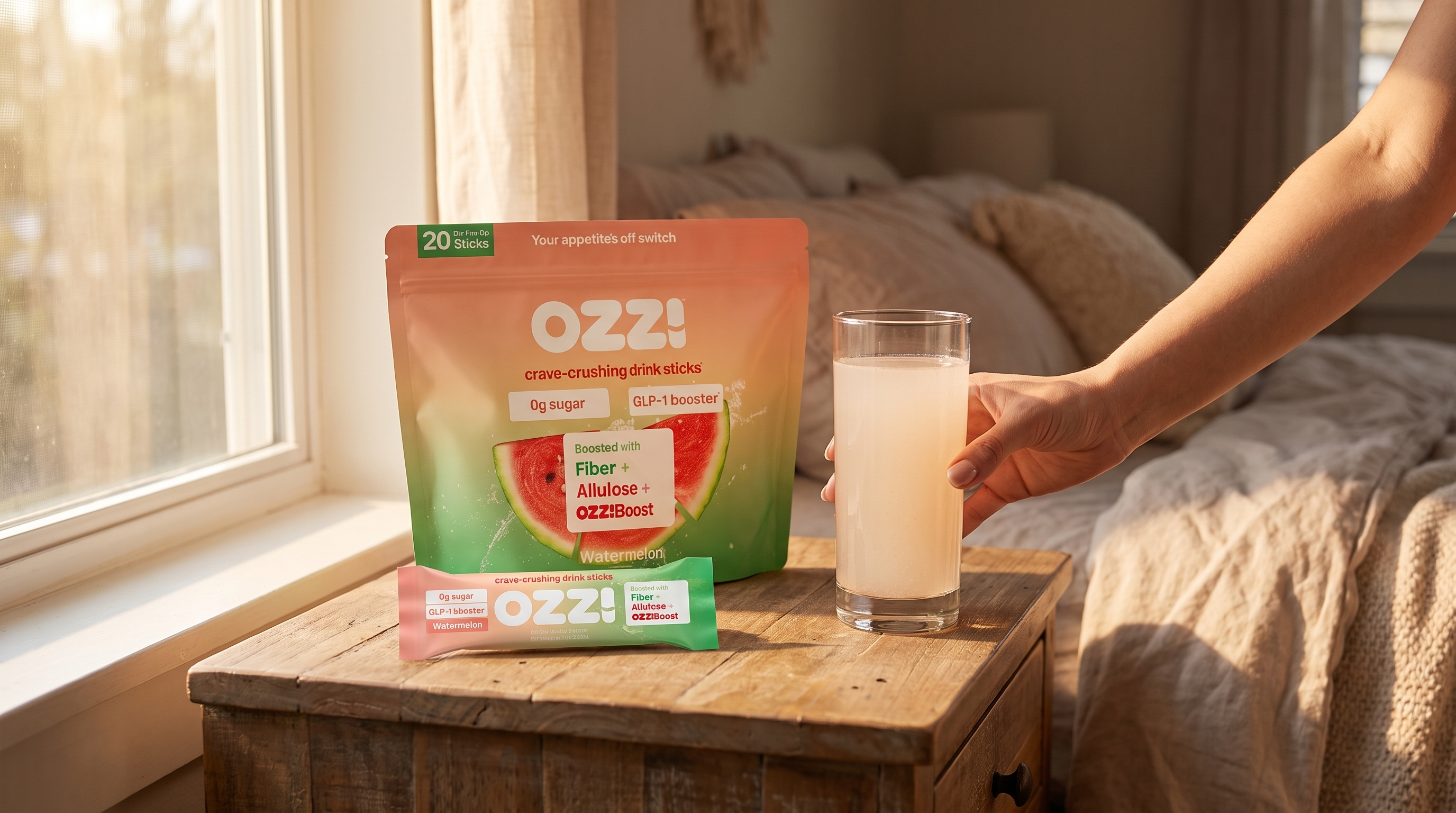
Full disclosure, I make one of the natural options in this comparison. Ozzi Crave Crusher is a caffeine-free drink stick built on the levers below: 500 mg glucomannan, L-Lysine Butyrate, and chicory root inulin. It mixes pale off-white and nearly clear in water, and it is not a drug. I've tried to keep the rest of this page fair anyway.
Does GLP-1 microdosing actually work?
Honest answer: nobody really knows yet.
The big randomized trials that proved these drugs work, like the STEP trials for semaglutide and SURMOUNT for tirzepatide, tested standard doses, not microdoses (Wilding et al., 2021; Jastreboff et al., 2022).
For microdosing specifically, the evidence is anecdotal. A May 2026 STAT investigation put it bluntly: microdosing is popular but unsupported by clinical evidence (STAT, 2026).
The American Association of Clinical Endocrinology does not support routine microdosing and recommends FDA-approved dosing, allowing exceptions only in specific clinical cases like severe side effects (MU Health Care, 2026).
Popular and proven aren't the same thing. Microdosing is the first, not yet the second.

What are the risks of microdosing compounded GLP-1?
The risks aren't really about the small dose. They're about where the drug comes from and what gets lost along the way. Here's the short version.
| Risk | What's actually been reported | Source |
|---|---|---|
| Misleading marketing | On March 3, 2026, the FDA issued 30 warning letters to telehealth companies over false or misleading claims about compounded GLP-1 products | STAT, 2026 |
| Dose accuracy | Compounded samples may contain lower-than-indicated strengths, or in some cases no active drug at all | Novo Nordisk |
| Manufacturing standards | Compounded products may skip Good Manufacturing Practice standards that the approved pens follow | Novo Nordisk |
| Muscle loss | Standard GLP-1 weight loss can come with meaningful loss of lean muscle | Perioperative GLP-1 review, 2025 |
We dig into the muscle question separately in GLP-1 and muscle loss.
None of this means the drugs are bad. Used properly, at proven doses, under a real doctor, they're a major tool. The gray-market microdose version is where the risk creeps in.
What is natural GLP-1 support?
Natural GLP-1 support works on the same hormone from a different direction. Instead of injecting a GLP-1 mimic, you nudge your body to release more of its own.
Your gut makes GLP-1 from L-cells when it senses certain signals: protein, viscous fiber, and short-chain fatty acids made when bacteria ferment prebiotic fiber.
So the natural levers are food and ingredients. More protein and fiber, fewer fast carbs, and specific compounds like glucomannan, inulin, and butyrate. Our how to increase GLP-1 naturally guide walks through all of them.
The honest framing: natural support is real, but it's gentle. It nudges your hormones rather than flooding the receptor like a drug does.
Where it tends to matter most is the evening, when hunger stops behaving like hunger. If that's your hardest window, the Ozzi munchies page covers why late-night cravings run on a different signal than daytime ones.
Microdosing vs natural: how do they compare?
Here's the side-by-side. I've tried to keep this fair to both.
| Factor | GLP-1 microdosing | Natural GLP-1 support |
|---|---|---|
| Strength | Stronger appetite effect | Milder, gradual |
| Evidence | No microdose trials yet | Mechanism studied, effects modest |
| Source | Usually compounded | Food and supplements |
| Prescription | Required | None |
| Side effects | Nausea, possible muscle loss | Mostly mild GI at first |
| Needles | Usually injected | No needles |
If you want the strongest possible appetite suppression and you can access a legitimate, supervised program, the drugs win on raw power. If you want something safe, cheap, and prescription-free that you'll actually stick with, natural wins on simplicity.
They're also not mutually exclusive. Some people use natural support to ease off the drugs, which we cover in how to keep weight off after Ozempic.
Where does Ozzi fit in?
Ozzi is squarely on the natural side, and I'll be straight about what that means.
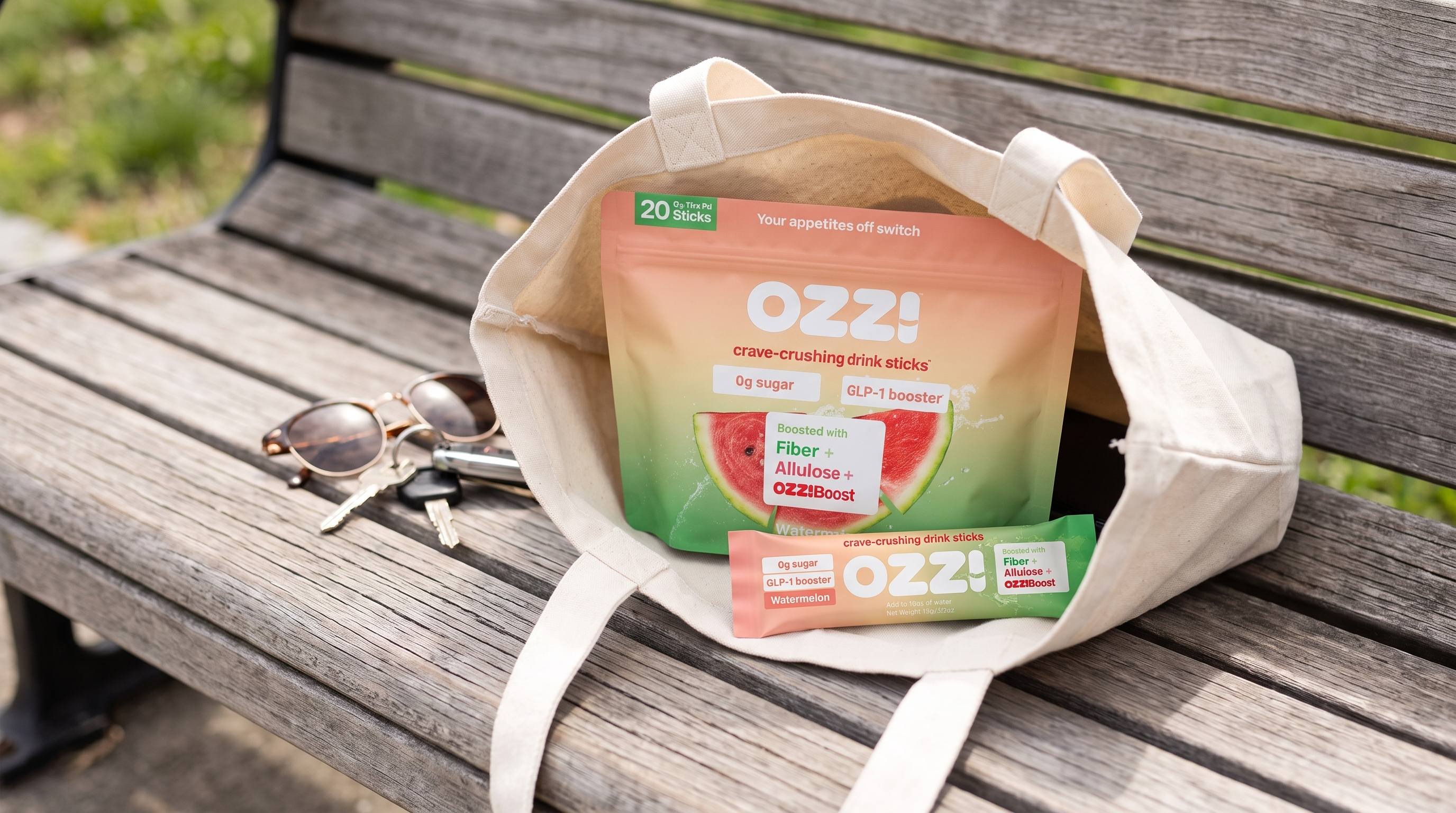
Crave Crusher is a watermelon drink stick built around the natural GLP-1 levers: glucomannan for fullness, chicory root inulin to feed gut bacteria, L-Lysine Butyrate to deliver butyrate directly, plus allulose, African mango, and chromium for the craving and blood-sugar side.
It will not match a prescription drug's strength. I won't pretend otherwise. What it does is give you a daily, no-caffeine, no-needle routine that nudges your own appetite signals.
For a lot of people, that's the right fit: the ones nervous about side effects, the ones who can't access or afford the drugs, and the ones tapering off who need gentler ongoing support. We compare the full natural field in natural alternatives to Ozempic and the natural GLP-1 supplement guide, and the side-effect angle in Ozempic side effects and the natural alternative.
Ozzi Crave Crusher
The gentle, prescription-free option
If microdosing feels like too much, start where it's safe. Crave Crusher supports your own GLP-1 production with 500 mg glucomannan for fullness, L-Lysine Butyrate for direct butyrate, and chicory root inulin to feed the bacteria that make more of it. No needles, no script, no caffeine.
| Format | Drink stick, mixed in water |
| Contains a GLP-1 drug? | No. It is not a microdose |
| Prescription | Not needed |
| Subscribe & Save | 15% off |
14-Day Ozzi Challenge: Take it for 14 straight days. If your cravings and food noise aren't quieter, we'll refund your first bag.
If you are weighing the supplement route, our comparison of natural GLP-1 supplements lays the doses out.
Frequently asked questions
Is GLP-1 microdosing FDA-approved?
No. There's no FDA-approved microdose protocol. Most microdose offerings use compounded drugs, and the FDA sent warning letters to telehealth sellers in March 2026.
Does microdosing have fewer side effects?
It may reduce nausea for some people, but there's no clinical trial proving it. Side effects vary, and compounded products add quality and dosing uncertainty.
How much weight can you lose microdosing?
Unknown for sure. Early anecdotal reports suggest less than standard dosing, roughly 2 to 4% body weight in 8 weeks in some low-dose programs, but this isn't validated.
Is natural GLP-1 support as strong as the drugs?
No. Natural support is gentle and gradual. It nudges your own hormones rather than flooding the receptor like a drug does.
Can I combine natural support with a GLP-1 drug?
Many people do, especially when tapering off. Talk to your doctor first, since timing and digestion can interact.
Why is compounded semaglutide risky?
Compounded products can vary in strength, may contain little or no active drug, and may skip manufacturing standards that the approved pens follow.
Who should consider the natural route?
People nervous about side effects, those who can't access or afford the drugs, and those tapering off who want gentle ongoing appetite support.
Does losing weight on GLP-1 cost you muscle?
It can. Rapid weight loss from any method, including GLP-1 drugs, can reduce lean muscle, which is why protein and resistance training matter.
Is Ozzi a microdose?
No. Ozzi contains no semaglutide or any GLP-1 drug. It's a supplement that supports your body's own GLP-1 through fiber and butyrate.
Keep reading
Ozempic Side Effects and the Natural Alternative People Are Trying
The full side-effect picture, what the FDA added to the label in 2025, and what a natural route can and can't do.
GLP-1 Quitting Protocol: How to Stop Ozempic Without Gaining the Weight Back
The taper schedule, the protein number, and the first 90 days after your last dose.
This article is for educational purposes and isn't medical advice. Ozzi is a dietary supplement and isn't intended to diagnose, treat, cure, or prevent any disease. Never start, stop, or change a prescription medication without your doctor. Talk to a licensed clinician before considering any GLP-1 drug.
References
- Wilding JPH, et al. Once-Weekly Semaglutide in Adults with Overweight or Obesity (STEP 1). N Engl J Med. 2021. https://pubmed.ncbi.nlm.nih.gov/33567185/
- Jastreboff AM, et al. Tirzepatide Once Weekly for the Treatment of Obesity (SURMOUNT-1). N Engl J Med. 2022. https://pubmed.ncbi.nlm.nih.gov/35658024/
- Chambers ES, et al. Effects of targeted delivery of propionate to the human colon on appetite regulation and body weight. Gut. 2015. https://www.ncbi.nlm.nih.gov/pmc/articles/PMC4680171/
- Glucagon-Like Peptide-1 Receptor Agonists: Perioperative Considerations and Safety Protocols. 2025. https://www.ncbi.nlm.nih.gov/pmc/articles/PMC12724355/
- Inulin effect on gut hormone release and appetite perception: a randomized crossover study. 2024. https://www.ncbi.nlm.nih.gov/pmc/articles/PMC10918168/
- GLP-1 microdose popular but unsupported by evidence. STAT News. 2026. https://www.statnews.com/2026/05/29/glp-1-microdose-popular-but-unsupported-by-evidence/
- Thinking About Microdosing GLP-1? 5 Myths Debunked. MU Health Care. 2026. https://livehealthy.muhealth.org/stories/thinking-about-microdosing-glp-1-5-myths-debunked
