

GLP-1 and Muscle Loss: How to Protect Your Muscle on Ozempic (2026)
Key takeaways
- Roughly 20 to 30% of GLP-1 weight loss can be lean mass.
- Protein and strength training matter more than the drug itself.
- Aim for 1.2 to 2g of protein per kg of body weight daily.
- Resistance training 3 to 4 times a week protects muscle.
- Muscle loss matters most when you stop the drug.
GLP-1 medications cause muscle loss because rapid weight loss from any source pulls from both fat and lean tissue. Studies estimate 20 to 30% of total weight lost on GLP-1 drugs is lean mass. Higher protein intake and resistance training sharply reduce that muscle loss without reducing fat loss.
GLP-1 drugs are good at one thing: they shrink your appetite and the weight comes off.
What the ads skip is that some of that weight is muscle. And muscle is the tissue you least want to lose, because it drives your metabolism, your strength, and how well you keep weight off later.
This isn't a reason to fear the drugs. It's a reason to use them smarter. Let me walk through what the research says and what to actually do about it.
Do GLP-1 drugs actually cause muscle loss?
Yes, but with an important caveat. Some muscle loss happens with almost any meaningful weight loss, whether it comes from a drug, a diet, or surgery.
Recent systematic reviews and meta-analyses report that roughly 20 to 30% of total weight lost during GLP-1 treatment comes from lean mass, which includes muscle, bone, and organ tissue.
So if someone loses 30 pounds, somewhere around 6 to 9 of those pounds might be lean mass. That's not trivial.
Here's the part that matters most: how much muscle you lose is shaped more by your protein intake and training than by the medication itself. The drug sets the calorie deficit. You decide what gets burned in it.
The drug sets the calorie deficit. You decide whether it burns fat or muscle.
How much muscle can you protect with the right habits?
A lot, and the 2025 data is genuinely encouraging.
One 2025 study of 200 adults combined GLP-1 medication with resistance training education and individualized protein targets (generally above 0.36g per pound). After six months, participants lost about 13% of body weight but only 3% of muscle mass.
Compare that to the typical 20 to 30% lean mass figure and the difference is striking.
A 2025 case series in SAGE Open Medicine followed three people on semaglutide or tirzepatide who trained 3 to 5 days a week and ate 0.36 to 0.77g of protein per pound. Their lean soft tissue changes were -6.9%, +2.5%, and +5.8%, even while total weight dropped 13 to 33%. Two of them actually gained lean tissue while losing weight.
| Approach | Lean mass lost (share of weight) | Source |
|---|---|---|
| GLP-1 alone, no structured training | ~20 to 30% | Meta-analyses, 2025-2026 |
| GLP-1 + protein + resistance training | ~3% muscle at 6 months | 2025 study, 200 adults |
| GLP-1 + high protein + 3-5x training | Lean tissue held or gained | 2025 case series |
The takeaway is simple. The medication isn't destiny. Your inputs decide the quality of the weight you lose.
How much protein do you need on a GLP-1?
The current best-practice range is 1.2 to 2g of protein per kg of body weight per day.
For a 75kg person (about 165 pounds), that's roughly 90 to 150g of protein daily. That's a real amount, and it's the hard part on a GLP-1.
Why hard? Because the drug kills your appetite. When you're barely hungry, hitting a protein target takes intention. People often drift into eating very little of anything, and that's exactly when muscle loss accelerates.
A few practical moves that help:
Front-load protein at breakfast, when the drug's appetite suppression is often weakest. Aim for 30g before noon.
Lean on easy, high-protein options: Greek yogurt, eggs, cottage cheese, protein shakes, chicken, fish, tofu. Liquid protein is easier when food feels like a chore.
Don't skip meals just because you're not hungry. On a GLP-1, "not hungry" is the default, not a signal to eat nothing.
What kind of exercise protects muscle best?
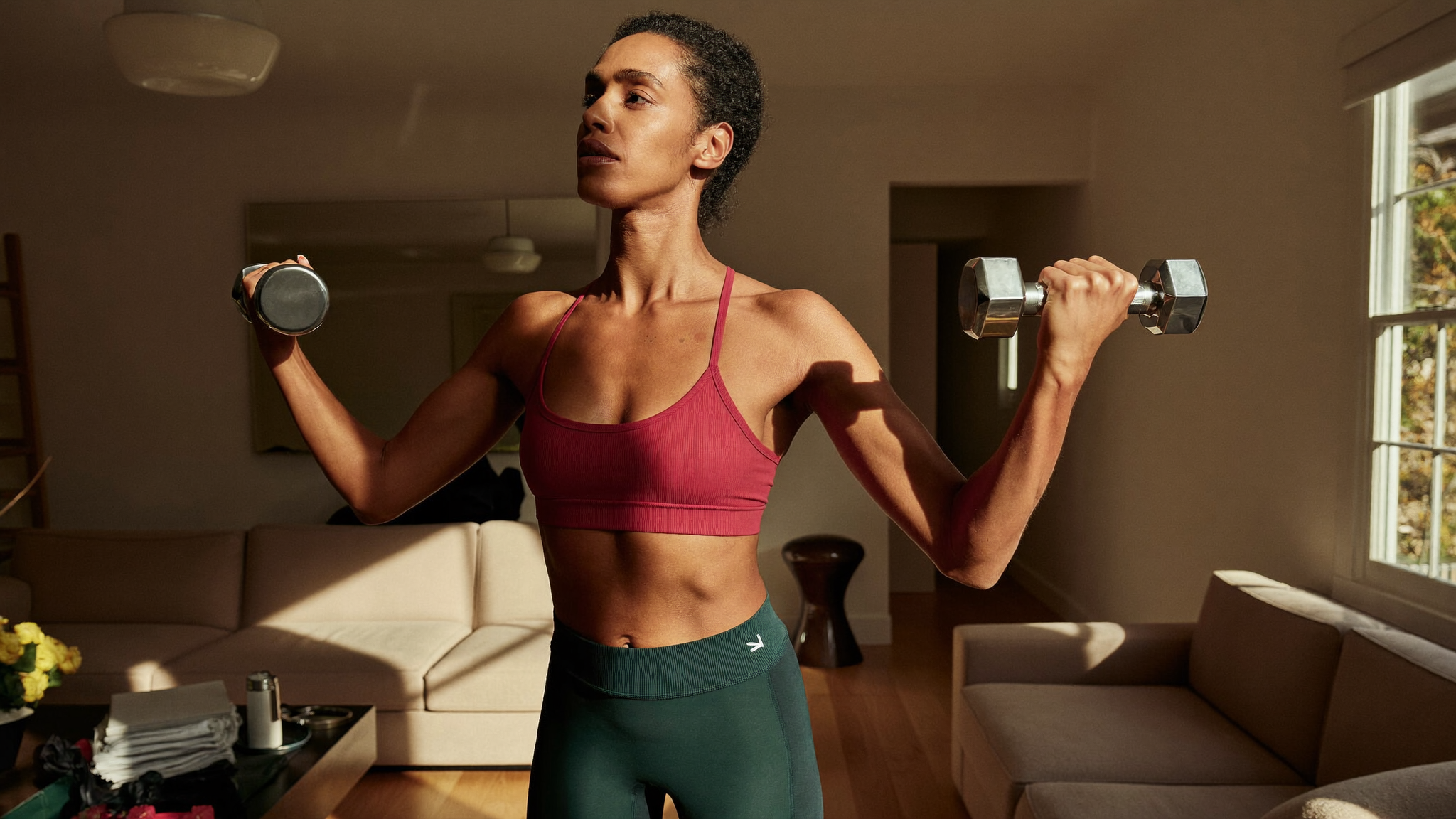
Resistance training. Full stop. Cardio is great for your heart, but it doesn't tell your body to keep muscle the way lifting does.
The signal works like this: when you load a muscle against resistance, you tell your body that tissue is needed. In a calorie deficit, that signal is what spares it from being broken down for fuel.
You don't need a fancy gym. Bodyweight squats, push-ups, resistance bands, and a couple of dumbbells cover most of it. The target is roughly 3 to 4 sessions a week hitting the major muscle groups.
A 2025 Frontiers review on GLP-1 agonists and exercise made the case plainly: pairing these drugs with structured strength work changes the composition of the weight you lose, not just the amount. The American Diabetes Association has echoed the same point about protecting muscle quality.
Cardio burns calories. Lifting tells your body which tissue to keep.
Why does muscle loss matter most when you stop the drug?
This is the quiet risk nobody talks about enough.
When people stop a GLP-1, appetite often comes roaring back. Many regain a large share of the weight within a couple of years. We covered the rebound pattern in detail in how to keep weight off after Ozempic.
Here's the trap. If you lost muscle on the way down, your metabolism is now running slower than before. So when appetite returns, you regain weight, and the weight you regain tends to be fat, not the muscle you lost.
Over a few cycles, body composition gets worse even if the scale looks similar. More fat, less muscle, slower metabolism.
Protecting muscle on the way down is what makes the way back up survivable. Our GLP-1 quitting protocol walks through the off-ramp step by step.
What if you're boosting GLP-1 naturally instead?
If you're avoiding the drugs and supporting your own GLP-1 through fiber, butyrate, and diet, the same rules apply, with a gentler curve.
Natural approaches create a smaller, slower calorie deficit than injectable drugs do. Slower weight loss is generally easier on muscle, because your body isn't being asked to shed tissue at a sprint.
Still, protein and resistance training aren't optional. Any time you're in a deficit, lifting and protein are what protect lean mass. That holds whether your appetite is quieted by a shot or by raising GLP-1 naturally.
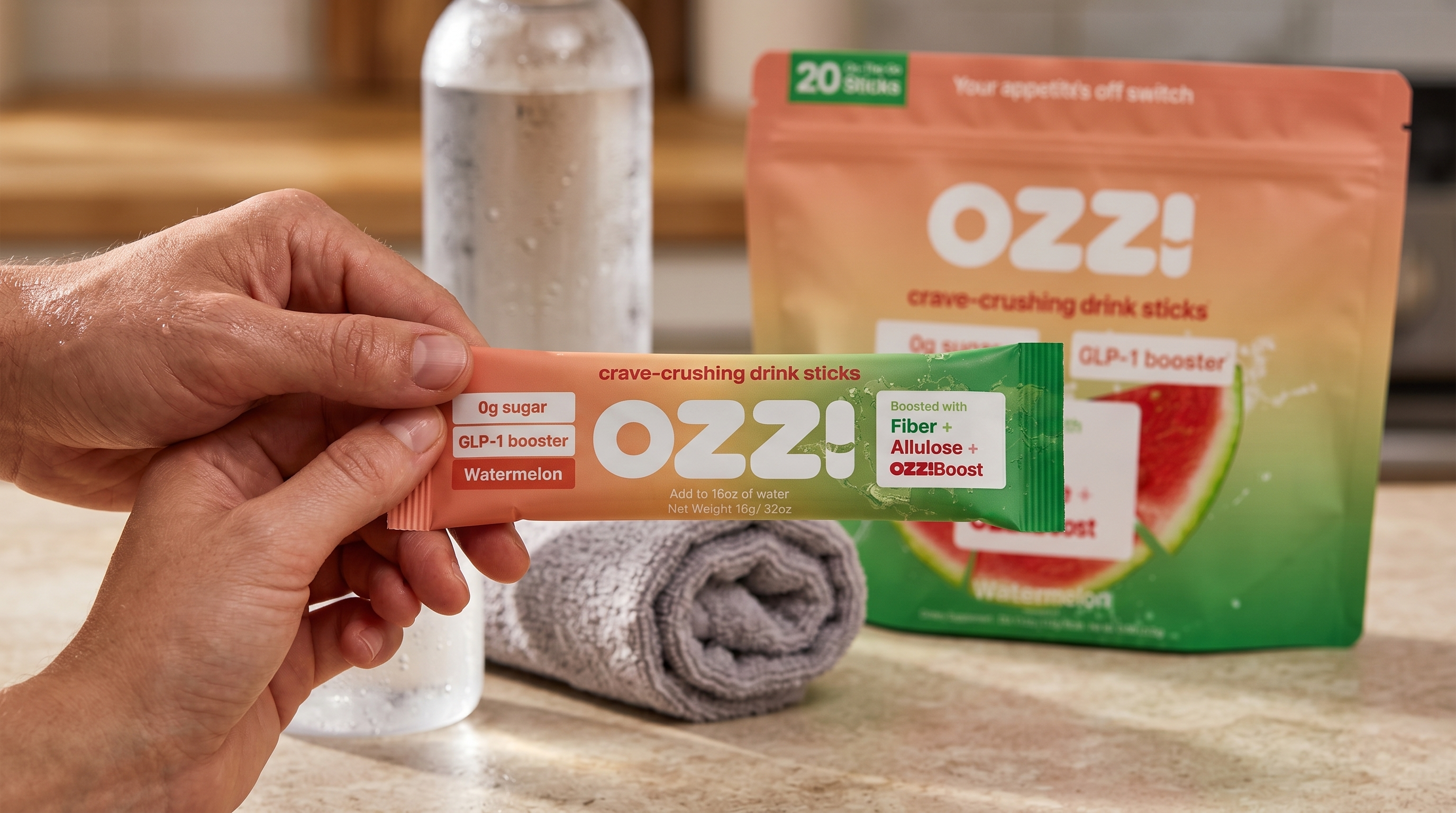
This is part of why I built Ozzi the way I did. The fiber and butyrate support your own GLP-1 and appetite signals without slamming you into the kind of aggressive deficit that strips muscle. If you're curious how natural and pharmaceutical paths compare, see natural alternatives to Ozempic and our primer on what GLP-1 actually is.
Support your appetite without the crash
Ozzi Crave Crusher uses fiber, allulose, and butyrate to support your own GLP-1 and quiet cravings, no injections, no stimulants. Stir one stick into cold water. Use it for 10 days straight. If you don't feel a difference, we'll refund your first bag.
Frequently asked questions
Is muscle loss on Ozempic permanent?
Not necessarily. Muscle you lose can be rebuilt with resistance training and adequate protein. The bigger problem is failing to protect it in the first place, which makes regain harder later.
How do I know if I'm losing muscle or fat?
A DEXA or InBody scan shows body composition directly. Without one, watch your strength. If your lifts are dropping fast, you're likely losing muscle, not just fat.
How much protein should I eat on a GLP-1?
Most guidance lands at 1.2 to 2g per kg of body weight daily. For many people that's 90 to 150g. The appetite suppression makes it hard, so plan protein first at each meal.
Do I have to lift heavy weights?
No. Bands, bodyweight moves, and light dumbbells work, especially when you're starting. The key is challenging the muscle 3 to 4 times a week, then gradually adding load.
Will cardio protect my muscle?
Not on its own. Cardio supports your heart and burns calories, but resistance training is the signal that tells your body to keep muscle in a deficit.
What happens to muscle when I stop the drug?
If you didn't protect it, your metabolism is slower and regain tends to come back as fat. Keeping muscle on the way down is what makes maintenance possible.
Can natural GLP-1 support cause muscle loss too?
Any calorie deficit can. Natural approaches usually create a gentler deficit, which is easier on muscle, but protein and lifting still matter.
Does Ozzi help preserve muscle?
Ozzi isn't a protein supplement or a muscle product. It supports appetite and GLP-1 with fiber and butyrate. Muscle preservation comes from your protein intake and training, not from any drink.
How fast should I lose weight to protect muscle?
Slower is gentler on muscle. Aggressive deficits strip lean tissue faster. Pairing any weight loss with protein and lifting protects composition regardless of pace.
References
- GLP-1 agonists and changes in body mass and composition in adults with overweight or obesity: systematic review and meta-analysis. Int J Obes. 2026. Link
- Preservation of lean soft tissue during weight loss induced by GLP-1 and GLP-1/GIP receptor agonists: a case series. PubMed. 2025. Link
- Effects of GLP-1 receptor agonists on muscle mass, strength, and quality in MASLD: a systematic review. PMC13090617. Link
- GLP-1 agonists and exercise: the future of lifestyle prioritization. Frontiers in Clinical Diabetes and Healthcare. 2025. Link
- Preserving musculoskeletal health through resistance training during GLP-1 receptor agonist therapy: controlled interrupted time-series analysis. medRxiv. 2025. Link
- New GLP-1 therapies enhance quality of weight loss by improving muscle preservation. American Diabetes Association. Link
This article is for general education and isn't medical advice. Ozzi is a dietary supplement, not a drug, and isn't intended to diagnose, treat, cure, or prevent any disease. Never start or stop a prescription medication without talking to your doctor.
