

How to Stop Sugar Cravings With Type 2 Diabetes (2026 Guide)
To manage sugar cravings with type 2 diabetes, focus on steadying blood glucose instead of fighting cravings directly. Eat protein and fiber before carbs, add soluble fiber like glucomannan to slow sugar absorption, swap in sweeteners like allulose that don't spike glucose, and keep meals regular so you avoid the crash-then-crave loop.
Key takeaways
- Blood sugar crashes trigger cravings, so steadier glucose means fewer cravings.
- Insulin resistance and brain reward wiring both amplify the pull toward sugar.
- Soluble fiber and protein slow carb absorption and blunt the spike.
- Allulose tastes sweet without raising blood glucose like table sugar.
- Any diabetes plan should be built with your doctor, not around them.
You ate well all day. Balanced lunch, sensible dinner, glucose meter behaving. Then 9pm hits and you're standing at the pantry like it owes you money.
If you have type 2 diabetes, that craving feels heavier. There's guilt on top of it, because you know the numbers matter.
One of our customers put it plainly: "I have late night cravings for sugar and I'm type 2 diabetic." That's a lot of people carrying the same weight.
So let's talk about what's actually happening in your body, and what you can do about it. No lectures. No magic cure claims. Just the mechanism and the levers you can pull.
Why are sugar cravings so intense with type 2 diabetes?
Cravings aren't random. They ride on top of a few overlapping systems, and diabetes turns the volume up on most of them.
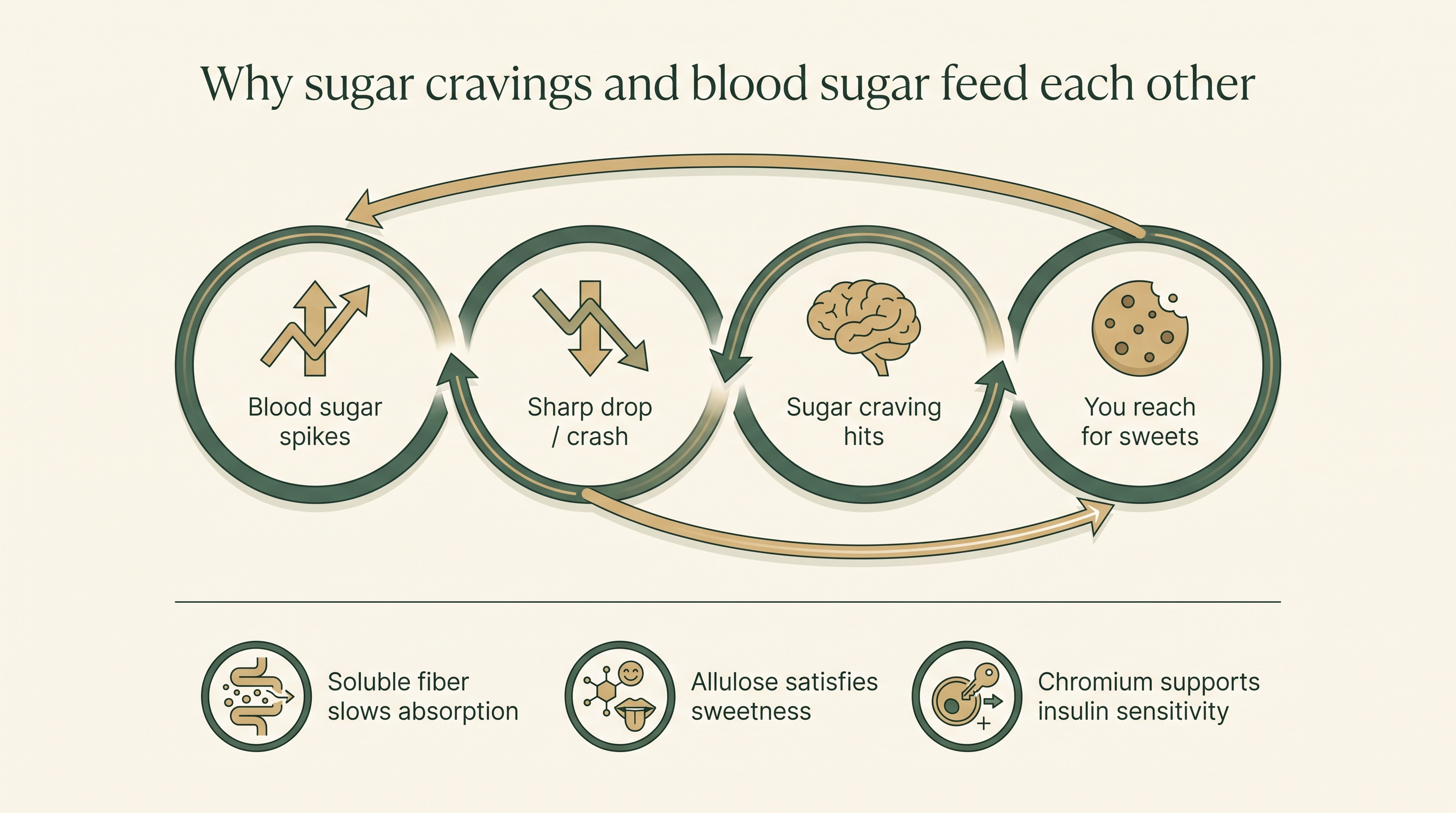
The first is the blood sugar rollercoaster. When you eat fast carbs, glucose shoots up. Your body answers with insulin. If you're insulin resistant, that response is messy, and glucose can swing too far down afterward. Your brain reads the drop as an emergency and screams for the fastest fix it knows: sugar.
A 2025 cross-sectional study of 204 people with type 2 diabetes found that emotional low points, cutting carbs too hard, and sudden shifts in blood glucose all significantly raised food cravings. The researchers concluded that controlling cravings is a foundational step to controlling glucose, not a side project.
The second system is reward. Sugar lights up dopamine pathways in the brain. A 2025 review in Brain and Behavior on the neural mechanisms of sugar described how repeated sugar hits reshape dopamine, glutamate, and norepinephrine signaling, which nudges eating behavior toward more sugar over time.
Your cravings aren't a character defect. They're a glucose curve and a reward loop doing exactly what they evolved to do.
The third is stress and habit. Life stress raises cortisol, cortisol nudges appetite, and a nightly pantry trip becomes a wired-in routine. Diabetes often stacks all three at once.
Do blood sugar swings actually cause cravings?
Short answer: they're a big part of it.
Think of a spike-and-crash as a debt. You borrow fast energy, then your body overcorrects and leaves you lower than where you started. That low is the craving trigger.
Interestingly, it's not always about the actual sugar. One study found that in people with type 2 diabetes, perceived sugar intake influenced glucose responses as much as the real thing, which tells you how tangled the brain and metabolism really are here.
The practical takeaway is simple. Flatten the curve, and you remove the crash that sets off the next craving. Most of the strategies below are just different ways to flatten that curve.
How do you stop sugar cravings without spiking blood sugar?
Here's the order I'd think about it. Steady the glucose curve first, satisfy the sweet signal second, support the background biology third.
1. Eat protein and fiber before carbs. Food order matters. Leading a meal with protein and vegetables slows how fast the carbs hit your bloodstream, which softens the spike and the crash that follows.
2. Add soluble fiber. Viscous fibers like glucomannan (from konjac root) form a gel in the stomach that slows carbohydrate absorption. A 2022 meta-analysis of randomized trials found glucomannan supplementation significantly reduced fasting blood glucose (a drop of about 0.6 mmol/L) and increased satiety by slowing gastric emptying.
3. Swap the sweet, keep the pleasure. You don't have to white-knuckle every craving. Allulose is a rare sugar that tastes like sugar but is metabolized differently. A 2024 meta-analysis of clinical trials found allulose significantly lowered post-meal glucose and glucose area under the curve, without the spike table sugar causes.
4. Don't skip meals. Aggressive carb cutting backfired in that 2025 diabetes study, raising cravings rather than lowering them. Regular, balanced meals keep glucose from dipping into craving territory.
5. Address the night specifically. Nighttime is the hardest window for most people, diabetic or not. A protein-forward dinner, a walk after eating, and a planned sweet-but-steady option beat willpower every time.
Which ingredients support steadier blood sugar and fewer cravings?
A few ingredients show up again and again in the glucose and appetite research. Here's an honest rundown of what each one does and how strong the evidence is.
| Ingredient | What it does | Evidence strength |
|---|---|---|
| Allulose | Sweet taste, minimal glucose impact, may lower post-meal glucose | Moderate (meta-analysis of RCTs) |
| Glucomannan | Soluble fiber, slows carb absorption, boosts fullness | Moderate (meta-analysis of RCTs) |
| Chromium | Trace mineral involved in insulin signaling | Mixed (some meta-analyses positive, clinical size debated) |
| Inulin | Prebiotic fiber, feeds gut bacteria that make short-chain fatty acids | Emerging (glycemic and appetite markers) |
| Butyrate | Short-chain fatty acid linked to GLP-1 release from gut L-cells | Emerging (mechanistic and early human data) |
On chromium specifically, be careful with the hype. Some meta-analyses show reductions in fasting glucose and HbA1c, but a widely cited review concluded the clinical effect is limited and inconsistent in people who already have type 2 diabetes. It may help at the margins. It's not a substitute for anything your doctor prescribes.
How does GLP-1 fit into diabetes and cravings?
GLP-1 is a hormone your gut releases after you eat. It slows digestion, signals fullness, and helps regulate blood sugar. It's the same pathway the well-known injectable drugs act on.
You can also nudge GLP-1 through food and fiber. Butyrate, a short-chain fatty acid made when gut bacteria ferment fiber, has been linked in emerging research to GLP-1 secretion from intestinal L-cells. Prebiotic fibers like inulin feed the bacteria that produce it.
A randomized crossover trial on allulose and GLP-1, with results expected in 2026, is one of several studies digging into how specific ingredients affect this hormone. The science is young, but the direction is interesting.
You don't need a prescription to support your own GLP-1. Fiber, food order, and a few specific ingredients all point in that direction.
To be clear about what this means and doesn't: supporting GLP-1 naturally is not the same as taking a diabetes medication. If you're on a GLP-1 drug or any glucose-lowering medication, none of this replaces it. Loop in your doctor before changing anything.
What's a realistic daily plan to tame sugar cravings?
Simple beats perfect. Here's a frame you can actually keep.
Morning: Protein-forward breakfast. Eggs, Greek yogurt, whatever fits. This sets a steadier glucose baseline for the day.
Meals: Vegetables and protein first, carbs last. Add a soluble fiber source most days.
After eating: A 10 to 15 minute walk. Movement helps your muscles pull glucose out of the blood, which softens the post-meal spike.
Evening: Plan your sweet option instead of ambushing yourself at 9pm. A sweet-but-low-glucose drink or a piece of fruit with protein works better than pretending the craving won't come.
Track loosely: If you use a glucose meter or CGM, watch which meals crash you two hours later. Those are your craving triggers. Fix those meals first.
Give your 9pm cravings something better to do
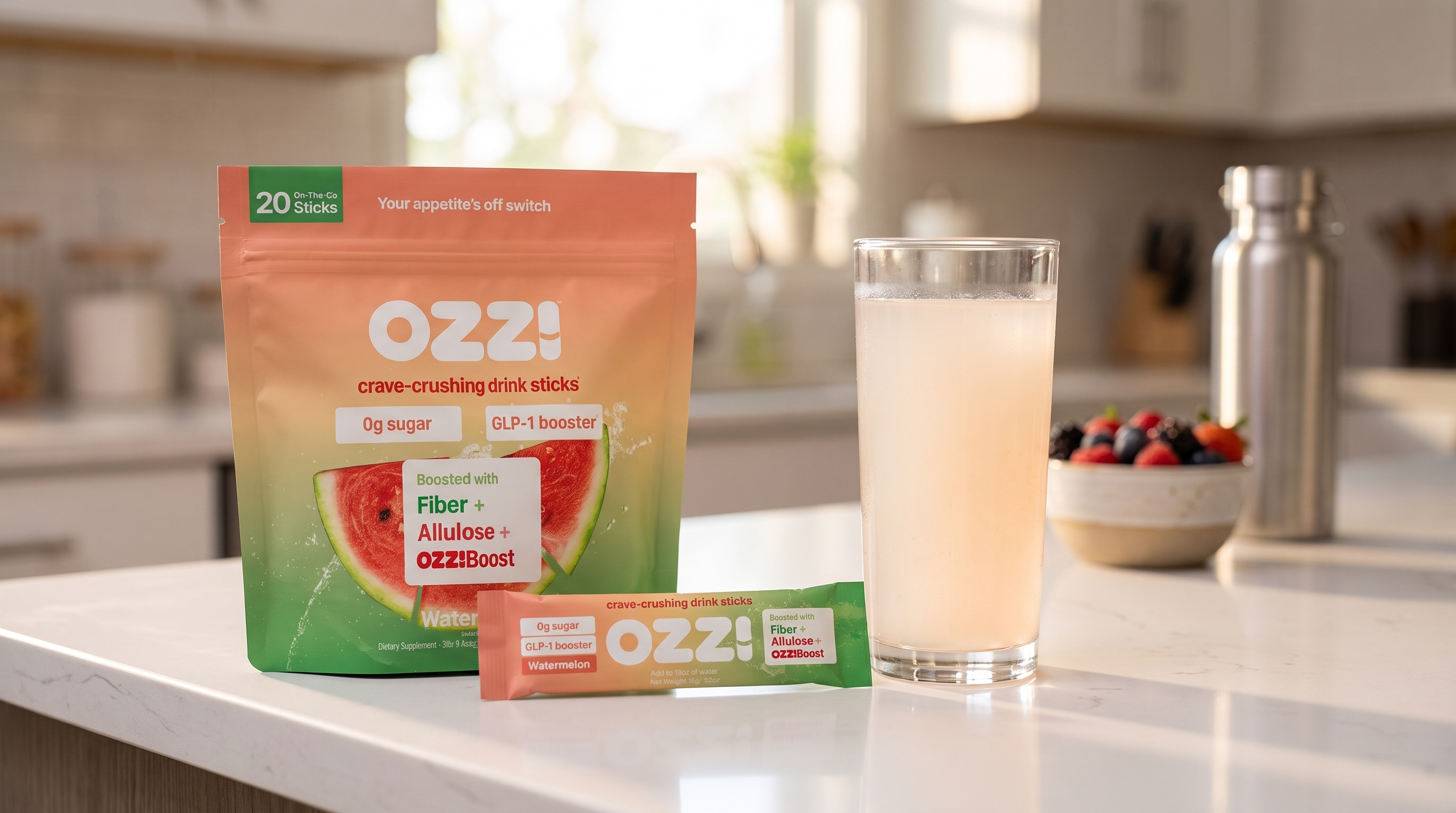
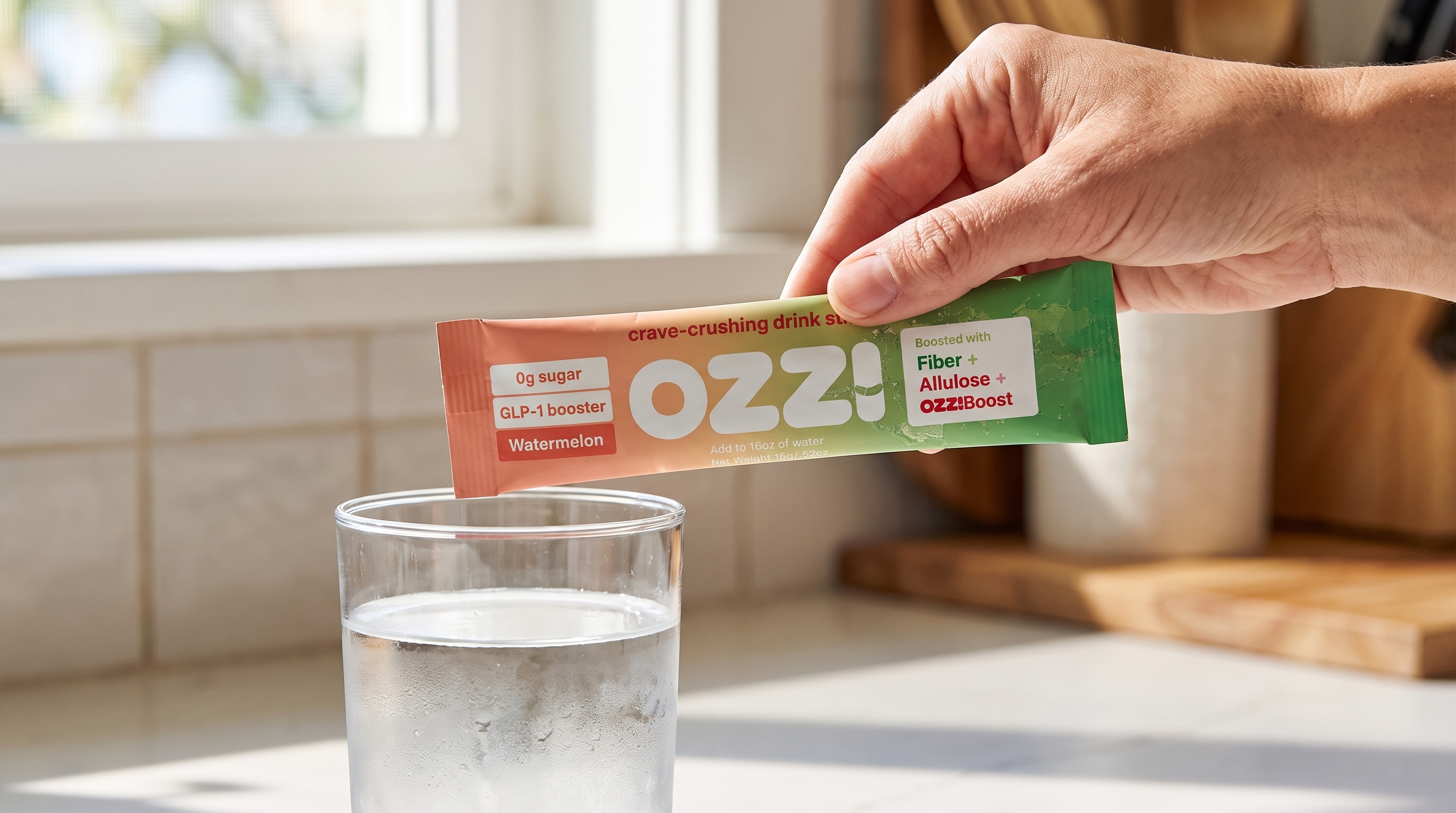
Ozzi Crave Crusher is a GLP-1 support drink stick built around fiber, allulose, and a butyrate blend. Sweet watermelon taste, 0g sugar, zero caffeine. Try it for 10 days and feel the difference on your first bag, or we'll make it right.
Frequently asked questions
Can I ever eat sugar with type 2 diabetes?
That's a conversation for you and your doctor. Most guidance focuses on total carbs, timing, and pairing sweets with protein and fiber to blunt the spike, rather than a hard zero.
Why do I crave sugar more at night?
Nighttime cravings are the single most common complaint we hear. A full day of eating well can drain your willpower, glucose can dip in the evening, and habit takes over. Planning an evening option helps more than resisting.
Does allulose raise blood sugar?
Research suggests allulose doesn't spike glucose the way table sugar does, and some trials show it lowers post-meal glucose. It tastes sweet but is metabolized differently. Still, check with your care team about your own targets.
Is glucomannan safe for diabetics?
Glucomannan is a soluble fiber studied in randomized trials for glucose and satiety. Take it with plenty of water and space it from medications, since fiber can slow absorption. Ask your pharmacist about timing.
Does chromium really help blood sugar?
The evidence is mixed. Some meta-analyses show small improvements in fasting glucose and HbA1c, others find limited clinical benefit in people who already have diabetes. It's a supporting player, not a treatment.
Can supplements replace my diabetes medication?
No. Nothing here is a substitute for prescribed medication. These are lifestyle and structure-function strategies to support steadier glucose and fewer cravings, used alongside your medical plan.
Will steadying my blood sugar actually reduce cravings?
For a lot of people, yes. When you remove the crash that follows a spike, you remove the trigger that fires the next craving. It doesn't erase cravings, but it turns the volume down.
Is Ozzi safe if I'm diabetic?
Ozzi is a food-based drink stick with 0g sugar, built from fiber, allulose, and a butyrate blend. It's caffeine-free and vegan. As with any new product, run it by your doctor first, especially if you're on glucose-lowering medication.
Related reading: Does allulose spike blood sugar? · Chromium for cravings and blood sugar · Pre-diabetes and GLP-1 · Konjac root and glucomannan · How to stop night eating · Best supplements to curb sugar cravings
- Investigation of food cravings in individuals with type 2 diabetes: a hierarchical regression analysis. Primary Care Diabetes, 2025. Link
- Qin et al. Sugar Addiction: Neural Mechanisms and Health Implications. Brain and Behavior, 2025. Link
- Impact of allulose on blood glucose in type 2 diabetes: a meta-analysis of clinical trials. 2024. PubMed
- The effect of glucomannan on fasting and postprandial blood glucose in adults: a systematic review and meta-analysis of RCTs. 2022. PubMed
- Effects of glucomannan supplementation on type II diabetes mellitus in humans: a meta-analysis. PMC
- Chromium supplements for glycemic control in type 2 diabetes: limited evidence of effectiveness. PubMed
- Effects of chromium supplementation on glycemic control in patients with type 2 diabetes: a systematic review and meta-analysis of RCTs. 2020. Link
- Glucose metabolism responds to perceived sugar intake more than actual sugar intake. PMC
- Effects of allulose vs aspartame on postprandial GLP-1 profiles and metabolic health: protocol for a randomized crossover trial. 2026. Link
- Dietary sugar intake and incident type 2 diabetes risk: a systematic review and dose-response meta-analysis. 2025. PMC
This article is for general education and isn't medical advice. Statements about ingredients have not been evaluated to diagnose, treat, cure, or prevent any disease, including diabetes. Talk with your doctor before making changes to your diet, supplements, or medication.
