

Pre-Diabetes and GLP-1: How to Reverse It Naturally in 2026
Pre-diabetes means your blood sugar is higher than normal but not yet diabetic (HbA1c 5.7-6.4% or fasting glucose 100-125 mg/dL). Your GLP-1 hormone response is already weakening at this stage, which is why cravings, post-meal crashes, and creeping weight gain show up first. Boosting GLP-1 naturally through fiber, allulose, berberine, and meal timing can reverse pre-diabetes in 1 to 3 years for most people.
Key takeaways
- 115 million U.S. adults have pre-diabetes and 80% don't know it.
- GLP-1 secretion falls 20 to 30% before HbA1c crosses the diabetic line.
- Allulose, berberine, and viscous fiber each raise GLP-1 in human trials.
- Lifestyle + GLP-1 support cuts progression to diabetes by ~58%.
- Reversal is possible. Most studies show measurable HbA1c drops in 12 weeks.

What is pre-diabetes, in one honest paragraph?
Pre-diabetes is the holding pen before type 2 diabetes. The clinical line is a fasting blood glucose of 100 to 125 mg/dL, an HbA1c of 5.7 to 6.4%, or a 2-hour oral glucose tolerance reading of 140 to 199 mg/dL. According to the CDC, about 115 million American adults have it, and roughly 8 in 10 have no idea.1
The phrase sounds gentle. The biology is not. Pre-diabetes is not a separate disease. It's the early phase of the same insulin resistance and beta-cell stress that defines type 2 diabetes. Left alone, somewhere between 15 and 30% of people convert to full type 2 within five years. Up to 70% will over a lifetime.2
The good news: it's also the most reversible chapter you'll ever get. The Diabetes Prevention Program showed lifestyle changes cut progression to type 2 by 58%. Metformin cut it by 31%. Adding a real GLP-1 booster strategy on top of that can stack the deck further.3
How is GLP-1 already failing in pre-diabetes?
GLP-1 (glucagon-like peptide-1) is the gut hormone that tells your pancreas to release insulin after a meal, tells your stomach to empty slowly, and tells your brain you're full. Healthy people get a sharp GLP-1 spike about 15 to 30 minutes after eating.
In pre-diabetes, that spike flattens. A 2022 multi-ethnic study published in Diabetes Care found that as glucose tolerance worsens, incremental GLP-1 secretion drops in parallel with rising adiposity, liver fat, and falling insulin sensitivity.4 The hormone isn't completely gone. It's just slower and quieter, which is exactly why pre-diabetes feels like:
- Cravings that get louder after lunch and dinner.
- The 3 p.m. crash. Then a 9 p.m. raid on the pantry.
- Weight slowly creeping on, even when calories haven't changed.
- "Food noise" that's harder to ignore the older you get.
That's the GLP-1 signal weakening before the lab numbers crash. The repair window is right here.
"You don't feel pre-diabetes in your blood. You feel it in your cravings."
Can you raise GLP-1 naturally without Ozempic?
Yes. GLP-1 medications like semaglutide work by mimicking the hormone at a pharmacologic dose. But the body's own GLP-1 production is sensitive to four levers you can pull today:
- Viscous soluble fiber in the meal slows gastric emptying and feeds short-chain fatty acid production in the colon, which directly triggers GLP-1 release. A meta-analysis of patients with elevated blood sugar found about 8 g/day of soluble fiber dropped HbA1c by roughly 0.6 percentage points.5
- Allulose (a rare sugar that tastes like sugar but isn't metabolized like one) is the standout new evidence. A 2024 meta-analysis showed allulose significantly reduced postprandial glucose area under the curve in adults at risk for diabetes.6 In a Japanese trial, 5 g of allulose taken before a meal raised GLP-1 and lowered the glucose spike.
- Berberine activates AMPK and slows glucose absorption. A 2025 randomized trial in newly diagnosed pre-diabetics compared 500 mg berberine twice daily to metformin. Berberine dropped fasting glucose from 109.8 to 97.2 mg/dL over 12 weeks, similar to metformin.7
- Bitter compounds and polyphenols from foods like olive leaf, cinnamon, and apple cider vinegar prime gut L-cells (the cells that make GLP-1).
None of these are magic alone. Stacked, they recreate the same triple-lever the body used to pull on its own: slower gastric emptying, sharper insulin response, calmer cravings.
Which ingredients actually move the needle in pre-diabetes?
Here's the honest comparison. We've ranked by strength of human evidence specifically in pre-diabetic or impaired-glucose-tolerance populations.
| Ingredient | Mechanism | Best human evidence in pre-diabetes | Typical dose |
|---|---|---|---|
| Allulose | Raises GLP-1, blunts post-meal glucose | Significant AUC reduction (2024 meta-analysis) | 5 to 15 g pre-meal |
| Berberine HCl | AMPK activation, slows glucose absorption | HbA1c 5.43% from 6.40% in 12 weeks | 500 mg, 2 to 3x daily |
| Soluble fiber (PHGG, glucomannan, beta-glucan) | Slows gastric emptying, feeds SCFA-driven GLP-1 | ~0.6% HbA1c drop at 8 g/day | 8 to 15 g/day |
| Cinnamon (Cinnulin PF or similar) | Improves insulin signaling | Modest fasting glucose drop in trials | 500 to 1,500 mg/day |
| Apple cider vinegar | Delays gastric emptying | Small studies, real but modest | 1 to 2 tbsp pre-meal |
| Chromium picolinate | Insulin co-factor | Mixed; helps some, not most | 200 to 400 mcg/day |
The pattern is clear. The strongest hitters are allulose, berberine, and the right kind of soluble fiber. Everything else is supportive, not primary. We dive deeper into each in our allulose supplement guide and berberine for GLP-1 guide.
What does a pre-diabetes day actually look like?
You can stack the science into a routine that fits a normal life. This is the version we hear back from customers most often who say their numbers moved.
Morning. Protein-first breakfast. Three eggs and Greek yogurt with berries, or a protein shake with chia and a little nut butter. The goal is 30+ grams of protein and at least 8 grams of fiber before 10 a.m. No naked carbs.
Mid-morning. Walk 10 minutes. Even a flat hallway counts. Post-meal walking lowers the glucose spike by 12 to 22% in pre-diabetic adults.8
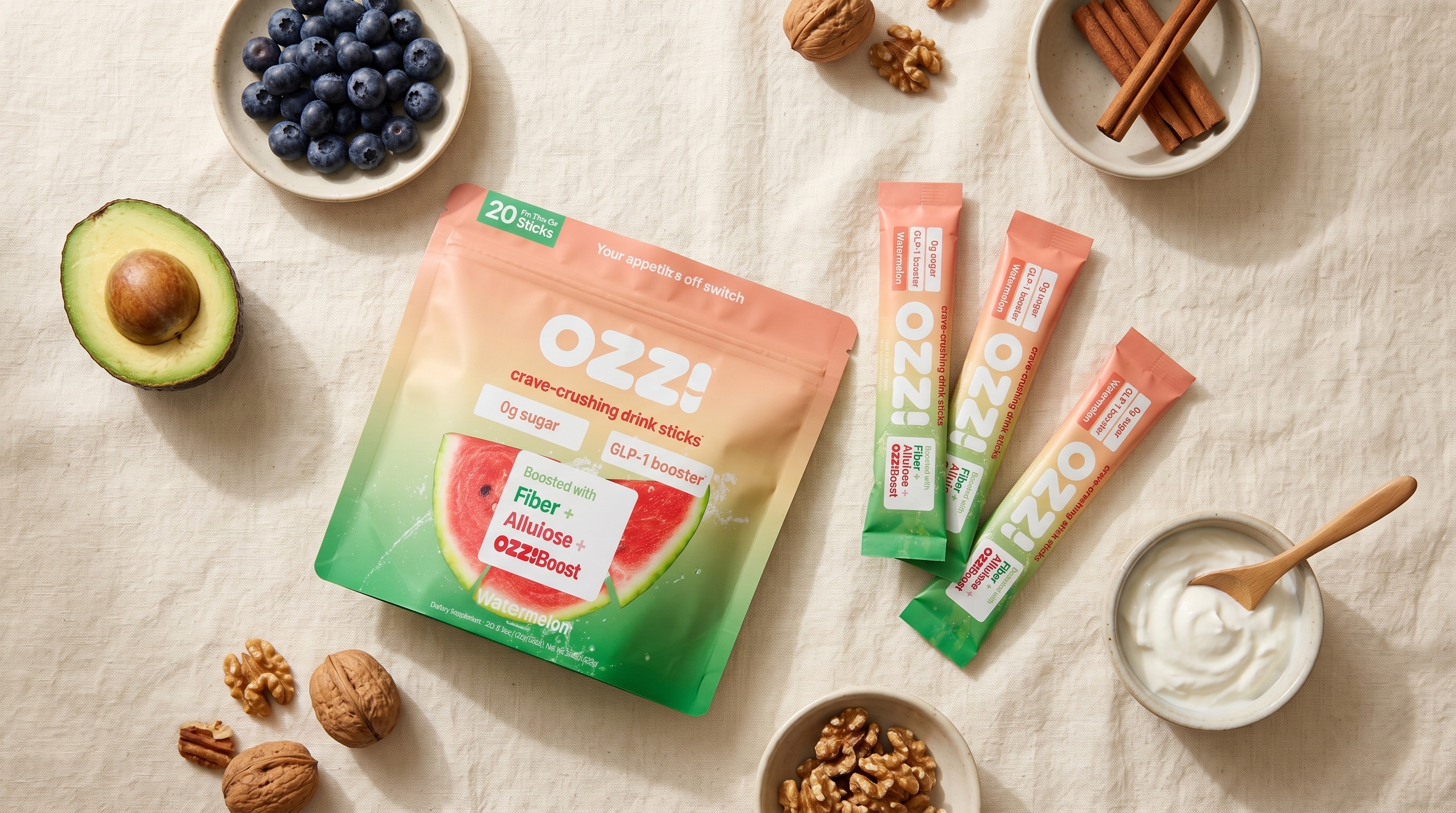
Pre-lunch. 16 oz of water with your GLP-1 booster stack. Allulose, soluble fiber, and a small dose of berberine if your doctor is on board. This is where Ozzi Crave Crusher does the heavy lifting.
Lunch. Protein, vegetables, slow carbs. Eat fiber and protein first, carbs last. This single ordering trick has been shown to lower the post-meal glucose peak by ~30%.
Afternoon. 5 to 10 air squats every hour if you sit at a desk. Muscle is your most insulin-sensitive tissue. Use it.
Dinner. Same rule. Protein first. Veggies second. Slow carbs last. Stop eating by 8 p.m. if you can.
Evening cravings. A second stick of Ozzi in cold water tends to quiet the 9 p.m. "night monster" that drags so many people off plan. Sleep 7+ hours. Sleep loss raises cortisol and breaks GLP-1.
"Pre-diabetes doesn't ask for perfection. It asks for the next twelve weeks."
How fast can pre-diabetes actually reverse?
Faster than most people expect. HbA1c reflects roughly 90 days of blood sugar exposure, so meaningful drops usually show up at the 12-week recheck. In the HIMABERB berberine trial, HbA1c fell from 6.40% to 5.43% in 12 weeks. In the DPP, sustained lifestyle change cut diabetes incidence by 58% over three years.3
Realistic milestones for someone starting today:
- Week 2 to 4. Cravings quieter. Energy more even between meals.
- Week 6 to 8. Average glucose (if you wear a CGM) drops 10 to 20 mg/dL.
- Week 12. First measurable HbA1c shift. Often 0.3 to 0.7% lower.
- Month 6 to 12. Full reclassification out of pre-diabetes if the plan stays consistent.
This is not a promise. It's a pattern we see, and it's a pattern that shows up in the published trials. Your numbers will move at your own pace.

Where does Ozzi fit into a pre-diabetes plan?
Ozzi Crave Crusher is a daily drink stick built specifically around the GLP-1 lever. The formula combines three of the strongest pre-diabetes ingredients in one cold-water pour:
- Allulose at a clinically useful per-serve dose to blunt the post-meal glucose curve and raise GLP-1.
- Viscous soluble fiber to slow gastric emptying and feed short-chain fatty acid production.
- BIOMEnd L-lysine butyrate including bitter compounds shown to prime gut L-cells.
It is not a medication. It will not replace metformin if your doctor has prescribed it. What it does is make the lifestyle plan easier to actually keep. The cravings go quiet. The post-meal slump softens. And the daily ritual makes the rest of the plan stick.
If you want to compare it head-to-head with other options, our best OTC GLP-1 supplement guide walks through the field honestly. For the broader hormone explainer, see what is GLP-1 and how to increase GLP-1 naturally.
Quiet the cravings. Move the numbers.
Try Ozzi Crave Crusher for the first 10 days. If you don't feel the difference on your first bag, we'll refund it. No questions.
When should you consider an actual GLP-1 medication?
If your HbA1c is closer to 6.4% and climbing, or you have significant cardiovascular risk, or lifestyle and supplementation haven't moved your numbers after 6 months, that's the conversation to have with your doctor. The SELECT trial showed semaglutide reduced cardiovascular events in people with overweight or obesity who had pre-diabetes. Tirzepatide also significantly increased the rate of regression to normoglycemia.9
This is not an either/or. A growing number of people use natural GLP-1 support before, during, and after a prescription. We cover the transition in our GLP-1 quitting protocol and the prescription comparison in natural alternatives to Ozempic.
Frequently asked questions
Can pre-diabetes be reversed without medication?
Yes, for most people. The Diabetes Prevention Program showed lifestyle change cut progression to type 2 by 58%. The biggest drivers were a 5 to 7% weight loss, 150 minutes of weekly activity, and a higher-fiber diet. Adding GLP-1 boosting nutrition stacks the deck further.
How much allulose does it take to raise GLP-1?
Human studies have used 5 to 15 grams per meal. A 5 g pre-meal dose has been shown to raise GLP-1 and lower the post-meal glucose peak in healthy and pre-diabetic adults. More isn't always better. Above 0.4 g per kilogram of body weight, some people get GI bloating.
Is berberine safe with metformin?
Most clinicians say yes, with monitoring. Berberine works through a similar AMPK pathway and adds modest glucose lowering. Always tell your doctor what you're taking, and recheck HbA1c at 8 to 12 weeks.
What HbA1c counts as pre-diabetes?
5.7% to 6.4%. Below 5.7% is normal. 6.5% or higher is type 2 diabetes. Fasting glucose of 100 to 125 mg/dL is the other accepted threshold.
Will Ozzi affect my CGM readings?
Most customers report flatter post-meal curves when they take Ozzi 5 to 15 minutes before a carb-heavy meal. Individual response varies. Watch your two-hour reading.
Does fasting reverse pre-diabetes?
Time-restricted eating (a 10 to 12 hour eating window) has shown modest improvements in insulin sensitivity and fasting glucose in pre-diabetic adults. It is not required for reversal but it helps many people.
Can I drink Ozzi if I'm on Ozempic or Mounjaro?
Yes. The combination is common. Many customers say it softens the nausea on dose-up weeks and helps with food noise on the off days between shots. Check with your doctor first.
How long do I have to stay on this plan?
The honest answer: the plan is the lifestyle. The supplement stack is the easy on-ramp. Once your numbers normalize, most people scale back the supplements to a maintenance dose and keep the food and movement habits.
References
- Centers for Disease Control and Prevention. Prediabetes: Could It Be You? cdc.gov
- Tabak AG, Herder C, Rathmann W, et al. Prediabetes: a high-risk state for diabetes development. Lancet. 2012. PubMed
- Knowler WC, Barrett-Connor E, Fowler SE, et al. Reduction in the incidence of type 2 diabetes with lifestyle intervention or metformin (Diabetes Prevention Program). N Engl J Med. 2002. PubMed
- Alssema M, et al. Fasting and stimulated GLP-1 exhibit a compensatory adaptive response in diabetes and pre-diabetes states: A multi-ethnic comparative study. PMC9501699
- Reynolds A, Mann J, Cummings J, et al. Carbohydrate quality and human health: a series of systematic reviews and meta-analyses. Lancet. 2019. PubMed
- Impact of allulose on blood glucose in type 2 diabetes: A meta-analysis of clinical trials. 2024. PMC11585728
- Chaudhary et al. Comparative study of berberine hydrochloride versus metformin in newly diagnosed prediabetic patients. Int J Basic Clin Pharmacol. 2025. IJBCP
- Buffey AJ, Herring MP, Langley CK, et al. The acute effects of interrupting prolonged sitting time with walking on postprandial glycemia. Sports Med. 2022. PubMed
- GLP-1 receptor agonists and new-onset diabetes in overweight/obese individuals with prediabetes: A systematic review and meta-analysis of randomized trials. ScienceDirect
- HIMABERB Berberine on glycemic control in prediabetes: a randomized pilot trial. BMC Endocr Disord. 2023. PMC10483788
This article is for educational purposes only and is not medical advice. Speak with your physician before starting any supplement, especially if you take medication for blood sugar or have a chronic condition.
