


Cluster Dextrin Benefits: What Highly Branched Cyclic Dextrin Actually Does (2026)
You've probably seen "Cluster Dextrin" on a pre-workout label and wondered what it actually does. It's one of those ingredients that sounds high-tech and vague at the same time.
Here's the plain version. Cluster Dextrin is a special carbohydrate built to leave your stomach quickly, then release energy slowly. That combination is unusual, and it's why endurance athletes reach for it.
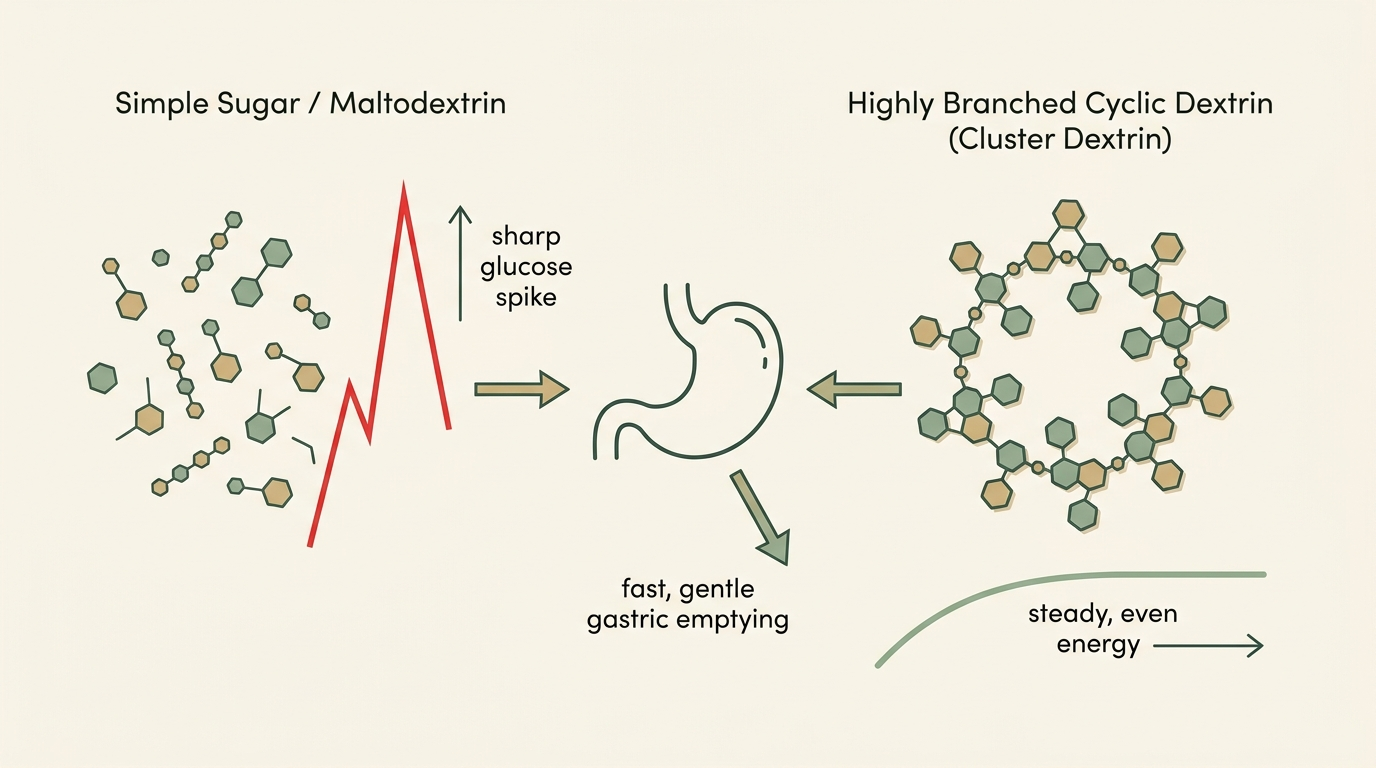
Cluster Dextrin is a branded form of highly branched cyclic dextrin (HBCD), a carbohydrate made from starch. Its large, ring-shaped molecular structure and low osmolality let it clear the stomach fast while releasing glucose gradually, giving steady energy with less of the spike-and-crash you get from simple sugars.
Key takeaways
- Cluster Dextrin is a branded highly branched cyclic dextrin (HBCD).
- It empties from the stomach fast but releases energy slowly.
- Studies show a lower insulin response than plain glucose.
- It's popular in sports drinks for steady fuel, no crash.
- In Ozzi it's a small, easy-on-the-gut supporting ingredient.
What is Cluster Dextrin, exactly?
Cluster Dextrin is the trademarked name (owned by Ezaki Glico) for a carbohydrate called highly branched cyclic dextrin, or HBCD.
It starts as regular starch. Food scientists use a branching enzyme to rearrange it into a large, tidy, ring-shaped molecule. That structure is the whole point.
Because the molecule is big and heavily branched, it has very low osmolality. In plain terms, it doesn't pull much water into your gut the way sugary drinks do. Low osmolality is a big reason it sits so lightly on the stomach.
So you get a carbohydrate that behaves nothing like table sugar, even though it's made from starch.
Why does Cluster Dextrin empty from the stomach so fast?
This is the headline benefit, and it's actually measured.
In a study of 10 healthy volunteers published in the International Journal of Sports Medicine, researchers used ultrasound to track how fast different carbohydrate drinks left the stomach. A properly formulated HBCD drink cleared the stomach faster than a standard commercial dextrin drink with higher osmotic pressure.
The trick is that low osmolality. Drinks that are too concentrated or too sugary tend to linger, and that heavy, sloshy feeling is what wrecks a lot of workouts.
Fast out of the stomach, slow into the blood. That's the whole appeal.
Once it clears the stomach quickly, it gets broken down and absorbed more gradually. That's what gives you the slow, even glucose release instead of a spike.
Does Cluster Dextrin spike blood sugar and insulin?
Less than plain glucose, based on the research we have.
In an animal study from the same Japanese research group, mice given HBCD before exercise showed a significantly lower rise in insulin than mice given a straight glucose solution. Their blood glucose rose more gently and appeared to last longer.
Human sports-nutrition data points the same direction. HBCD tends to produce a flatter glucose curve than fast sugars like dextrose or maltodextrin.
A quick, honest caveat. A lot of the strongest HBCD research sits in the sports-performance world, often with small sample sizes. It's promising, not the last word.
How is Cluster Dextrin different from maltodextrin and simple sugars?
They're cousins on paper (all made from starch), but they behave very differently in your body.
| Carb | Stomach exit | Energy release | Typical GI feel |
|---|---|---|---|
| Cluster Dextrin (HBCD) | Fast | Slow, even | Light, low bloating |
| Maltodextrin | Moderate | Fast | Can feel heavy |
| Dextrose / glucose | Slower (high osmolality) | Very fast, spike | Sloshy, crash-prone |
| Table sugar (sucrose) | Slower | Fast, spike | Sweet, spike-crash |
The pattern is clear. Cluster Dextrin gets the "fast stomach exit" of a light drink without the "fast spike" of a sugary one. That combination is genuinely hard to get from ordinary carbs.
What are the main benefits of Cluster Dextrin?
Rounding up what the research and real-world use point to:
Steady energy, no crash. The slow, even glucose release is the reason cyclists and lifters like it for long sessions.
Easy on the stomach. Low osmolality means less water pulled into the gut, so less of that heavy, bloated, sloshy feeling mid-workout.
Lower insulin response than fast sugars. A gentler insulin rise means a smoother ride and less of the rebound hunger that follows a sugar spike.
Fast fuel when you need it. Quick stomach clearance means the carbs are available sooner, without the concentrated-sugar downside.
The best carbs are the ones you barely notice. Cluster Dextrin is built to be one of them.
Is Cluster Dextrin a GLP-1 booster?
No, and I want to be straight with you here, because this is where a lot of supplement marketing gets sloppy.
Cluster Dextrin is not what drives GLP-1 in Ozzi. GLP-1 is the appetite hormone behind that "quiet, not hungry" feeling, and the ingredients that actually nudge it are the short-chain fatty acids.
According to research retrieved from PubMed, short-chain fatty acids like butyrate bind to receptors on your gut's L-cells and trigger GLP-1 release. That's the mechanism worth caring about.
In Ozzi, that job belongs to L-Lysine Butyrate (direct butyrate) and chicory root inulin (prebiotic fuel your gut ferments into more butyrate). If you want the full breakdown, our guide to increasing GLP-1 naturally walks through it.
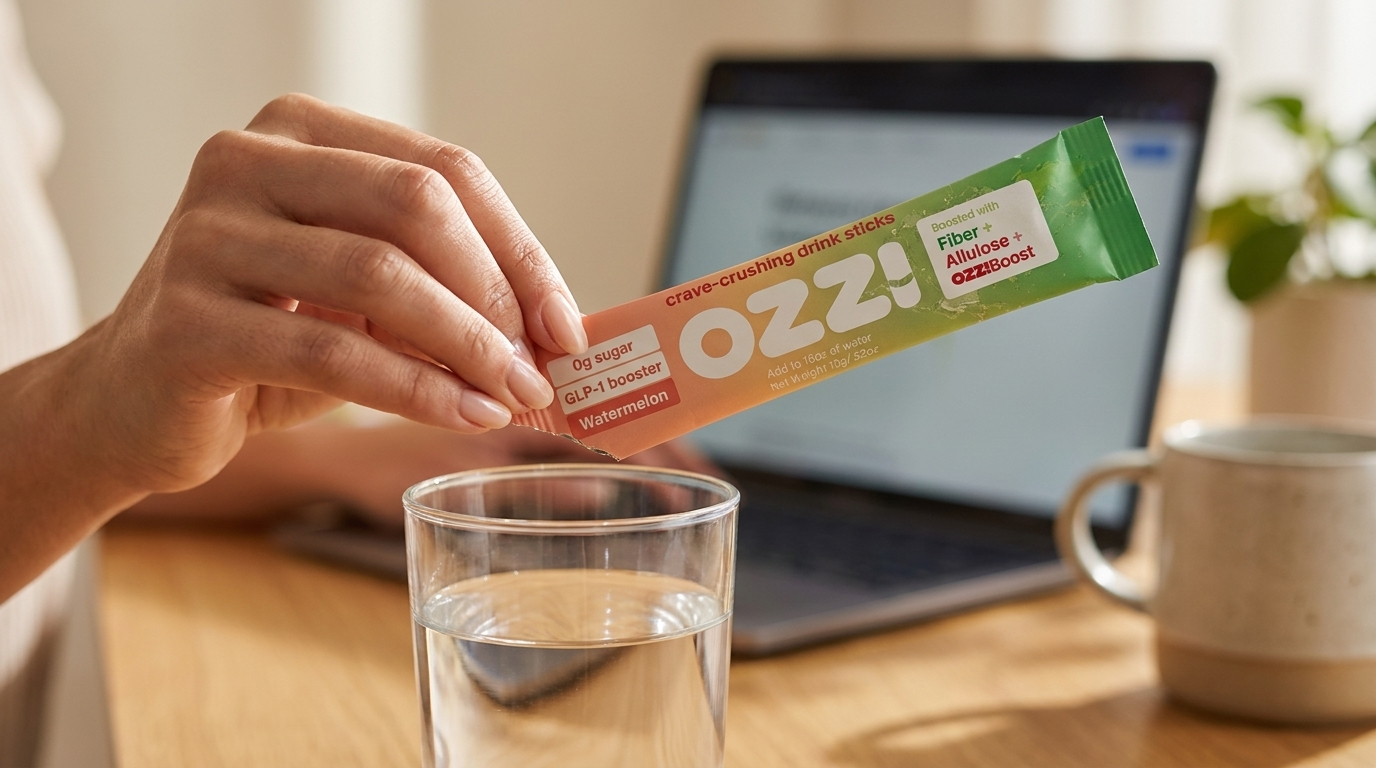
So where does Cluster Dextrin fit? It's a small supporting carbohydrate (0.5g per serving) that helps the drink mix cleanly and sit lightly, so it's kind to your stomach. It's not there to move a hormone. It's there so the whole thing goes down easy.
Honesty about what each ingredient does is kind of the point. You can read more about how the full stick works in our GLP-1 booster drink guide.
Who should consider Cluster Dextrin?
Endurance athletes and lifters get the clearest benefit. Steady fuel, no bloat, no crash mid-session.
People who hate the heavy, sugary feeling of most drink mixes tend to like it too. It's one of the gentler carbs you can put in a cold-water stick.
If your main goal is quieting blood-sugar swings or appetite, Cluster Dextrin isn't your hero ingredient. It's a helper. The allulose, fiber, and butyrate are doing that heavier lifting.
Frequently asked questions
Is Cluster Dextrin the same as highly branched cyclic dextrin?
Yes. Cluster Dextrin is Ezaki Glico's branded, trademarked version of highly branched cyclic dextrin (HBCD). Same ingredient, brand name on top.
Is Cluster Dextrin better than maltodextrin?
For steady energy and stomach comfort, most evidence favors HBCD. It clears the stomach faster and releases energy more evenly, with a gentler insulin response than maltodextrin's quick spike.
Does Cluster Dextrin break a fast?
Yes. It's a carbohydrate with calories, so it breaks a fast like any other carb. The amount in a single Ozzi stick is small (0.5g), but it's still a carb.
Will Cluster Dextrin spike my blood sugar?
Less than plain sugar or dextrose. Studies show a lower insulin rise and a gentler glucose curve versus glucose. It still raises blood sugar, just more smoothly.
Is Cluster Dextrin safe?
It has a long track record in sports nutrition with good gastrointestinal tolerance in studies. As with any carb, individual tolerance varies. Check with your doctor if you manage a blood-sugar condition.
How much Cluster Dextrin is in Ozzi?
0.5g of Highly Branched Cyclic Dextrin per serving. It's a supporting ingredient, not a bulk carb dose like you'd find in a sports fuel scoop.
Does Cluster Dextrin help with weight loss?
Not directly. It's an energy carb, not an appetite tool. Ozzi's appetite support comes from its fiber, allulose, and butyrate ingredients working on fullness and GLP-1.
Is Cluster Dextrin vegan and stimulant-free?
Yes. It's a plant-starch-derived carbohydrate with no caffeine or stimulants. Ozzi as a whole is vegan and caffeine-free, so you can drink it before bed.
Want a drink that goes down easy and actually helps with cravings?
Ozzi Crave Crusher pairs gentle carbs like Cluster Dextrin with the fiber, allulose, and butyrate that quiet night cravings. Zero caffeine, zero sugar. Try it for 14 days straight. If it doesn't work for you, we'll refund your first bag.
References
Research summarized here was retrieved from PubMed. DOI links go to the original articles.
- Takii H, et al. Fluids containing a highly branched cyclic dextrin influence the gastric emptying rate. Int J Sports Med. 2005;26(4):314-9. DOI · PubMed
- Takii H, et al. Enhancement of swimming endurance in mice by highly branched cyclic dextrin. Biosci Biotechnol Biochem. 1999;63(12):2045-52. DOI · PubMed
- Kaji I, et al. Short-chain fatty acid receptor and its contribution to glucagon-like peptide-1 release. Digestion. 2014;89(1):31-6. DOI · PubMed
- Mio K, et al. Arabinoxylan as well as beta-glucan in barley promotes GLP-1 secretion by increasing short-chain fatty acids production. Biochem Biophys Rep. 2022;32:101343. DOI · PubMed
- Rahat-Rozenbloom S, et al. Acute increases in serum colonic short-chain fatty acids elicited by inulin do not increase GLP-1 or PYY responses but may reduce ghrelin in lean and overweight humans. Eur J Clin Nutr. 2016;71(8):953-958. DOI · PubMed
- Systematic review and meta-analysis: effect of resistant dextrin on glucose regulation markers in patients with type 2 diabetes. PMC. 2025. PubMed Central