

Inulin and Appetite: How Prebiotic Fiber Quietly Turns Down Hunger (2026)
Inulin reduces appetite by feeding gut bacteria that produce short-chain fatty acids. Those acids trigger your intestinal L-cells to release GLP-1 and peptide YY, two hormones that signal fullness to the brain and slow how fast your stomach empties. Inulin also lowers ghrelin, your main hunger hormone.
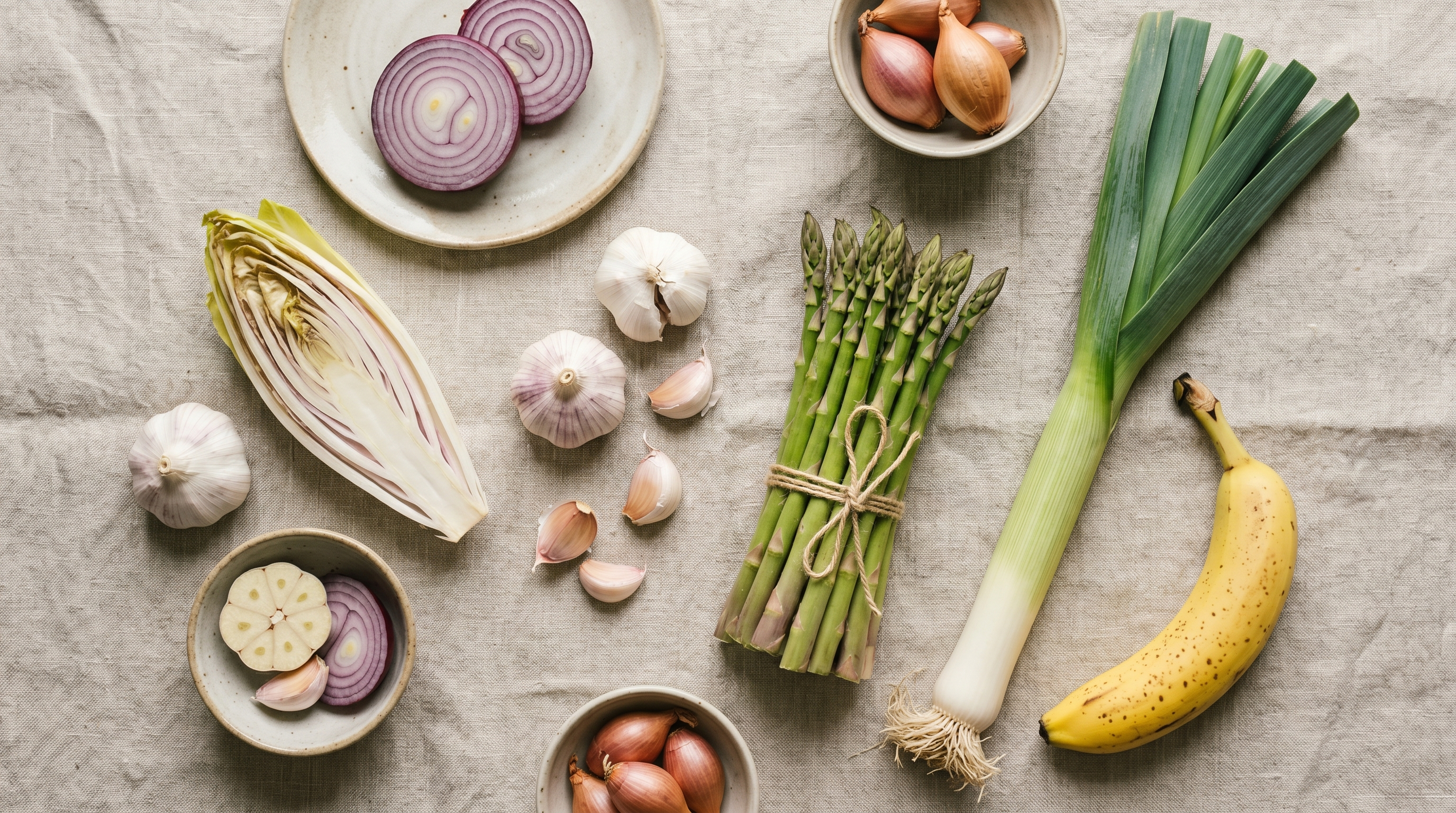
Most people meet inulin without knowing it. It's in onions, garlic, leeks, asparagus, and chicory root. It's also the fiber that shows up on more and more supplement labels with a vague promise to "support gut health."
Here's the part worth your attention. Inulin doesn't just help digestion. It quietly changes the hormones that decide whether you feel hungry an hour after dinner.
Key takeaways
- Inulin is a fermentable prebiotic fiber, not a filler.
- Gut bacteria turn it into butyrate and other acids that boost GLP-1.
- Trials show 10 to 16g daily lowers hunger and food intake.
- A 2024 meta-analysis found it reduced body weight by about 1kg.
- Start at 2 to 3g a day to dodge the bloating.
What is inulin, and why does it affect appetite?
Inulin is a type of soluble fiber called an inulin-type fructan. Plants use it to store energy. Chicory root is the richest source, which is why most supplement inulin comes from it.
Your body can't digest inulin. No human enzyme breaks it down. So it travels intact through your small intestine and lands in your colon, where your gut bacteria treat it like a feast.
That fermentation is the whole point. When bacteria eat inulin, they release short-chain fatty acids: acetate, propionate, and butyrate. Those acids are signaling molecules, and your appetite hormones listen to them.
So inulin's effect on hunger is indirect. It doesn't suppress appetite the way a stimulant does. It works through your microbiome, which then talks to your gut, which then talks to your brain.
How does inulin actually reduce hunger?
The short version: inulin raises your fullness hormones and lowers your hunger hormone. Here's the chain.
Your colon is lined with cells called L-cells. When short-chain fatty acids from inulin fermentation hit them, those cells release GLP-1 and peptide YY (PYY). Both tell your brain you're full and slow how fast your stomach empties.
GLP-1 is the same hormone Ozempic and Wegovy mimic. Your gut already makes it. Inulin is one of the levers that turns the volume up naturally.
At the same time, inulin appears to lower ghrelin, the hormone that drives the urge to eat. One trial in overweight adults found that weight loss during oligofructose supplementation came with lower ghrelin and higher PYY at the same time.
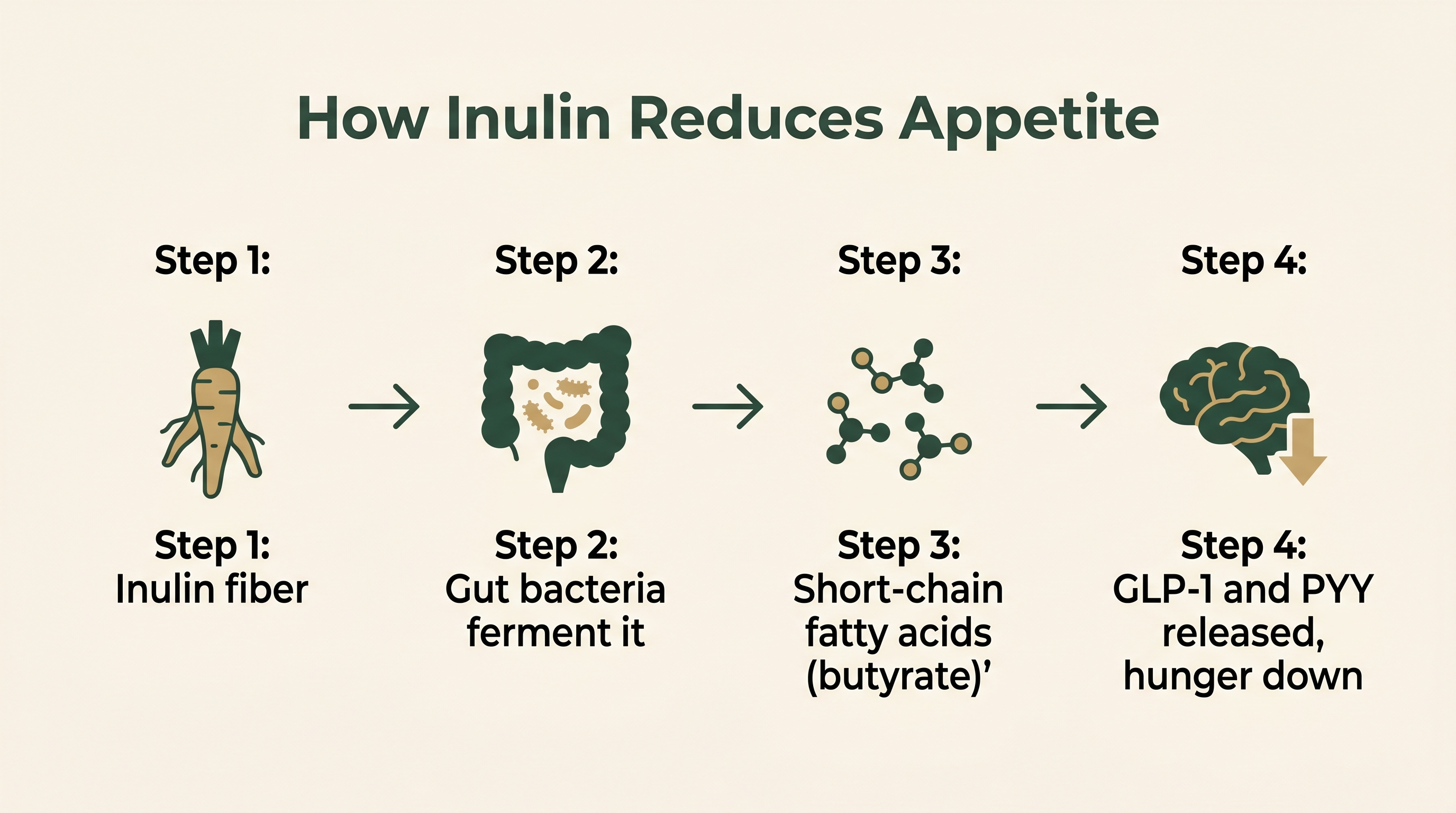
Inulin doesn't fight your appetite. It feeds the bacteria that turn your fullness signals back on.
Researchers have mapped this in both animals and people. In rats, inulin-type fructans raised GLP-1 and lowered ghrelin while increasing the gut tissue that makes those hormones. In humans, Cani and colleagues found that 16g a day of oligofructose for two weeks promoted fullness after breakfast and dinner and reduced hunger.
Does inulin really help with weight? What does the research say?
This is where it gets concrete. A 2024 systematic review and meta-analysis in The American Journal of Clinical Nutrition pooled 32 randomized controlled trials on chicory inulin-type fructans.
Across roughly 1,184 people, inulin reduced body weight by about 0.97kg versus placebo. BMI dropped by 0.39 across 25 trials. The reviewers also saw improvements in fat mass and waist circumference.
That's not a miracle. It's a real, measurable nudge from one fiber doing one job.
| What was measured | Result vs placebo | Trials |
|---|---|---|
| Body weight | −0.97 kg | 32 |
| BMI | −0.39 kg/m² | 25 |
| Appetite / hunger | Lower hunger, higher fullness (16g/day) | Multiple RCTs |
A separate crossover trial in people with type 2 diabetes found that inulin-type fructans shifted appetite ratings toward more fullness, lining up with the hormone data.
How much inulin do you need for an appetite effect?
Most human studies that moved appetite used 10 to 16g a day. That's the range where GLP-1 and PYY shifts showed up.
But here's the honest catch. Jumping straight to 16g is a recipe for gas. Your bacteria need time to adjust to the new fuel.
Start at 2 to 3g a day for a week. Then climb slowly. Most people land comfortably in the 5 to 10g range, and smaller daily doses paired with food tend to feel better than one big hit.
| Week | Daily inulin | What to expect |
|---|---|---|
| 1 | 2 to 3g | Gut adjusting, mild gas possible |
| 2 to 3 | 5 to 7g | Fewer side effects, fullness builds |
| 4+ | 8 to 12g | Appetite range, comfortable for most |
What about gas and bloating?
This is the real downside, and pretending otherwise would be dishonest. Inulin ferments. Fermentation makes gas. Some people get bloated, especially at high doses early on.
If you have IBS, inulin can be tricky, since it's a FODMAP. Go slow, or talk to your doctor first.
The good news: the gas usually fades as your microbiome adapts over a couple of weeks. Smaller, food-paired doses make the transition much smoother.
How does inulin compare to other appetite fibers?
Not all fiber works the same way. Some bulk up and slow digestion physically. Inulin works through fermentation and hormones. They're complementary.
| Fiber | Main mechanism | Hits GLP-1? |
|---|---|---|
| Inulin | Fermentation to short-chain fatty acids | Yes, indirectly |
| Glucomannan (konjac) | Swells in stomach, physical fullness | Minimal |
| Psyllium | Bulking, slows gastric emptying | Modest |
If you want the deeper science, we wrote a full breakdown of butyrate and GLP-1 and a guide to how your gut controls appetite. For the broader picture, see how to increase GLP-1 naturally and our take on quieting food noise.
Inulin is a prebiotic rather than a satiety fiber. If fullness is what you are after, the gel-forming fibers are the ones with the data, and we compared them in do fiber supplements work for weight loss.
Frequently asked questions
Does inulin curb appetite?
Yes, modestly. Trials using 10 to 16g a day showed lower hunger and higher fullness, driven by increases in GLP-1 and PYY and a drop in ghrelin.
How long does inulin take to work for appetite?
Some appetite effects show up within hours of a dose, but the hormone and weight effects in studies built over 2 to 12 weeks of daily use.
Is inulin the same as fiber?
It's a type of soluble, fermentable fiber called an inulin-type fructan. Not all fiber ferments like inulin does, which is why it affects gut hormones specifically.
Will inulin make me gassy?
It can, especially at high doses early on. Start at 2 to 3g a day and build up. The gas usually settles as your gut bacteria adapt.
Can inulin raise GLP-1 like Ozempic?
It nudges your own GLP-1 up through fermentation. It's gentler and slower than a drug, and it works with your biology rather than replacing it.
How much inulin is in food?
Chicory root is the richest source. Onions, garlic, leeks, asparagus, and bananas all contain smaller amounts. Most diets fall short of study doses.
Is inulin safe to take every day?
For most people, yes. It's well studied and generally well tolerated at moderate doses. If you have IBS or a sensitive gut, go slow or check with your doctor first.
Does inulin help with blood sugar too?
Research links inulin-type fructans to improved glycemic markers, likely through the same gut and short-chain fatty acid pathways. Talk to your doctor about your own numbers.
Can I just eat vegetables instead of supplementing?
You can get inulin from food, and you should. But hitting 10g a day from onions and garlic alone is a lot of onions. A measured dose is easier to dial in.
The 9pm part is the part we can help with
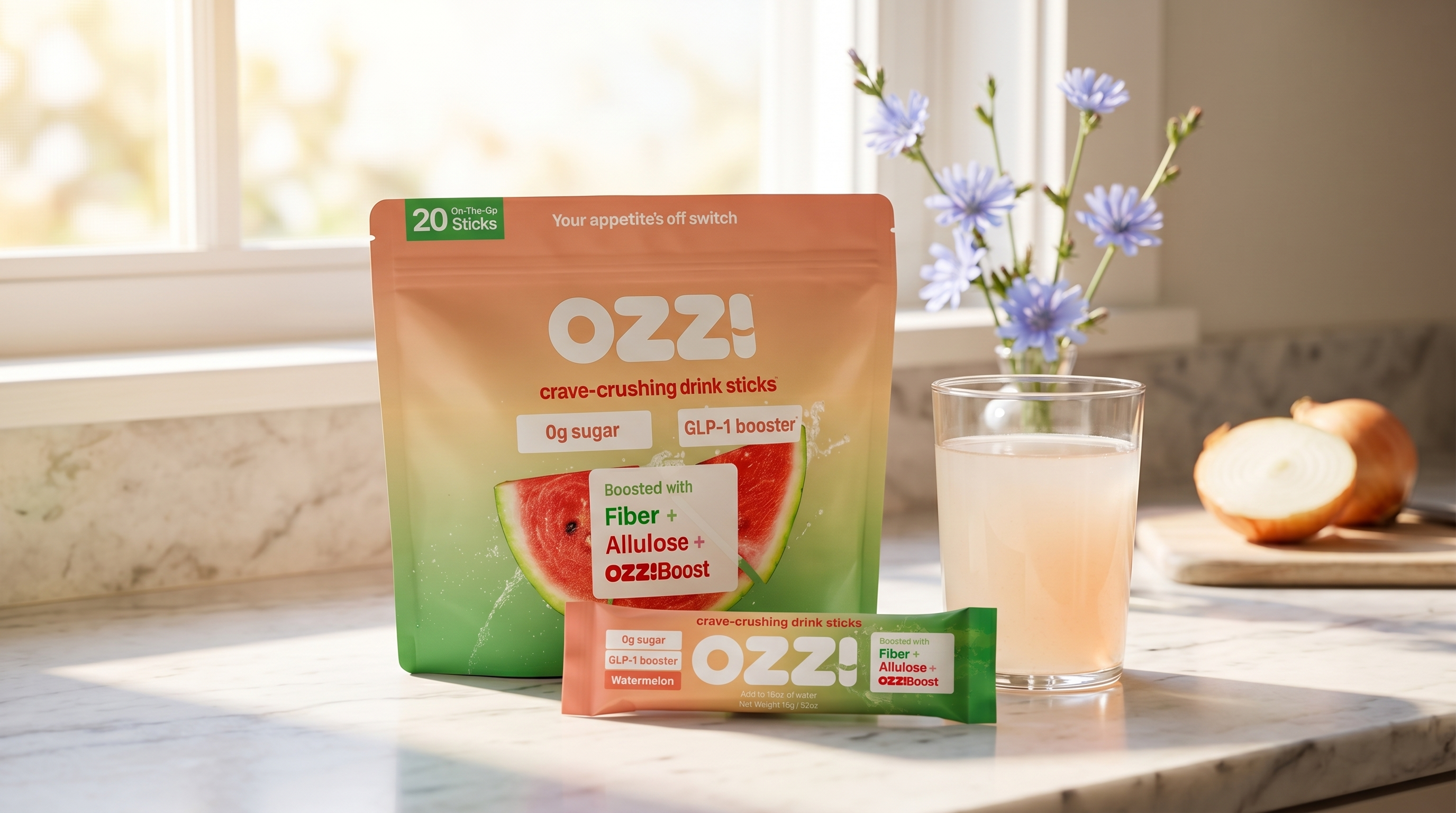
Ozzi Crave Crusher pairs direct butyrate, glucomannan, and allulose in one watermelon drink stick. Zero caffeine, no prescription. 14-Day Ozzi Challenge: Take it for 14 straight days. If your cravings and food noise aren't quieter, we'll refund your first bag.
- Li L, et al. The effects of chicory inulin-type fructans supplementation on weight management outcomes: systematic review, meta-analysis, and meta-regression of randomized controlled trials. Am J Clin Nutr. 2024. PMC11600113
- Effect of inulin-type fructans on appetite in patients with type 2 diabetes: a randomised controlled crossover trial. J Nutr Sci. 2021. PMC8453458
- Parnell JA, Reimer RA. Weight loss during oligofructose supplementation is associated with decreased ghrelin and increased peptide YY in overweight and obese adults. Am J Clin Nutr. PMC3827013
- Effects of oligofructose on appetite profile, GLP-1 and peptide YY3-36 concentrations and energy intake. Br J Nutr. Cambridge Core
- Inulin-type fructans modulate gastrointestinal peptides involved in appetite regulation (GLP-1 and ghrelin) in rats. Br J Nutr. Cambridge Core
- Oligofructose-enriched inulin consumption acutely modifies markers of postexercise appetite. PMC. 2023. PMC10745446
- The prebiotic potential of inulin-type fructans: a systematic review. PMC. PMC8970830
- Effect of inulin on gut hormone release and appetite perception in RYGB patients. Nutr Diabetes. 2024. Nature
These statements have not been evaluated by the Food and Drug Administration. This product is not intended to diagnose, treat, cure, or prevent any disease. This article is for educational purposes and is not medical advice.
