

African Mango Extract: Honest 2026 Guide to GLP-1 Claims, Dosing, and What Actually Works
African mango extract is a soluble-fiber-rich seed extract from the West African tree Irvingia gabonensis. Small trials at 150 mg twice daily show modest weight loss, lower leptin, and higher adiponectin. It likely works through fiber-driven satiety, not by directly stimulating GLP-1.
Key takeaways
- Most-cited dose is 150 mg of IGOB131 twice daily, taken 30 minutes before meals.
- The strongest trial reported a 12.8 kg drop over 10 weeks. The study is small and industry-funded.
- African mango doesn't directly raise GLP-1. Its soluble fiber may indirectly nudge it.
- Side effects are mild: gas, headache, sleep disturbance. Watch interactions with diabetes meds.
- Stronger GLP-1 ingredients exist: allulose, berberine, soluble fiber blends, and yerba mate.
What is African mango extract?
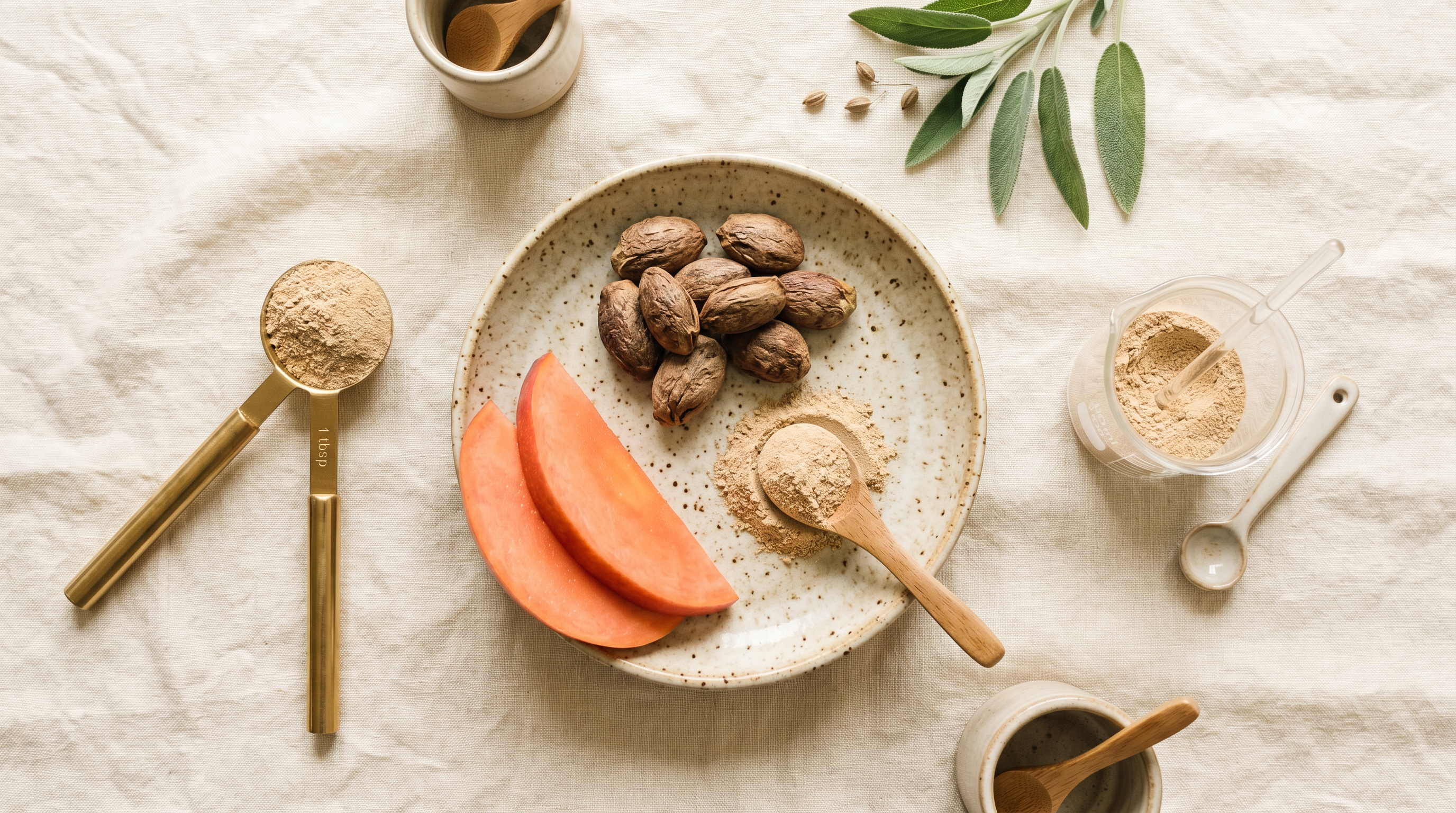
African mango (Irvingia gabonensis) is a tree native to West and Central Africa. The fruit is edible. The seed is what matters for supplements.
The seed kernel, called dika nut, has been used for centuries in Cameroon and Nigeria as a thickener for soups and stews. It's roughly half soluble fiber by weight, which is unusually high for any seed.
When food scientists started studying it in the 2000s, they extracted a standardized fraction called IGOB131. That's the form used in nearly every clinical trial you'll see cited. If a label just says "African mango" without specifying IGOB131 or a dose, it's probably not the studied material.
The supplement market caught on around 2009, when Dr. Oz featured it on his show. Sales spiked. So did skepticism, because the evidence base was, and still is, surprisingly thin.
Does African mango actually boost GLP-1?
Short answer: not directly, and not in any way the published trials have measured.
The marketing copy you'll find on most supplement sites tends to lump African mango in with "natural GLP-1 boosters." That's a stretch. The original IGOB131 trials measured body weight, waist circumference, leptin, adiponectin, total cholesterol, and CRP. They didn't measure GLP-1 levels. (If you want a primer on the hormone itself, our complete guide to GLP-1 covers the basics.)
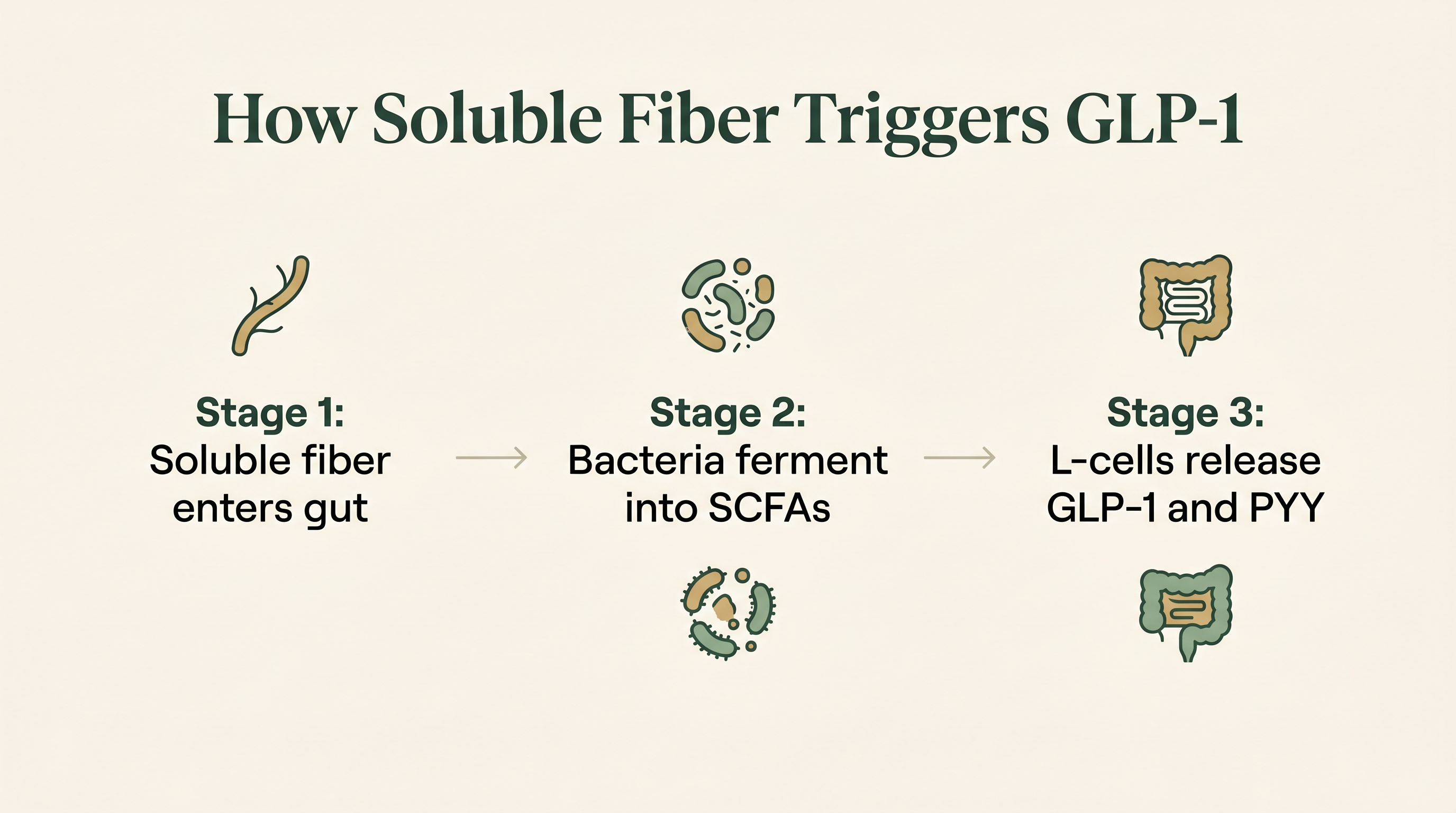
What we do know: about 50% of the dika nut is soluble fiber. Soluble fiber, especially the fermentable kind, gets broken down by gut bacteria into short-chain fatty acids (SCFAs). SCFAs are one of the most reliable known triggers for GLP-1 and PYY release from L-cells in the lower intestine.1,2
So the mechanism, if there is one, is probably indirect. You eat the fiber, your gut ferments it, SCFAs nudge L-cells, and a little extra GLP-1 trickles out. That's a real mechanism. It's just not unique to African mango. Any soluble fiber can do it.
African mango's "GLP-1 effect" is fiber doing what fiber does. The seed isn't magic. The fiber is just food for your gut bacteria.
What does the research actually say about weight loss?
Three randomized controlled trials anchor the African mango weight-loss case. All three were conducted in Cameroon, by overlapping research groups, with funding ties to the IGOB131 patent holder. That's not damning on its own, but it should color how you read the numbers.3
Here's what they reported.
| Trial | Duration | Dose | Weight loss (extract vs placebo) |
|---|---|---|---|
| Ngondi 2005 | 4 weeks | 1.05 g, 3x daily | 5.3% vs 1.0% body weight |
| Ngondi 2009 | 10 weeks | 150 mg IGOB131, 2x daily | 12.8 kg vs 0.7 kg |
| Oben 2008 (combo) | 10 weeks | IGOB131 + Cissus | 11.9 kg vs 2.1 kg |
Numbers like "12.8 kg over 10 weeks" are, frankly, suspicious. That's roughly 2.8 pounds per week, which is faster than most prescription weight-loss drugs produce. When effect sizes look too good, they usually are.
Independent systematic reviews have flagged exactly this. The 2013 Cochrane-style review by Onakpoya and colleagues concluded the evidence "is not convincing" because of small sample sizes, methodological weakness, and funding bias.4 A 2019 meta-analysis in the Journal of the American College of Nutrition found a smaller, more believable average weight reduction of around 1.7 kg across pooled trials.5
That's the honest number. Not 12. Around 1.7 kg, maybe a bit more if you also clean up your diet.
How does African mango work in the body?
Beyond the fiber-and-SCFA pathway, the IGOB131 trials report three specific changes worth knowing about.
Leptin drops. Leptin is the hormone fat cells release to tell your brain "we've stored enough, stop eating." The catch is that in chronic overeating, the brain stops listening. That's leptin resistance, and it's why obesity feels self-perpetuating. The 2009 IGOB131 trial reported a 49% drop in serum leptin, with researchers framing it as improved leptin sensitivity.6
Adiponectin rises. Adiponectin is the opposite kind of hormone. More of it generally means better insulin sensitivity and more fat oxidation. The same trial reported a 26% increase. A 2024 follow-up by Rao (n=120) also reported adiponectin increases correlating with fat loss.7
Hunger frequency falls. Self-reported hunger dropped by about 40% versus placebo in one of the smaller trials. That's the part that overlaps with what we'd call "killing food noise" or quieting the night monster.
Those are real signals. But again: tiny samples, one research group, one funder. Treat them as hypothesis-generating, not as proof.
How much African mango should you take?
The dose used in nearly every IGOB131 trial is 150 mg of standardized seed extract, twice daily, 30 to 60 minutes before meals.
Some products use higher amounts of generic Irvingia gabonensis powder (500 mg to 1,500 mg per dose). Those aren't equivalent. A non-standardized seed powder doesn't necessarily contain the same active fraction.
If you're going to try it, look for:
The label should say "IGOB131" or list a standardized extract. The dose should match 150 mg twice daily. The bottle should have third-party testing (NSF, Informed Sport, or USP) because wild-harvested West African seeds can carry heavy-metal contamination.
Take it before meals, not with them. Soluble fiber works best when it has time to gel up in the stomach before food arrives. Drink plenty of water with it.
Is African mango safe?
For most healthy adults, short-term use looks reasonably safe. The trials reported side effects at roughly the same rate in extract and placebo groups.
The most common complaints are mild and predictable when you add soluble fiber to your diet: gas, bloating, headache, occasional sleep disturbance. They usually fade within a week.
A few situations call for more caution:
If you take diabetes medication. African mango can lower blood sugar. Stacking it with metformin, sulfonylureas, or insulin can push you into hypoglycemia. Talk to your doctor first.
If you take other oral medications. The fiber delays gastric emptying, which can change how fast other drugs are absorbed. Space them at least two hours apart.
If you're pregnant or breastfeeding. There's no safety data here. Skip it.
If you have a tree-nut or mango allergy. Cross-reactivity is rare but documented. Start small if you have any history.
The FDA hasn't approved African mango for any condition, which is true of essentially every dietary supplement. That doesn't make it unsafe. It just means you, not a regulator, are doing the quality control. Buy from brands that test their material.
How does it compare to ingredients with stronger GLP-1 evidence?
If your goal is genuinely to boost GLP-1, there are ingredients with more direct human evidence. Here's an honest comparison.
| Ingredient | Direct GLP-1 evidence | Typical dose | Strength of trials |
|---|---|---|---|
| African mango | Indirect (fiber) | 150 mg, 2x daily | 3 small trials, single funder |
| Allulose | Direct (postprandial GLP-1 increase) | 5 to 10 g per meal | Multiple human trials |
| Berberine | Indirect (insulin sensitivity, gut) | 500 mg, 3x daily | Many human trials |
| Soluble fiber blends | Indirect (SCFAs to L-cells) | 5 to 15 g daily | Strong, repeated |
If you want to read more, we've got a deeper breakdown in our natural GLP-1 booster guide and a head-to-head allulose vs berberine comparison. For a broader rundown of options, see our natural alternatives to Ozempic guide and our how to increase GLP-1 naturally playbook.
The best ingredient for you isn't the one with the loudest marketing. It's the one with mechanism, dose, and human data that hold up.
Is African mango worth taking in 2026?
Honest answer from a founder who built a competing product: probably not as a standalone GLP-1 strategy.
If you want the satiety benefits of soluble fiber, you can get them more reliably from a fiber blend at a higher dose. If you want direct GLP-1 stimulation, allulose has cleaner human data. If you want to address food noise and night cravings, you'd want a stack that hits leptin, GLP-1, and blood sugar together, not just one of the three.
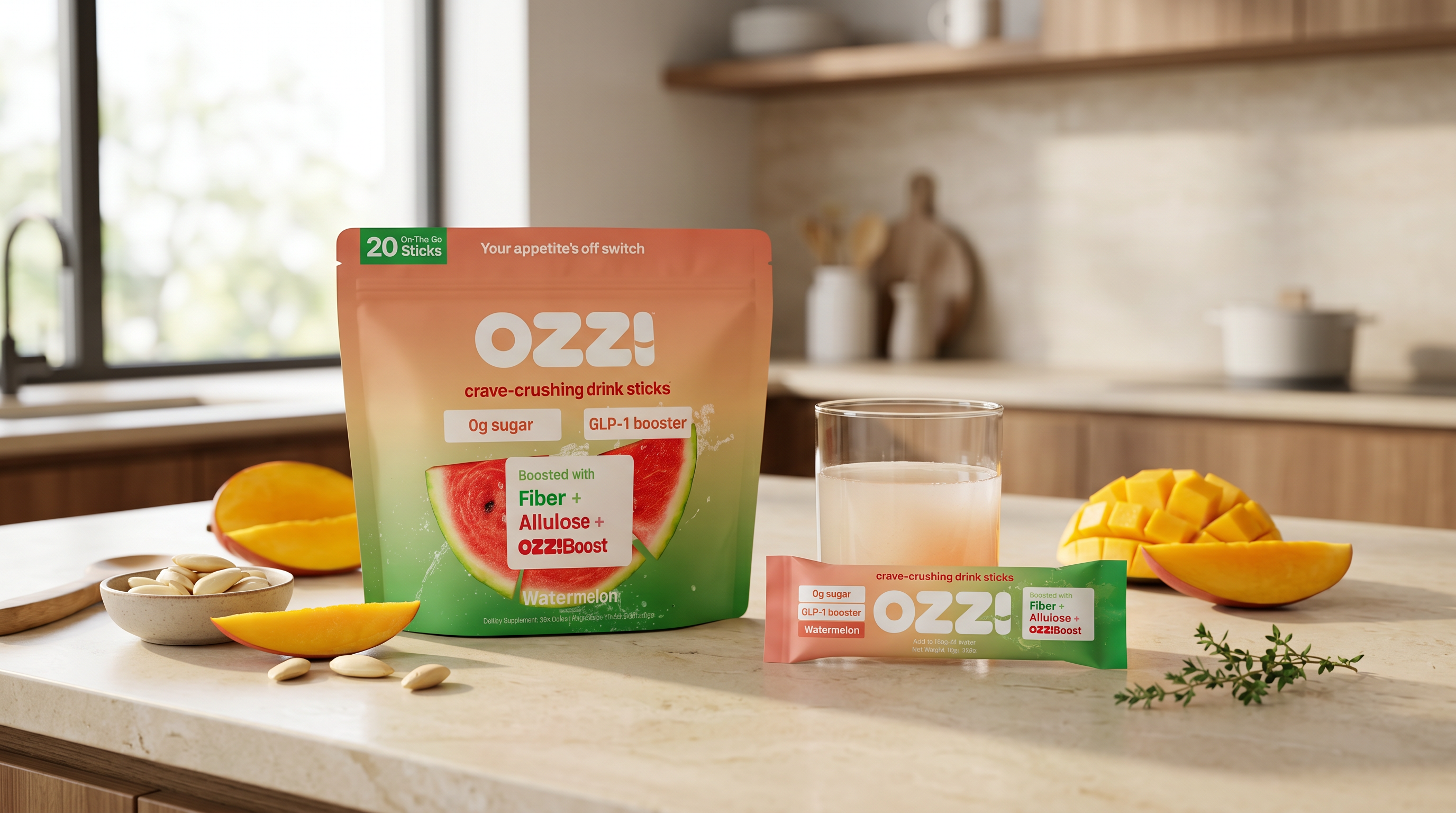
That's basically the case we made when we formulated Ozzi. The Crave Crusher stick pack pairs allulose (direct GLP-1 evidence), soluble fiber, and a botanical blend that nudges leptin signaling. It's designed to do what people hope African mango will do, with better evidence and a better delivery format.
African mango isn't useless. It's just oversold. If you're already taking it and feeling something, great. Keep going. Just don't pay premium prices for a single-ingredient capsule when you can get a more complete approach for the same money. If sugar cravings are your specific battle, our best supplements to curb sugar cravings guide covers what actually works.
Frequently asked questions
Is African mango the same as a regular mango?
No. They're different species. Regular mango (Mangifera indica) is the fruit you eat. African mango (Irvingia gabonensis) is a different tree, and the supplement uses the seed, not the fruit.
How long does African mango take to work?
The published trials ran 4 to 10 weeks. If you're going to try it, give it at least 6 weeks of consistent daily use before judging.
Can I take African mango with Ozempic or Wegovy?
Talk to your prescribing doctor. GLP-1 medications already slow gastric emptying and lower blood sugar. Adding a fiber-rich supplement that does similar things could compound side effects like nausea or hypoglycemia.
Does African mango have caffeine?
No. The seed extract is stimulant-free. If you find an "African mango energy" product with caffeine, the caffeine is added.
What's the best time of day to take African mango?
30 to 60 minutes before your two largest meals. That gives the soluble fiber time to gel up and blunt the post-meal blood sugar spike.
Can African mango help with belly fat specifically?
The IGOB131 trials reported waist circumference reductions, but spot-reducing belly fat isn't really a thing. Lower overall body fat tends to take belly fat with it.
Will African mango interact with my multivitamin?
Soluble fiber can slow absorption of fat-soluble vitamins (A, D, E, K) if taken at the same time. Space them by two hours.
Is African mango FDA approved?
No. Like all dietary supplements in the US, it's regulated as a food, not a drug. That means safety and quality come from the manufacturer, not the FDA. Buy from brands that publish third-party test results.
Is African mango vegan?
The extract itself is plant-based. Some capsules use gelatin shells. Check the label if you want strict vegan.
Skip the single-ingredient gamble
Ozzi Crave Crusher gives you allulose, soluble fiber, and a botanical blend in one cold-water stick. Designed to quiet food noise, smooth post-meal cravings, and hit the same satiety pathways African mango aims for, with better evidence.
Try it risk-free. If you don't feel the difference on your first bag, we'll refund you. That's our 10-day feel-the-difference guarantee.
Six actives, no stimulants
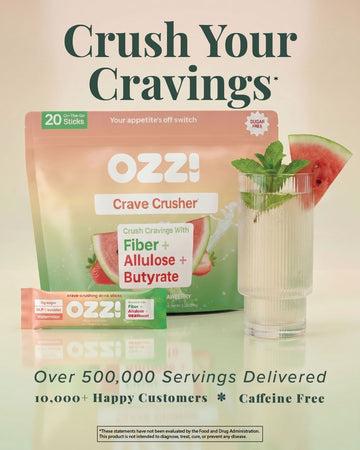
Ozzi Crave Crusher
Konjac fiber for physical fullness, 8g of allulose for the sweet craving, plus butyrate, chromium, ursolic acid and African mango. No caffeine and no stimulants, so there is no cutoff time on when you can drink it.
See what's in it →References
- Adam-Perrot A, et al. Different types of soluble fermentable dietary fibre decrease food intake, body weight gain and adiposity. Nutr Diabetes. 2014. PMC4141268
- Adam CL, et al. Dose-dependent effects of a soluble dietary fibre on food intake and gut satiety hormone secretion. PLOS ONE. 2015. PMC4300082
- Ngondi JL, et al. IGOB131 significantly reduces body weight and improves metabolic parameters in overweight humans. Lipids Health Dis. 2009. PMC2651880
- Onakpoya I, et al. The efficacy of Irvingia gabonensis supplementation: a systematic review of RCTs. J Diet Suppl. 2013. PMID 23419021
- Reza-López SA, et al. The effects of Irvingia gabonensis seed extract supplementation on anthropometric and cardiovascular outcomes: a meta-analysis. J Am Coll Nutr. 2019. Taylor & Francis
- Ngondi JL, et al. The effect of Irvingia gabonensis seeds on body weight and blood lipids of obese subjects in Cameroon. Lipids Health Dis. 2005. PMID 15916709
- Reinwald S, Weaver CM. African mango research breakdown. Examine database. 2024. Examine
- Tolhurst G, et al. Short-chain fatty acids stimulate GLP-1 secretion via free fatty acid receptor 2. Diabetes. 2012. PMID 22210325
