

How to Stop the Munchies Without Giving Up Weed: The Science of Cannabis Cravings and What Actually Works
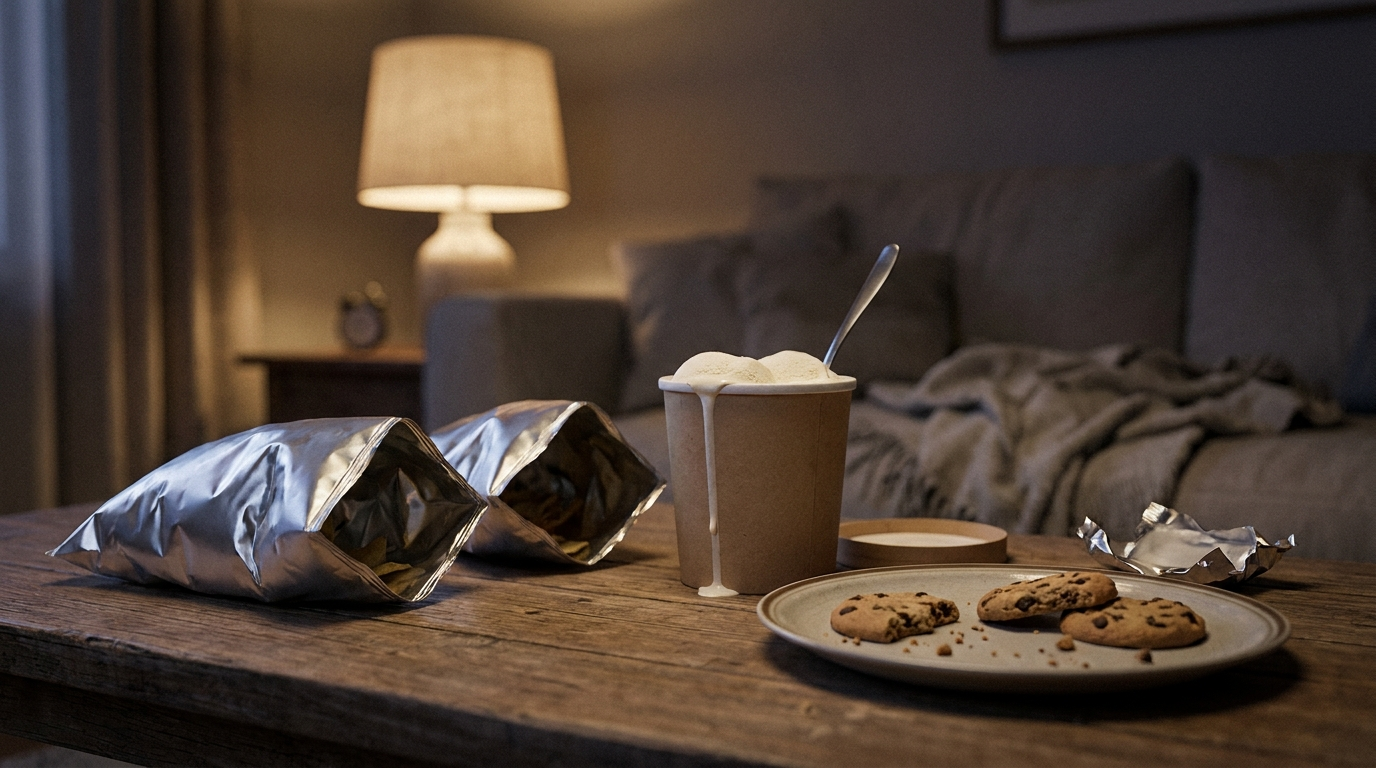
You know the drill. You smoke, you feel great, and then 45 minutes later you're standing in front of the fridge eating shredded cheese straight from the bag.
The munchies aren't a willpower problem. They're a neurochemistry problem. THC rewires your appetite signaling through at least 4 different pathways simultaneously, and your brain doesn't stand a chance against all of them firing at once.
Here's what's actually happening inside your body, why the standard advice ("just eat before you smoke!") barely works, and what does. If you'd rather skip the science, our munchies blocker page has the short version.
What Are the Munchies? The Neuroscience of THC and Hunger
The munchies are the intense spike in appetite that follows cannabis use. But calling it "appetite" undersells what's happening. THC doesn't just make you a little hungry. It hijacks your brain's entire hunger regulation system and flips it into overdrive.
This isn't metaphorical. It's literal. Researchers have mapped exactly how THC does this, and it hits your body from multiple angles at the same time.
"Great for late night snacking when my will power is tired."
Why Does Weed Make You So Hungry? 4 Pathways THC Uses to Trigger the Munchies
| Pathway | What THC does | What you feel | Evidence |
|---|---|---|---|
| POMC neurons | Flips satiety neurons into producing beta-endorphins instead of a-MSH | Your "stop eating" switch becomes a gas pedal | Nature, 2015 |
| Ghrelin | Raises circulating ghrelin via the mTOR pathway and lowers peptide YY | False hunger even after a full meal | Molecular Metabolism |
| Olfactory CB1 | Heightens smell sensitivity in the olfactory bulb, raises dopamine | Everything smells and tastes dramatically better | Frontiers in Neural Circuits |
| GLP-1 suppression | Attenuates the GLP-1 response to food and blocks incretin release | The fullness signal never arrives, or arrives late and weak | Translational Psychiatry |
1. THC Flips Your "I'm Full" Neurons Into "I'm Starving" Neurons
Your hypothalamus contains POMC neurons. Their job is to produce alpha-melanocyte-stimulating hormone (a-MSH), a signal that tells your brain you're full and to stop eating.
THC binds to CB1 receptors on these neurons and does something bizarre: it makes them switch from producing a-MSH (the satiety signal) to producing beta-endorphins, which stimulate appetite. The exact neurons that are supposed to tell you "stop eating" start telling you "keep going."
A 2015 study published in Nature confirmed this mechanism, showing that CB1R activation selectively increases beta-endorphin release while suppressing a-MSH in the hypothalamus. The researchers called it a "paradoxical" effect because POMC neurons are classically understood as appetite suppressors.
This is why the munchies feel so aggressive. Your body's off switch gets rewired into a gas pedal.
2. THC Cranks Up Ghrelin (Your Hunger Hormone)
Ghrelin is the hormone that makes your stomach growl before a meal. THC increases circulating ghrelin levels, creating a false hunger signal even if you ate 30 minutes ago.
Research published in Molecular Metabolism shows the endocannabinoid system and the ghrelin system amplify each other through a feedback loop. THC activates the mTOR pathway and decreases peptide YY (a satiety hormone), both of which spike ghrelin. A randomized, placebo-controlled human study published in The American Journal of Clinical Nutrition confirmed that THC administration increased ghrelin and disrupted normal metabolic hormone responses to food.
This is why eating before you smoke doesn't always help. THC can override the signals from the meal you just had.
3. THC Makes Food Smell and Taste Better (Literally)
THC binds to CB1 receptors in your olfactory bulb, the part of your brain that processes smell. This cranks up your sensitivity to food aromas. Research published in Frontiers in Neural Circuits confirmed that cannabinoids regulate sensory processing in early olfactory circuits.
Since roughly 80% of what we experience as "taste" comes from smell, everything suddenly tastes more intense and more rewarding. That leftover pizza isn't just pizza anymore. It's the best pizza you've ever had.
The same Nature study on POMC neurons also found that THC-exposed mice became significantly more sensitive to food odors and ate more as a direct result. Cannabinoids were also shown to increase dopamine levels in the brain, making food consumption feel more rewarding.
4. THC Suppresses Your Satiety Hormones (Including GLP-1)
Here's the part that ties everything together. THC doesn't just increase hunger signals. It actively suppresses the hormones that tell you to stop eating.
A randomized, double-blind, placebo-controlled study published in Translational Psychiatry found that THC attenuated GLP-1 (Glucagon-Like Peptide-1) responses to food consumption across multiple administration methods (oral, smoked, and vaporized). GLP-1 is one of your body's primary "I'm satisfied, stop eating" hormones. It slows digestion, signals fullness to your brain, and helps regulate blood sugar after a meal.
When THC dampens your GLP-1 response, your body loses one of its main braking mechanisms for appetite. You eat, but the fullness signal never arrives (or arrives late and weak).
Research published in Gastroenterology showed that cannabinoids also block fat-induced incretin release through both CB1-dependent and CB1-independent pathways in intestinal epithelial cells. So even the backup systems for satiety signaling get disrupted.
Why the Standard "Munchie Tips" Don't Work
You've probably seen the usual advice: eat a big meal before smoking, drink water, chew gum, distract yourself.
These tips treat the munchies like a willpower challenge. They're not. THC is hitting your appetite through 4 separate biological mechanisms at once:
- Your fullness neurons get flipped into hunger neurons (via POMC/CB1R interaction).
- Your hunger hormone (ghrelin) spikes (via the endocannabinoid-ghrelin feedback loop).
- Food smells and tastes 10x better (via olfactory CB1 receptor activation).
- Your satiety hormones (GLP-1, peptide YY) get suppressed (via incretin pathway disruption).
Drinking water doesn't counteract any of these pathways. Eating beforehand helps a little, but THC can override those fullness signals. Willpower is fighting neuroscience, and neuroscience wins.
So stop trying to win on willpower. The realistic goal isn't to not snack. It's to make the thing you reach for count for something. That's the whole idea behind the Munchies Buster, the drink version of everything below.

Chromium, glucomannan, butyrate, allulose and African mango in one 5-calorie drink. Mix a packet when you light up.
The Best Supplements to Stop the Munchies (According to Research)
If you've searched for supplements to curb the munchies, you've probably seen recommendations for chromium (for blood sugar stabilization), glucomannan (for physical satiety), and a few others. These recommendations are backed by real research. The question is whether you want to buy 4 to 6 separate supplements or get them in a single formula at clinical doses.
| Ingredient | Which THC pathway it targets | Dose in Ozzi | In Ozzi |
|---|---|---|---|
| Chromium (Metabolex) | Blood sugar spike-crash-crave cycle | 300 mcg chromium + 10 mg ursolic acid |
✓ |
| Glucomannan | Ghrelin-driven false hunger | 500 mg | ✓ |
| L-Lysine Butyrate (BIOMEnd) | GLP-1 suppression | 500 mg | ✓ |
| Allulose | Heightened sweet-taste reward | 8 g | ✓ |
| African Mango Extract | Leptin signalling | 150 mg | ✓ |
Full sourcing and dose rationale on our ingredients page.
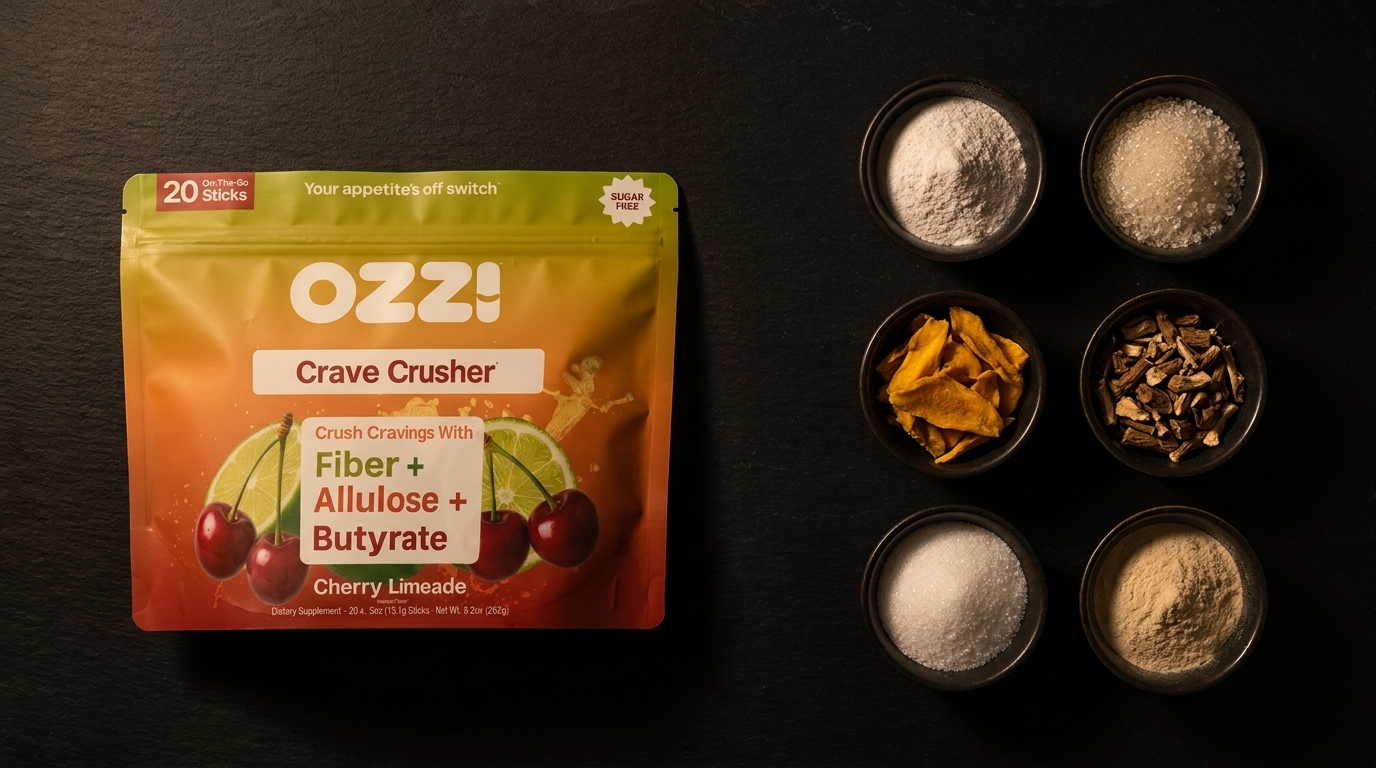
Ozzi Crave Crusher is a drink mix that contains both chromium and glucomannan (two of the most commonly recommended munchie-fighting supplements), plus additional clinically studied ingredients that target the specific appetite pathways THC disrupts. Here's how each one works:
Chromium: Blood Sugar Stabilization
Chromium is one of the most-studied minerals for blood sugar support. A double-blind, placebo-controlled trial found that chromium supplementation significantly reduced carbohydrate cravings and appetite. A meta-analysis of randomized controlled trials found significant reductions in fasting plasma glucose and HOMA-IR (a measure of insulin resistance) with chromium supplementation.
Ozzi uses Chromium Polyursolate (Metabolex), delivering 300mcg of chromium and 10mg of ursolic acid per serving. It's a branded form bound to ursolic acid that enhances insulin receptor activity. When THC triggers munchies and you reach for chips or candy, your blood sugar spikes and crashes, triggering another wave of cravings. Stable blood sugar breaks that cycle.
Glucomannan (Konjac Root): Physical Fullness
Glucomannan is a soluble viscous fiber that absorbs water and expands in your stomach. A randomized cross-over trial published in the British Journal of Nutrition found that konjac glucomannan reduced cumulative energy intake by up to 47%. A review in PMC found that glucomannan supplementation was associated with reductions in BMI, body weight, and waist circumference in overweight individuals.
Ozzi contains 500mg of Glucomannan per serving. When ghrelin spikes from THC and tells your brain you're hungry, having a fiber physically expanding in your stomach pushes back against that false hunger signal. Your brain says "eat." Your stomach says "I'm already full."
L-Lysine Butyrate (BIOMEnd): GLP-1 Support
This is the ingredient that addresses THC's most important appetite mechanism: GLP-1 suppression.
Butyrate is a short-chain fatty acid that stimulates GLP-1 secretion from L-cells in your intestine. A study published in Diabetes (American Diabetes Association) found that short-chain fatty acids stimulate GLP-1 secretion via the G-protein-coupled receptor FFAR2. Additional research in the Journal of Biological Chemistry showed that butyrate treatment of human L-cell lines enhanced GLP-1 secretion and increased expression of genes involved in GLP-1 synthesis.
Ozzi contains 500mg of L-Lysine Butyrate (BIOMEnd) per serving, providing butyrate directly to your gut. Since THC actively suppresses your GLP-1 response (as shown in the Translational Psychiatry study), supporting GLP-1 production is the most targeted way to counteract munchies at the hormonal level. We built a whole page on the drink version of this idea: the butyrate drink mix.
Allulose: Sweet Taste Without the Blood Sugar Spike
THC intensifies your desire for sweet, calorie-dense food. Allulose satisfies that craving without the metabolic damage.
A systematic review and meta-analysis published in PLOS One found that allulose intake significantly attenuates postprandial blood glucose levels. Research published in MDPI showed that allulose triggers GLP-1 release in preclinical models, and a 12-week clinical study examined allulose's metabolic and endocrine effects.
Ozzi contains 8g of Allulose per serving. It tastes sweet (because it's a sugar), but your body metabolizes it differently: roughly 1/10th the calories of regular sugar and no blood glucose spike.
African Mango Extract: Leptin Support
Leptin is another satiety hormone that tells your brain you have enough stored energy and don't need to eat. A double-blind, randomized, placebo-controlled trial of 102 overweight volunteers found that Irvingia gabonensis (African Mango) supplementation significantly improved leptin levels, body weight, and waist circumference compared to placebo. A systematic review and meta-analysis published in the Journal of the American College of Nutrition confirmed significant reductions in body weight and waist circumference.
Ozzi contains 150mg of African Mango Extract per serving, adding another layer of appetite regulation when THC is trying to override your satiety signals.

A free Sample Pack with your first order, in every flavor. Use code SAMPLE at checkout, or tap below and it applies itself.
Claim the free Sample PackBest Way to Use Ozzi for the Munchies
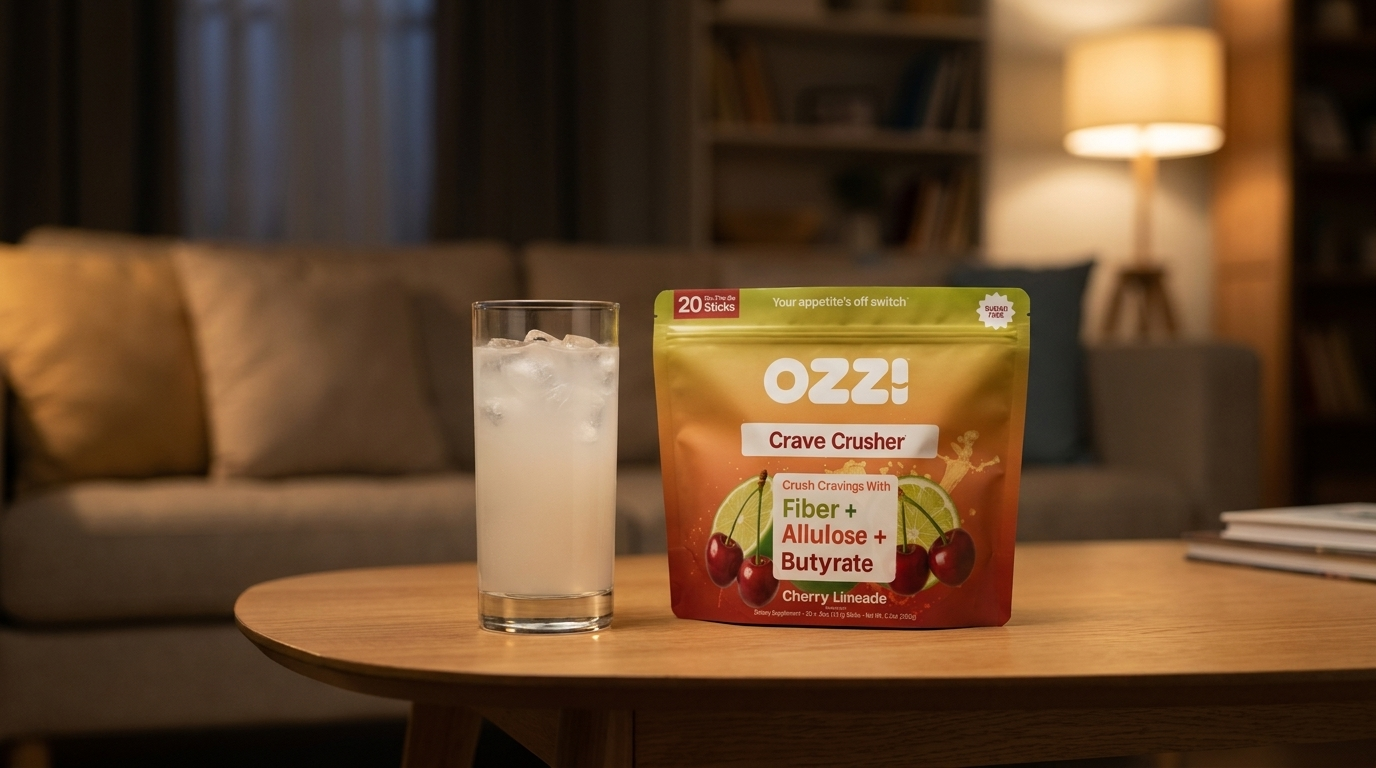
Mix Ozzi with 16-20oz of chilled water. The timing matters more than people expect:
Mix it when you light up, not an hour before. The munchies typically land around 45 minutes into a session. Mixing a packet as you start, or right as the buzz kicks in, gives the glucomannan time to expand and the GLP-1 support ingredients time to get to work, so they're active exactly when the cravings arrive. Pre-loading too far ahead just means you're hungry before the session even starts.
Make the Ozzi the thing you reach for. Be honest: you're probably going to snack on something. The realistic win isn't white-knuckling through it. It's making the thing in your hand a sweet 5-calorie drink instead of a 1,200-calorie bag of chips, at the exact moment your brain is demanding something.
Use 1 to 2 packets per day, spaced 3 to 5 hours apart. If you're a daily smoker, consistent use matters. The gut-side ingredients do their best work with daily use, and most people notice stronger effects after about a week.
Ozzi Nutritional Profile: Why It Beats Typical Munchie Snacks
Here's the math that matters. A standard munchie session can easily run 800 to 2,000+ calories. A bag of chips is 1,200 calories. A pint of ice cream is 1,000+. A sleeve of cookies with peanut butter is... let's not do that math.
| What you reach for | Calories | Supports satiety hormones? |
|---|---|---|
| Bag of chips | ~1,200 | No |
| Pint of ice cream | 1,000+ | No |
| Typical munchie session | 800 to 2,000+ | No |
| Ozzi Crave Crusher | 5 | Yes, targets GLP-1, ghrelin and blood sugar |
One serving of Ozzi Crave Crusher has only 5 calories (mostly from allulose, which your body metabolizes differently than regular sugar). It's:
- Caffeine-free (won't mess with your high or your sleep).
- Sugar-free (uses allulose + Reb M, not artificial sweeteners).
- Vegan.
- No stimulants of any kind.
You're replacing a 1,500-calorie munchie binge with a 5-calorie drink that tastes sweet and actually supports the biological systems THC is disrupting. That's the trade.
Frequently Asked Questions About the Munchies and Supplements
What are the best supplements to stop the munchies?
The most effective supplements for cannabis-induced munchies target the specific appetite pathways THC disrupts. Based on clinical research, the top ingredients include: chromium for blood sugar stabilization (meta-analysis), glucomannan for physical satiety (randomized trial), butyrate for GLP-1 support (Diabetes journal), and allulose for sweet cravings without blood sugar spikes (PLOS One meta-analysis). Ozzi Crave Crusher combines all of these in a single drink mix at clinically studied doses.
Is Ozzi the best low calorie snack alternative for the munchies?
Ozzi is one of the only products designed to support the specific appetite pathways that THC disrupts. Most low-calorie munchie snacks (rice cakes, celery, frozen berries) only address calories. They don't push back against the ghrelin spike, the GLP-1 suppression, or the blood sugar crash cycle. Ozzi's formula targets all of these through 6 clinically studied ingredients at effective doses, and it comes in at roughly 5 calories per serving.
How do I stop the munchies without quitting weed?
The most effective approach is supporting your body's satiety signaling during cannabis use, and giving yourself something better to reach for when the cravings land. That means: fiber and GLP-1 support timed to the session (what the Munchies Buster is built for), keeping blood sugar stable, and avoiding high-sugar snacks that trigger the spike-crash-crave cycle. Willpower alone isn't enough because THC alters your hunger hormones at the biological level, including suppressing GLP-1 and spiking ghrelin.
Does Ozzi interact with cannabis?
Ozzi contains no cannabinoids, no stimulants, and no ingredients known to interact with THC. It's a functional drink mix made from fiber, rare sugar (allulose), amino acid-bound butyrate, and trace minerals. It works on appetite pathways, not cannabinoid receptors.
When should I drink Ozzi if I'm going to smoke?
Mix it as you light up, or right as the buzz starts. The munchies usually hit around the 45-minute mark, so mixing at the beginning of your session gives the glucomannan time to expand (research shows it delays gastric emptying) and the GLP-1 support ingredients time to kick in, timed to land with the cravings rather than well before them. Drinking it an hour ahead can leave you hungry before you've even started.
Can I use Ozzi every day if I smoke daily?
Yes. Ozzi is designed for daily use (1 to 2 packets per day). For daily cannabis users, consistent use is actually more effective; the gut-side ingredients work best with daily use, and most users notice stronger effects after about a week.
Is Ozzi a GLP-1 drug?
No. Ozzi is not a prescription medication. GLP-1 drugs like Ozempic and Wegovy inject synthetic versions of GLP-1 at pharmaceutical doses. Ozzi supports your body's own GLP-1 production using natural ingredients (primarily butyrate from BIOMEnd, allulose, and konjac fiber). No injection, no prescription, no medical oversight required. Here are six reasons people switch to a natural GLP-1 drink.
How does Ozzi compare to other munchie supplements?
Most supplement lists for munchies recommend buying chromium, glucomannan, and other ingredients separately. Ozzi combines chromium (Metabolex, 300mcg with 10mg ursolic acid), glucomannan (500mg), butyrate (BIOMEnd, 500mg), allulose (8g), and African Mango (150mg) into a single drink mix. Every ingredient is at a clinically studied dose, and the formula is caffeine-free, sugar-free, and vegan.
The Bottom Line
The munchies aren't a character flaw. They're a predictable neurochemical response to THC hitting 4 appetite pathways at once: flipping your fullness neurons (Nature, 2015), spiking ghrelin (Molecular Metabolism), enhancing food reward (Frontiers in Neural Circuits), and suppressing GLP-1 (Translational Psychiatry).
You're going to reach for something. Ozzi's formula is built around supporting the exact systems THC disrupts, so the thing you reach for works with your body instead of against it.
Your weed habit doesn't have to come with a 1,500-calorie tax.
Clinically studied ingredients targeting all four appetite pathways THC disrupts. 5 calories a serving.
Shop Crave Crusher- The Munchies Buster — the short version of this guide, with the drink built for it
- 6 reasons people love Crave Crusher — why a natural GLP-1 drink beats the alternatives
- The full ingredient breakdown — every dose, every study
- What GLP-1 actually does — the hormone THC suppresses
Sources:
- Koch, M. et al. (2015). "Hypothalamic POMC neurons promote cannabinoid-induced feeding." Nature, 519(7541).
- Cluny, N.L. et al. (2020). "Effects of oral, smoked, and vaporized cannabis on endocrine pathways related to appetite and metabolism." Translational Psychiatry, 10(1).
- Alen, F. et al. (2013). "Ghrelin and cannabinoids require the ghrelin receptor to affect cellular energy metabolism." Molecular Metabolism, 2(1).
- Redmond, W.J. et al. (2021). "Cannabinoids regulate sensory processing in early olfactory and visual neural circuits." Frontiers in Neural Circuits.
- Tolhurst, G. et al. (2012). "Short-chain fatty acids stimulate glucagon-like peptide-1 secretion via the G-protein-coupled receptor FFAR2." Diabetes, 61(2).
- Yadav, H. et al. (2013). "Beneficial metabolic effects of a probiotic via butyrate-induced GLP-1 hormone secretion." Journal of Biological Chemistry, 288(35).
- Yoshida, K. et al. (2023). "Allulose for the attenuation of postprandial blood glucose levels in healthy humans: A systematic review and meta-analysis." PLOS One.
- Matsuura, T. et al. (2024). "The metabolic and endocrine effects of a 12-week allulose-rich diet." PMC.
- Yoshida, K. et al. (2025). "GLP-1 release by rare sugar D-allulose ameliorates sucrose-induced obesity." International Journal of Molecular Sciences.
- Keithley, J.K. et al. (2013). "Safety and efficacy of glucomannan for weight loss in overweight and moderately obese adults." PMC.
- Brum, J.M. et al. (2017). "The effects of gelled konjac glucomannan fibre on appetite and energy intake." British Journal of Nutrition.
- Deshpande, A.D. et al. (2005). "A double-blind, placebo-controlled trial of chromium picolinate in atypical depression: effect on carbohydrate craving." Journal of Psychiatric Practice.
- Ngondi, J.L. et al. (2009). "IGOB131, a novel seed extract of Irvingia gabonensis, significantly reduces body weight." Lipids in Health and Disease.
- Hadi, A. et al. (2020). "Effects of chromium supplementation on glycemic control in patients with type 2 diabetes: a meta-analysis." Clinical Nutrition ESPEN.
- Santos, H.O. et al. (2019). "The effects of Irvingia gabonensis seed extract supplementation: a systematic review and meta-analysis." Journal of the American College of Nutrition.
- Rodriguez, A.S. et al. (2024). "Cannabinoids block fat-induced incretin release via CB1-dependent and CB1-independent pathways." Gastroenterology.
